


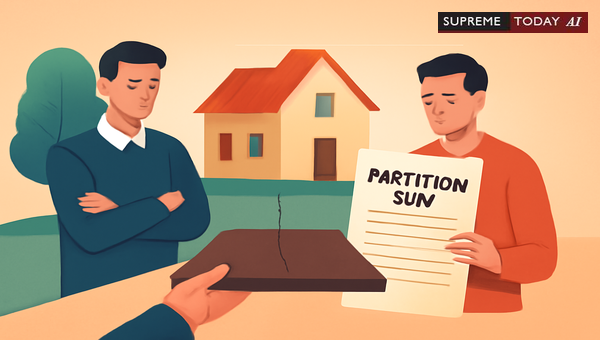
Can You Claim Half Share in a House Built by Co-Owner After 30 Years?
In property disputes among co-owners, tensions often arise when one party builds a structure on the entire shared plot without . Imagine this scenario: a co-owner constructs a house covering the whole plot, and decades later—after 30 years—another co-owner files a suit claiming a 1/2 share in that house. What if a co-owner has built a house on the whole plot and a suit is filed after 30 years claiming 1/2 share on the house? This question strikes at the heart of property law principles like limitation periods, title proof, and .
This blog post breaks down the legal landscape, drawing from key court judgments and principles. We'll explore why such claims are generally challenging but not impossible, supported by case analyses. Note: This is general information based on legal precedents and not specific legal advice. Consult a qualified lawyer for your situation.
Core Legal Principles in Co-Owner Property Disputes
When a co-owner builds on the entire joint plot, it doesn't automatically extinguish the other co-owners' rights. However, filing a suit for declaration of share or partition after a long delay like 30 years faces significant hurdles, primarily due to and the need for valid title proof.
As outlined in key judgments, a suit for or rights over property is binding only on the parties to the suit and persons claiming through them. 2022 0 Supreme(P&H) 895 This means administrative changes, like , don't override true ownership rights established in court. Essential parties must be joined, limiting the relief's scope. 2022 0 Supreme(P&H) 895
Moreover, building a house on the whole plot does not confer absolute ownership unless backed by valid title documents such as a registered sale deed or gift deed. Mere possession or construction isn't enough without proving legal entitlement. 2023 0 Supreme(Del) 2245
Key Factors Courts Consider
- : Claims must rest on solid documents; admitted facts alone won't suffice if they exceed proven rights. 2023 0 Supreme(Del) 2245
- Limitation Period: In India, suits for possession or partition typically have a 12-year limitation for claims, but declaration suits may vary. Long delays (e.g., 30 years) often bar relief unless tolled by or fraud.
- Necessary Parties and Binding Effect: Relief binds only involved parties, protecting outsiders. 2022 0 Supreme(P&H) 895
Impact of Long Delay: 30 Years Later
A 30-year gap significantly weakens claims. Courts infer that unchallenged possession over such periods may imply or . In one case, rights derived from a gift deed and collaboration agreement were scrutinized, emphasizing that claims unsupported by valid documents falter, especially after prolonged inaction. 2023 0 Supreme(Del) 2245
The principle is clear: long possession or construction does not establish ownership without valid title. Family settlements or informal arrangements don't override legal documents. 2022 0 Supreme(P&H) 895
However, other precedents show nuances. For instance, in without , co-owners retain shares despite one building on the plot. Claims persisted even after decades if no legal division occurred. 2024 Supreme(Online)(Del) 32759 Here, a allotted 1/6th shares to plaintiffs and defendants, with one getting 1/2, underscoring undivided interests. 2024 Supreme(Online)(Del) 32759
Insights from Related Cases
Additional sources highlight how courts handle similar disputes:
Construction and Possession Timing: If a habitable house isn't built within specified periods (e.g., two years), certain rights like land settlement conversion may lapse. Yet, a suit claiming ownership based on purchase showed ongoing disputes over built houses. 2023 Supreme(Online)(GAU) 3386 If within the period of two years a habitable residence was not built, the pass cannot be converted into an LSC. As there is nothing to show that a house was built by Sh. ... Liandawla as the legal and rightful owner... The suit filed by Sh. V. Liandawla shows that he had bought the said land... 2023 Supreme(Online)(GAU) 3386
Possession at Time of Suit: Courts examine possession when the suit is filed. One appellant pleaded possession of a house on plot C at filing, influencing outcomes.
The appellant had pleaded that he had been in possession of the house on plot C by the time he filed the suit.
in Built Properties: In a case involving a 1/4th undivided share in a house portion on a plot, claims proceeded with detailed property descriptions. 2025 Supreme(Online)(TEL) 4595 Long-term occupation by beneficiaries in adjacent plots also factored in estate disputes.
Joint Shares After Sales: Even after 40 years, shares in plots via sale deeds were recognized, with defendants holding one-ninth interests.
It was pleaded that defendant nos. 1 and 3 got a one-ninth share in Plot No. 683 through a sale deed... Ram Singh passed away about 40 years...
These cases illustrate that without , joint ownership endures, allowing late claims if evidence supports undivided status. 2024 Supreme(Online)(MP) 2966 2023 Supreme(Online)(Del) 16928 2023 Supreme(Online)(DEL) 674
Exceptions Where Claims May Succeed
While generally unsustainable without title, exceptions include:- : 12 years of open, hostile possession can prescribe ownership, though not explicitly in provided docs.- : If the builder recognized the claimant's share, limitation resets.- Undivided Joint Property: In Hindu undivided families, shares persist sans partition. Courts may decree partition equitably. 2024 Supreme(Online)(Del) 32759- No : Long-standing construction without consent doesn't bar claims if property remains joint. 2023 Supreme(Online)(GAU) 3386
Practical Recommendations
If you're the claimant after 30 years:- Gather Documents: Sale deeds, gift deeds, partition records, or family settlements.- Prove Possession: Show joint or your possession history.- Check Limitation: Assess if or tolling applies.- Join All Parties: Ensure necessary co-owners are impleaded. 2022 0 Supreme(P&H) 895- Seek Expert Advice: File with strong based on facts. 2023 0 Supreme(Del) 2245
For the builder: Document consent, payments, or adverse acts to defend.
Conclusion and Key Takeaways
Claims for 1/2 share in a house built by a co-owner on the whole plot after 30 years are typically barred by limitation unless valid title, undivided status, or exceptions like are proven. Courts prioritize documents over mere construction, but joint properties without partition offer leeway. 2022 0 Supreme(P&H) 895 2023 0 Supreme(Del) 2245
Key Takeaways:- Prove title with deeds; possession alone insufficient.- 30-year delay invokes limitation—act promptly.- protects builders; informal setups risk late suits.- Outcomes vary by facts; professional legal counsel essential.
Stay proactive in co-ownership—partition early to avoid disputes. For more on property law, explore our blog.
(Word count: 1028. References based on provided documents; general analysis only.)
#PropertyLaw #CoOwnerDispute #PartitionSuit















