


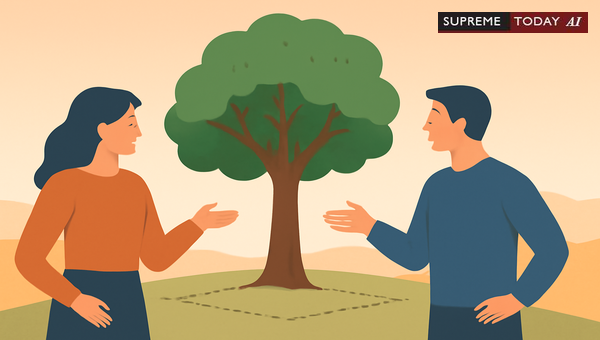
Can Co-Owners Enjoy the Entire Property Including Its Trees?
In the world of property ownership, disputes often arise when multiple parties share land. Imagine owning a piece of land with siblings or partners—can you freely use the entire property, pluck fruits from trees, or even cut branches without interference? The question, Co Owner can Enjoy the Entire Property Including its Trees, strikes at the heart of rights. This blog post dives into the legal principles, case law, and practical considerations under Indian and common law jurisdictions to clarify these rights.
Note: This is general information based on legal principles and case law. It is not specific legal advice. Consult a qualified attorney for your situation.
Understanding : The Basics
, also known as , means multiple individuals hold in a property. The foundational principle is that each co-owner has equal rights to possession, use, and enjoyment of the entire property, not just a fraction. This includes natural resources like trees growing on the land. 2014 0 Supreme(Ker) 189
11111111111
As courts have emphasized, co-owners possess a in the whole property, implying until legally divided. 2014 0 Supreme(Ker) 189 2016 0 Supreme(HP) 1947 Each co-owner is entitled to enjoy and possess the entire property equally, harvesting fruits or using trees as part of shared enjoyment, provided it doesn't harm others' rights. 1999 0 Supreme(P&H) 617 2017 0 Supreme(HP) 484
A key quote from multiple judicial decisions underscores this: Each co-owner in theory is entitled to enjoy the entire property in part and in whole.2021 0 Supreme(Mad) 1418 2021 0 Supreme(Mad) 2842 2008 0 Supreme(Ker) 635 2006 0 Supreme(Mad) 2751 2002 0 Supreme(Mad) 1140
Restrictions and the Role of Partition
While rights are equal, they're not absolute. Co-owners can agree on exclusive use of portions (e.g., one farming a section), but this doesn't erase others' rights without . Partition—by metes and bounds or mutual agreement—divides the property into exclusive shares, ending joint enjoyment. Until then, the whole remains accessible to all.
G. Radhakrishnan VS Kanna Pillai - ()
2018 0 Supreme(HP) 1845 2011 0 Supreme(P&H) 1361by one co-owner is typically inconsistent with . Courts allow exceptions for settled, continuous, and exclusive physical possession, such as through improvements or claims, but others can challenge it. 2017 0 Supreme(HP) 484 1992 0 Supreme(AP) 292
Rights Over Trees and Natural Resources
Trees on jointly owned land are part of the . A co-owner may enjoy them—harvesting fruits, pruning branches— as long as acts stay within joint enjoyment and avoid or . 1999 0 Supreme(P&H) 617
If a co-owner plants trees or makes improvements with others' acquiescence, they may possess the entire plantation until partition. This protects investments while preserving joint rights.
Ownership of land includes rights to possess, enjoy, and dispose of trees. Even overhanging branches or fruits belong to the joint owners, and pruning/selling is permissible without neighbor consent if legally planted.
Under laws like the , landowners (including co-owners) can plant and enjoy , but cutting may require permissions. 2025 Supreme(Online)(Ker) 58522 2023 Supreme(Online)(MP) 1540
One case notes a transferring property along with trees standing in the property, affirming trees as integral to ownership rights. 2023 0 Supreme(Ker) 81
Judicial Interpretations: Key Case Law
Equal Rights to Use and Enjoyment
Courts consistently affirm co-owners' equal rights to use, enjoyment, and possession of the entire property, including trees, absent partition. 1999 0 Supreme(P&H) 617 2014 0 Supreme(Ker) 189
Impact of
Exclusive physical possession may allow utilization of trees if settled and continuous, but it's challengeable without partition. 2017 0 Supreme(HP) 484
G. Radhakrishnan VS Kanna Pillai - ()
Trees from Improvements
Trees planted by a co-owner on joint land remain joint property unless partitioned, though the planter gets possession rights until division. 2014 0 Supreme(Bom) 292
and Share Enlargement
A deed of release by one co-owner enlarges others' shares without conveyance, reinforcing theoretical full enjoyment rights. 2021 0 Supreme(Mad) 1418
Practical Considerations for Co-Owners
- Avoid : Enjoyment must not destroy the property (e.g., excessive cutting).
- Mutual Agreements: Document arrangements to prevent disputes.
- Seek Partition: For exclusive rights, pursue legal partition.
- : Long-term exclusive use might ripen into ownership, but it's rare among co-owners.
- Government Properties: Special rules apply if land involves government claims. 2023 0 Supreme(Ker) 81
Co-owners may plant or build on common land if it doesn't alter its fundamental character and aligns with joint purpose—often requiring consent.
When Exclusive Rights Arise
Exclusive rights emerge post-partition or via settled possession. For instance, a co-owner with improvements can claim the entire plantation against others until partition.
In rubber or coconut tree scenarios, ownership includes enjoyment rights, even for lessees or mortgagees under specific acts. 2023 Supreme(Online)(KER) 45248
Key Takeaways
- Yes, generally: A co-owner can enjoy the entire property, including trees, under until partition. 1999 0 Supreme(P&H) 617
- Equal Access: All co-owners share rights to the whole, not parts. 2014 0 Supreme(Ker) 189
- Partition Changes Everything: Formal division grants exclusive shares.
- Trees as Joint Assets: Harvesting and use are shared unless restricted.
- Exceptions Exist: Continuous or improvements may offer temporary protection.
promotes harmony through shared rights, but disputes often lead to courts. Proactive communication or partition can prevent litigation.
Sources: 2014 0 Supreme(Ker) 189 1999 0 Supreme(P&H) 617 2016 0 Supreme(Del) 2614 2016 0 Supreme(HP) 1947
G. Radhakrishnan VS Kanna Pillai - ()
1992 0 Supreme(AP) 292 2014 0 Supreme(Bom) 292 2023 0 Supreme(Ker) 81 2023 Supreme(Online)(KER) 45248 2021 0 Supreme(Mad) 1418 2021 0 Supreme(Mad) 2842 2008 0 Supreme(Ker) 635 2006 0 Supreme(Mad) 2751 2002 0 Supreme(Mad) 11402025 Supreme(Online)(Ker) 58522 2023 Supreme(Online)(MP) 1540
Word count: 1028. For personalized advice, contact a legal professional.
#CoOwnerRights, #PropertyLaw, #JointOwnership












