Searching Case Laws & Precedent on Legal Query.....!
Analysing the retrieved Case Laws
Scanned Judgements…!



Searching Case Laws & Precedent on Legal Query.....!
Analysing the retrieved Case Laws
Scanned Judgements…!
GOKALDAS TRADING CO vs REGIONAL DIRECTOR - Gujarat
"], ["1994 0 Supreme(Bom) 422"].Regional Director, ESI Corporation VS Pahelvi Bakery - Bombay
"].Storage in small refrigerators or domestic units is considered preservation, not manufacturing or commercial cold storage activity, unless the capacity and infrastructure meet the specific criteria for cold storage facilities ["2026 Supreme(Online)(Bom) 387"], ["1979 0 Supreme(Ker) 44"].
Analysis and Conclusion:
GOKALDAS TRADING CO vs REGIONAL DIRECTOR - Gujarat
"].References:- ["2026 Supreme(Online)(Bom) 387"]- ["2025 Supreme(Online)(Mad) 74057"]- ["1994 0 Supreme(Bom) 422"]- ["1989 0 Supreme(Cal) 305"]- ["2010 0 Supreme(Del) 681"]- ["2008 0 Supreme(Bom) 1257"]- ["1979 0 Supreme(Cal) 13"]- ["2024 Supreme(Online)(Bom) 7527"]- ["1979 0 Supreme(Ker) 44"]- ["2024 Supreme(Online)(Bom) 55"]- ["
American Refrigerator Co. Ltd. VS Collector of Central Excise, Calcutta - Customs, Excise And Gold Appellate Tribunal
"]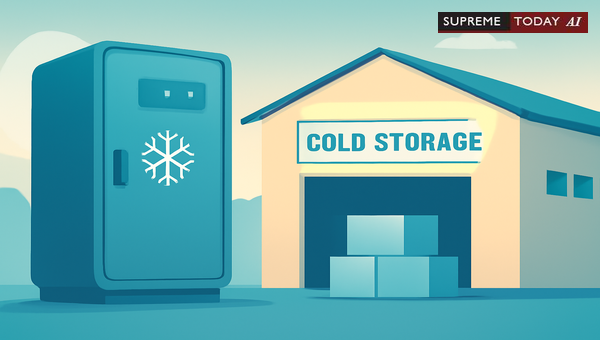
In the world of food preservation and storage, the terms cold storage and refrigerator are often used interchangeably by the general public. However, when it comes to legal interpretations, especially under Indian statutes like the and , the distinction is crucial. Misunderstanding this can lead to regulatory non-compliance, tax implications, or disputes over whether a facility qualifies as a factory.
What exactly is the difference between cold storage and refrigerator? This question arises frequently in contexts involving business operations, licensing, and labor laws. This article explores the statutory definitions, judicial rulings, and practical implications to provide clarity.
Cold storage is not just any cooling device; it refers to a large-scale, scientifically controlled facility. According to key legal interpretations, a cold storage is defined as any chamber or chambers insulated and mechanically cooled by refrigeration machinery and used for storing foodstuffs but does not include refrigerated cabinets or coolers having capacity of less than 25 cubic meters 2017 0 Supreme(SC) 1152.
This definition emphasizes:- Size and Capacity: Minimum 25 cubic meters, designed for bulk storage.- Infrastructure: Insulated chambers with mechanical refrigeration systems maintaining specific temperature and humidity levels.- Purpose: Long-term preservation of agricultural produce or perishable goods under controlled conditions, often part of a cold chain facility.
Judicial rulings reinforce this. In one case, the court clarified that cold storage involves a building or chambers with refrigeration machinery, capable of maintaining specific temperature and humidity levels necessary for preservation 2003 0 Supreme(SC) 1483. Cold storages are subject to licensing and regulation due to their commercial scale 2017 0 Supreme(SC) 1152 2003 0 Supreme(SC) 1483.
In contrast, a refrigerator is typically a domestic or small-scale appliance. It is a compact, insulated, and equipped with refrigeration units that maintain temperatures generally above freezing point, suitable for immediate preservation but not intended for long-term storage 2017 0 Supreme(SC) 1152.
Key attributes include:- Small Capacity: Far below 25 cubic meters, often used in households or small commercial settings like restaurants.- Short-Term Use: Acts as a point on the way from producer to consumer for keeping items fresh temporarily 2017 0 Supreme(SC) 1152.- No Heavy Regulation: Household refrigerators do not require special licensing or meet industrial standards.
Courts have explicitly distinguished them, noting that treating a domestic refrigerator as cold storage would be
MOHD ARIF vs EMPLOYEES STATE INSURANCE CORP
.The distinctions boil down to several core factors:
| Aspect | Cold Storage | Refrigerator ||-----------------|---------------------------------------------------|-------------------------------------------|| Size/Capacity | ≥25 cubic meters 2017 0 Supreme(SC) 1152 2003 0 Supreme(SC) 1483 | Much smaller, e.g., household units || Purpose | Long-term, large-scale preservation 2017 0 Supreme(SC) 1152 | Short-term, immediate use 2017 0 Supreme(SC) 1152 || Infrastructure | Insulated chambers, mechanical cooling, controls 2003 0 Supreme(SC) 1483 | Compact appliance with basic unit || Regulation | Licensing required, commercial/industrial 2017 0 Supreme(SC) 1152 | Generally unregulated for domestic use |
These differences are critical in legal contexts, such as determining if an establishment is a factory under labor laws.
Indian courts have consistently upheld these distinctions, particularly in ESI Act disputes.
In a notable ruling, the court held that the word 'cold storage' has a different connotation and meaning... than the appliances like freezer deep freezer. It refers to preservation or storage in a cold storage and not some article preserved or stored in a refrigerator 2017 0 Supreme(Guj) 187. Here, a restaurant using deep freezers for ice-cream and food was not deemed a factory, as refrigeration did not constitute a .
Similarly, If preservation or storage of an article in a domestic refrigerator is to be treated as preservation or storage of an article in cold storage, it would be
MOHD ARIF vs EMPLOYEES STATE INSURANCE CORP
. This underscores that mere use of refrigerators does not trigger factory definitions under .Another case involving a toddy shop clarified: mere employment of over 10 workers and use of refrigeration does not constitute a without concrete evidence demonstrating that the refrigeration was integral to operations qualifying as manufacturing 2017 Supreme(Online)(KER) 32335. The appeal was dismissed, affirming refrigerators do not equate to cold storage.
In consumer disputes, cold storages have specific liability clauses. For instance, receipts may disclaim responsibility for losses due to electricity failure, as upheld in a case where damage to apples was not attributed to
.
These precedents emphasize that refrigeration is the process of lowering the temperature inside an insulated enclosure... a cold storage is a refrigeration on a large scale 2003 0 Supreme(SC) 1483.
For businesses, classifying correctly avoids penalties:- ESI and : Restaurants or shops with refrigerators employing >10 workers typically aren't factories unless involving true manufacturing 2017 0 Supreme(Guj) 187.- Licensing: Cold storages must comply with insulation standards and obtain licenses; violations can lead to fines 2017 0 Supreme(SC) 1152.- Cold Chain: Part of regulated supply chains for perishables, unlike domestic setups 2017 0 Supreme(SC) 1152.
Operators should assess capacity, purpose, and controls. For example, a facility storing goods in a cold chamber may qualify, but a simple cooler won't 2003 0 Supreme(SC) 1483.
The legal difference between cold storage and a refrigerator hinges on scale, purpose, and regulation. While refrigerators serve everyday needs without fanfare, cold storages are industrial powerhouses under scrutiny.
Key Takeaways:- Focus on capacity (≥25m³), insulation, and mechanical systems for cold storage classification 2017 0 Supreme(SC) 1152 2003 0 Supreme(SC) 1483.- Courts reject equating household appliances with cold storage
MOHD ARIF vs EMPLOYEES STATE INSURANCE CORP
2017 0 Supreme(Guj) 187.- Businesses: Consult statutes and experts for compliance to avoid disputes.This article provides general information based on cited rulings and is not legal advice. Laws may vary; seek professional counsel for specific cases.
MOHD ARIF vs EMPLOYEES STATE INSURANCE CORP
, 2017 0 Supreme(Guj) 187, 2017 Supreme(Online)(KER) 32335,: Supporting case laws.


There is a difference between a cold storage and a refrigerator. Cold storage refers to a large, insulated, mechanically cooled facility meant for storing large quantities of perishable goods under scientifically controlled conditions for longer duration. ... There can be no dispute that cold storage is different from a 365 liters refrigerator and what is covered by Section 2(k) is preserving or storing any article in a co....

Ex.A6 dated 27.08.2010 – is the Cold Storage Commissioning Report. On the defendant's side, one Kishore has been examined as DW1 and seven documents have been marked. 7. ... On perusal of Ex.A5 and Ex.B1 would explicate that there is a difference in the amount. ... The Cold Room – Storage unit to be delivered, installed and commissioned at Murugan Idli Shop at Pursaiwakkam and it was installed and commissioned by the plaintiff on 27.08.2010. The defendant issued a cheque bearing No.611875 dated 22.06.20....

If preservation or storage of an article in a domestic refrigerator is to be treated as preservation or storage of an article in cold storage, it would be doing violence to the language. ... It is common knowledge that there are several business concerns or companies owning cold storage equipments which are approached by others for preservation or storage of their articles in the cold storage apparatus of the owner....

... ( 2 ) IT is the specific case of the petitioners that the petitioner Company carries on the business of cold storage. ... Further, the said steel pipes welded and arranged in 'u' shape for installation of the said cold storage systems are not goods and cannot be bought or sold in the market as goods. ... Reference has also been made to a reported decision in (Gopal Cold Storage and Ice Factory v. Union of India and Ors.) wherein the Division Bench of Allahabad High Court upheld the....

If preservation or storage of an article in a domestic refrigerator is to be treated as preservation or storage of an article in cold storage, it would be doing violence to the language. ... (vi) preserving or storing any article in cold storage; 11. ... It is common knowledge that there are several business concerns or companies owning cold storage equipments which are approached by others for preservation or #HL_S....

If preservation or storage of an article in a domestic refrigerator is to be treated as preservation or storage of an article in cold storage, it would be doing violence to the language. ... It is common knowledge that there are several business concerns or companies owning cold storage equipments which are approached by others for preservation or storage of their articles in the cold storage apparatus of the owner....
If preservation or storage of an article in a domestic refrigerator is to be treated as preservation or storage of an article in cold storage, it would be doing violence to the language. ... It is common knowledge that there are several business concerns or companies owning cold storage equipments which are approached by others for preservation or storage of their articles in the cold storage apparatus of the owner....
Mangolia Dairy Products (India), the assessee, owns and runs a cold storage plant. ... Normally, a refrigerator is used for the purpose of storage. Even in a restaurant articles are kept in the refrigerator till they are required for sale. Mere storage as such will not be part of the manufacturing process as defined by Section 2 (k) of the Factories Act of 1948. ... Kanodia Cold Storage [1975] 100 ITR 155. In that case, depreciation was allowed in re....

At the time of visit of the Inspector and on verifying the records, he never disclosed that the 1st respondent used cold storage for preserving food or any dishes in the cold storage. ... The learned counsel for the appellant submitted that Section 2(k) (VI) will attract, since respondent is preserving or storing article in cold storage. ... If the appellant has a case that the respondents are preserving food in a cold storage and supplying, it is ....

The expression 'cold storage' has a special meaning. Mere refrigerator by itself without anything more cannot be considered as cold storage. ... If preservation or storage of an article in a domestic refrigerator is to be treated as preservation or storage of an article in cold storage, it would be doing violence to the language. ... There is separate room for the purpose of storage of the said it....

The emphasis on sec. 2(k)(vi) which refers to "preserving or storing any article in a cold storage" requires a closer scrutiny. The word 'cold storage' has a different connotation and meaning as discussed in the impugned judgment where the goods could be stored and the word cold storage will have a separate meaning and connotation than the appliances like freezer deep freezer. It refers to preservation or storage in a cold storage and not some article preserved or stored in a refrigerator.

However, the cold storage is not legal obligation for any loss damage destruction, deterioration, shrinkage or spoilage of the stored goods as a result of break down in refrigeration, plant leakage of gas failure or non supply of electricity strike by labourers lockout fire natural calamities or act of God or war or rules of order issued by the Government or any other authority or revolution or communal or other riots sabotage or civil and political commotion or accident during storing or any other cause over which the cold storage has no control. The cold storage shall be at liberty to disp....


An indispensable Tool for Legal Professionals, Endorsed by Various High Court and Judicial Officers
Please visit our Training & Support
Center or Contact Us for assistance

Scan Me!
India’s Legal research and Law Firm App, Download now!


For Daily Legal Updates, Join us on :



 Back to top


