


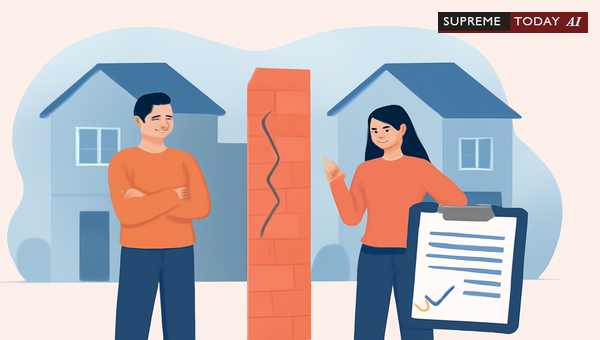
Resolve Common Wall Disputes Without
Introduction
Disputes over common or party walls are a frequent headache for neighbors and co-owners, often involving questions like support, construction, damage, or maintenance. A common concern arises: Can an issue regarding a common wall be decided without seeking ? The short answer is yes—in many cases, courts can grant effective remedies like injunctions or without declaring ownership or title, relying on statutory provisions, equitable principles, and evidence of harm. This approach streamlines resolution and avoids complex title disputes unless absolutely necessary. 2000 0 Supreme(P&H) 796
In this guide, we'll explore the legal principles, procedural remedies, and practical steps for resolving these issues efficiently. Drawing from key case laws and doctrines, we'll show how property owners can protect their rights without declaratory judgments, while noting scenarios where they may still be required.
Legal Principles Governing Common Wall Disputes
Rights and Uses of Common Walls
Co-owners generally share equal rights to use a party wall for support and necessary construction, but with strict limits:- Entitlement to Use: Parties can use the wall for support if it doesn't damage the other side. 2000 0 Supreme(P&H) 796- Consent Requirement: Raising, altering, or extending the wall needs all co-owners' consent; unilateral actions risk legal challenges. 2000 0 Supreme(P&H) 796- No Damage Rule: Permissible use must avoid harm or weakening the structure. 2000 0 Supreme(P&H) 796
Damage and Irreparable Harm
Courts evaluate potential or actual damage carefully:- Proposed works causing injury may trigger injunctive relief. 2000 0 Supreme(P&H) 796- Demolition or weakening justifies protection without title declaration. 2004 0 Supreme(Mad) 550
However, some cases highlight limits. For instance, one ruling states: Unless is granted, declaring that the plaintiffs are the owners of eastern wall of their house, relief of cannot be granted.
This underscores that when ownership is directly contested, declaration may be essential—but not always for basic harm prevention.
Procedural Remedies Without
Courts offer practical tools focused on harm prevention and compensation, bypassing title declarations.
1. Injunctions: The Primary Shield
Injunctions restrain unauthorized acts like construction or demolition:- Temporary and Permanent: Granted where damage or building violations are clear. 2000 0 Supreme(P&H) 796 2004 0 Supreme(Mad) 550- Key Principles: - : Show probable right to prevent harm (e.g., Sunehri v. Chatru). 2000 0 Supreme(P&H) 796 - : Weigh harms to each party. 2000 0 Supreme(P&H) 796 - : Essential if monetary compensation won't suffice. 2000 0 Supreme(P&H) 796
In a notable case, courts upheld mandatory injunctions for restoring unauthorized height increases on common walls, noting: The act of one co-owner in raising the height of the party wall... without the consent of the other co-owner will constitute . 2021 0 Supreme(Mad) 1468 No declaration was needed; evidence of damage sufficed.
2. for Actual Harm
When damage occurs:- Sue for compensation via , nuisance, or demolition claims. 2004 0 Supreme(Mad) 550- Procedure: Gather evidence like expert reports and inspections—no title proof required.
3. Rights: Light, Air, and Support
- No automatic easements from co-ownership; need 20-year adverse use proof. 2004 0 Supreme(Mad) 550
- Challenge obstructions with injunctions or if rights are established.
4. Maintenance and Reasonable Use
- Co-owners can repair but must prevent weakening. Negotiate first; courts intervene via injunctions if needed. 2000 0 Supreme(P&H) 796
5. Compliance with Building Regulations
All works must follow local zoning, height limits, and safety rules:- Submit sanctioned plans and permits.- Courts halt violations causing damage. 2000 0 Supreme(P&H) 796
Contrastingly, bare suits without declaration fail if title is disputed: Without asking , praying for cannot be maintained. 2021 0 Supreme(Mad) 2392 Thus, assess your case—focus on harm over ownership.
Practical Steps to Resolve Disputes
Follow this roadmap for efficient, non-declaratory resolution:
- Negotiate Amicably: Seek mutual agreements on repairs or use.
- Gather Evidence:
- Inspections and photos.
- Expert reports from engineers/architects.
- Document encroachments or damage.
- Send Legal Notice: Demand cessation of unauthorized works.
- File Suit:
- Seek (interim relief first) and/or .
- Emphasize , irreparable harm, . 2000 0 Supreme(P&H) 796
- Court Process:
- Present evidence.
- Rely on equity and statutes—no declaration if uncontested.
- Ensure Compliance: Verify plans against building laws.
This mirrors successful cases where concurrent findings granted injunctions for common walls without title decrees. 2021 0 Supreme(Mad) 1468
When Might Still Be Needed
While avoidable, declarations are crucial if:- Ownership/title is fundamentally challenged.
- Consequential reliefs like possession depend on it ( considerations). 2022 0 Supreme(Ker) 139
Other barred scenarios include disputes, where civil suits yield to tribunals. 2024 0 Supreme(Mad) 2000 2021 0 Supreme(Mad) 3330
Conclusion and Key Takeaways
Common wall issues can typically be resolved without through injunctions, , and compliance enforcement, promoting quicker justice. Prioritize negotiation, evidence, and harm-focused claims to safeguard rights efficiently.
Key Takeaways:- Demonstrate damage/irreparable harm for injunctions. 2000 0 Supreme(P&H) 796- Use for compensation without title proof. 2004 0 Supreme(Mad) 550- Comply with building rules to strengthen cases.- Seek declaration only if ownership is core.
This is general information based on case laws and not specific legal advice. Consult a qualified lawyer for your situation.
References:- 2000 0 Supreme(P&H) 796- 2004 0 Supreme(Mad) 550- 1988 0 Supreme(Mad) 31- 1998 0 Supreme(P&H) 66-
- 2021 0 Supreme(Mad) 1468- 2021 0 Supreme(Mad) 2392 #CommonWallDispute #PropertyLaw #InjunctionRelief















