


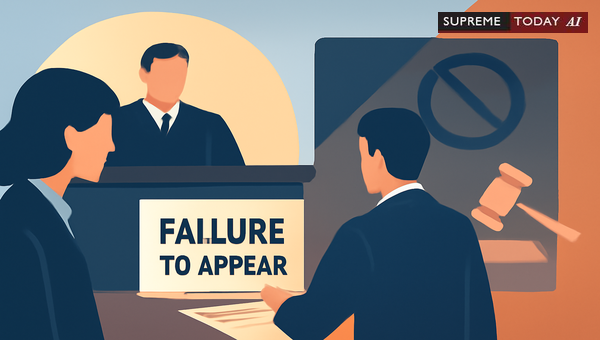
Must You Appear and Contest Court Proceedings Timely?
In the fast-paced world of legal disputes, a common question arises: Council Appear and Undertaken to Contest Later a Sound Effect on Case—which boils down to whether simply appearing before a council or court is enough, or if you must actively contest proceedings to avoid negative outcomes. This query touches on critical aspects of legal participation across elections, family law, tax assessments, and more. Failing to engage can result in , presumptions against your case, and irreversible judgments. This post explores key legal principles, backed by case law, to help you understand the risks and best practices.
Overview of Contesting Proceedings
Legal systems worldwide, particularly in India, emphasize active participation in court or tribunal proceedings. Courts generally expect parties to appear, file responses, and contest allegations to ensure fairness. Non-appearance often leads to proceedings going ex parte, where decisions are made without your input, presuming your claims lack merit. As highlighted in various judgments, if a party fails to appear as a witness and does not offer themselves for , it can be presumed that their case is not correct 2021 0 Supreme(Gau) 758 2021 0 Supreme(Gau) 8 2021 0 Supreme(Gau) 180.
This principle applies broadly, from election disputes to maintenance claims under . Delaying contestation or merely appearing without undertaking to challenge can have a sound effect—meaning lasting, detrimental impacts—on your case.
Contesting Election Disputes: Strict Timelines and Standing
Election challenges demand prompt action. Under , disputes over Regional Council elections must be referred by the candidate within of result declaration. The President's decision is final, and non-contesting parties lack standing. In one case, the erred by entertaining a from a non-contesting respondent, underscoring that only those who actively contest have 2022 0 Supreme(SC) 1133.
Failure to timely contest can bar future challenges. Similarly, in assessment disputes, authorities waking up after years—like a —still expect appearance, but short notice periods may quash orders if unreasonable, especially amid pandemics: respondent/Corporation woke up after a gap of about 12 and a half years and required the assessee to come for a final hearing within a couple of days. Apparently, the period is too short... 2021 0 Supreme(Del) 178.
Key Takeaway for Elections
- File within or lose rights.
- Non-participants cannot later challenge 2022 0 Supreme(SC) 1133.
Maintenance Orders and Family Law: Active Contest Required
In maintenance proceedings under Section 125 CrPC, courts stress appearance and contestation. An ex parte enhancement of maintenance was quashed because the petitioner failed to actively contest: the court directed them to contest the matter actively 2024 0 Supreme(Gau) 37.
This extends to divorce cases. In a matter, despite service of summons and counsel representation, non-appearance led to ex parte divorce decree. The later application to set aside failed due to negligence and under : the respondent failed to establish sufficient cause for not appearing in court, and the application... was not filed within the prescribed period of 2020 0 Supreme(Chh) 462. Even with knowledge and notices for final arguments, negligence prevailed.
Presumption from Non-Appearance: A Universal Rule
The established a cornerstone principle: non-appearance as a witness invites adverse presumption. This echoes in modern cases, reinforcing that silence weakens your position 2021 0 Supreme(Gau) 758 2021 0 Supreme(Gau) 8 2021 0 Supreme(Gau) 180.
In land disputes, defendants who appeared but absented later faced ex parte proceedings, with courts scrutinizing possession claims strictly 2018 0 Supreme(P&H) 3253. Similarly, in tax assessments, erroneous recording of no response despite objections led to quashing, highlighting 2021 0 Supreme(Del) 178.
Criminal and Civil Proceedings: Opportunity to Contest
Fairness demands giving the accused a chance to contest before trial. Courts uphold this to prevent ex parte decisions 1994 0 Supreme(Raj) 1013. In motor accident claims, insurance companies may pay and recover if owners breach policy terms by not appearing, but preconditions like undertakings are avoided to protect claimants: if a precondition is imposed requiring the owner... to furnish an undertaking to reimburse... it would cause unjustified, undue hardship 2014 0 Supreme(Raj) 1560 2014 0 Supreme(Raj) 1312.
Here, ex parte proceedings dragged due to non-appearance, but courts balanced claimant rights by allowing direct recovery without owner undertakings.
Integrating Broader Contexts from Case Law
Other scenarios amplify these risks:- Education Approvals: Late objections to decisions may not hold if prior approvals govern
.- Precedents: Rulings like clarify non-adoption of certain appeal interpretations, stressing timely contest
.- Property Disputes: Sale deeds fail without proving under if not contested properly 2018 0 Supreme(P&H) 3253.
These cases illustrate a pattern: courts may quash flawed but rarely excuse deliberate non-participation.
Judicial Discretion and Practical Recommendations
Courts exercise discretion for fairness but penalize negligence. To mitigate risks:- Appear Promptly: Respond to notices, even short ones, or seek adjournments with cause.- File Objections/Written Statements: Contest allegations actively.- For Clients: Engage counsel early; monitor proceedings to avoid ex parte surprises.- For Lawyers: Counsel on timelines— for elections, periods for setting aside orders.
In insurance matters, owners not contesting claims face directions, protecting victims while holding owners accountable 2014 0 Supreme(Raj) 1560.
Conclusion: Safeguard Your Rights Through Participation
Actively contesting proceedings is not optional—it's essential to avoid presumptions, , and lost appeals. From elections 2022 0 Supreme(SC) 1133 to maintenance 2024 0 Supreme(Gau) 37, non-engagement echoes adversely. While courts may show leniency in exceptional cases like pandemics 2021 0 Supreme(Del) 178, negligence rarely excuses delay 2020 0 Supreme(Chh) 462.
Key Takeaways:- Timely appearance and contestation prevent adverse outcomes.- Understand standing and limitations specific to your matter.- Consult professionals promptly.
This post provides general insights based on reported cases and is not legal advice. Laws vary; seek tailored counsel from a qualified attorney for your situation.
References: 2022 0 Supreme(SC) 1133 2024 0 Supreme(Gau) 37 2021 0 Supreme(Gau) 758 2021 0 Supreme(Gau) 8 2021 0 Supreme(Gau) 180 1994 0 Supreme(Raj) 1013 2021 0 Supreme(Del) 178 2020 0 Supreme(Chh) 462 2018 0 Supreme(P&H) 3253 2014 0 Supreme(Raj) 1560 2014 0 Supreme(Raj) 1312
#CourtProceedings #ExParteOrders #LegalRights












