Searching Case Laws & Precedent on Legal Query.....!
Scanned Judgements…!



Searching Case Laws & Precedent on Legal Query.....!
Scanned Judgements…!
Unsourced and Illegal Money is Not Valuable in NI Act Cases - Main Points and Insights
Mere recovery of tainted or illegal money does not automatically lead to conviction unless there is substantive evidence proving that the money was paid as a bribe or illegal gratification and that the accused knowingly accepted it ["2024 0 Supreme(Chh) 117"] ["2013 0 Supreme(Del) 486"] ["2016 0 Supreme(Del) 2059"] ["2013 0 Supreme(Del) 486"] ["2014 0 Supreme(Del) 2641"] ["2016 0 Supreme(Del) 2059"] ["2017 0 Supreme(Mad) 1766"] ["2016 4 Supreme 719"].
The prosecution must establish a demand for illegal gratification or valuable consideration, and that the acceptance was voluntary and with knowledge of its illicit nature. Absence of proof of demand weakens the case significantly ["2024 0 Supreme(Jhk) 319"] ["2011 0 Supreme(MP) 1435"] ["GIRI RAJ SINGH MEENA vs STATE (NCT OF DELHI) - Delhi"].
In many cases, courts have emphasized that simply possessing or recovering tainted money without evidence of a demand or acceptance of bribe does not suffice for conviction. For example, if the money was handed over without proof of demand or if the accused was unaware that the money was illegal, the case against them is weak ["2024 0 Supreme(Jhk) 319"] ["1997 0 Supreme(Del) 257"] ["GIRI RAJ SINGH MEENA vs STATE (NCT OF DELHI) - Delhi"].
It is critical to demonstrate that the money was accepted voluntarily as a result of a demand, and that the accused employed corrupt or illegal means to obtain the money. If the money was received innocently or without knowledge of its illicit origin, conviction is not justified ["2024 0 Supreme(Jhk) 319"] ["1997 0 Supreme(Del) 257"] ["GIRI RAJ SINGH MEENA vs STATE (NCT OF DELHI) - Delhi"].
Courts have also held that the use of illegal means or abuse of official position must be proven for a conviction under corruption laws. Abuse of position without proof of illegal means does not necessarily amount to an offense ["GIRI RAJ SINGH MEENA vs STATE (NCT OF DELHI) - Delhi"] ["GIRI RAJ SINGH MEENA vs STATE (NCT OF DELHI) - Delhi"].
Analysis and Conclusion
The consistent legal principle across these cases is that the mere recovery of illegal or tainted money is insufficient for conviction under laws like the Prevention of Corruption Act or IPC unless accompanied by clear evidence of demand, acceptance, and knowledge of illegality by the accused.
Courts require substantive proof of the illicit transaction, including proof of demand and voluntary acceptance, to establish guilt beyond reasonable doubt. Without such evidence, cases are likely to be dismissed or acquitted, emphasizing that illegal money alone does not hold intrinsic value in legal proceedings unless linked to criminal intent and conduct ["2024 0 Supreme(Jhk) 319"] ["1997 0 Supreme(Del) 257"].
Therefore, unsourced or illegal money, in the absence of proof of demand or acceptance, is considered legally insignificant and cannot be used as sole evidence of corruption or criminal misconduct ["2024 0 Supreme(Jhk) 319"] ["2011 0 Supreme(MP) 1435"].
References:
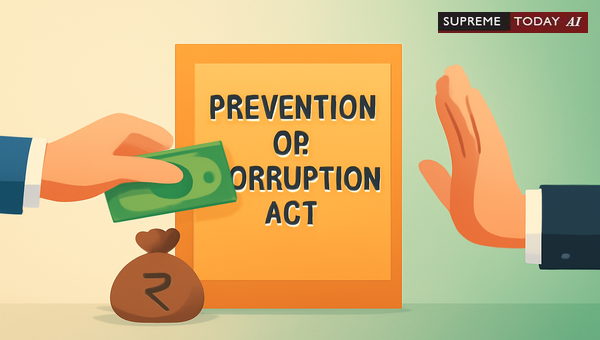
In high-stakes bribery investigations under India's Prevention of Corruption Act (), 1988, the recovery of cash from an accused public servant often makes headlines. But does possessing tainted money automatically spell conviction? Not always. A common misconception is that any money linked to a complainant in a proves guilt. However, courts consistently emphasize that unsourced or illegal money holds little value from the complainant's side without clear evidence of demand and guilty intent.
This brings us to a key legal query: Unsources and Illegal Money is Not Valuable in NI Act Case from Side of Complainant. While the phrasing may seem unclear (possibly referring to unsourced funds in corruption or Negotiable Instruments contexts), it highlights a broader principle in litigation. Courts have ruled that mere possession or recovery isn't enough—prosecution must establish a direct link to . This post breaks down the legal nuances, drawing from landmark judgments.
Disclaimer: This article provides general information based on judicial precedents and is not legal advice. Consult a qualified lawyer for specific cases.
criminalize public servants demanding or accepting gratification other than legal remuneration as a motive or reward. But what qualifies as gratification?
In one case, the court noted: It is not the case of the prosecution that the Head constable used to collect bribe or illegal gratifications on behalf of the Inspector. This underscores that without evidence of a pattern or direct involvement, money in possession doesn't imply corruption. 2010 0 Supreme(Mad) 4683
Trap cases often hinge on phenolphthalein powder-coated notes handed over in a sting. Recovery alone doesn't seal guilt. Courts demand:
The judgment in a Head Constable's appeal clarified: the appellant's conduct, including verifying the instruction with the Inspector and innocently receiving the money, indicated lack of guilty intent. The court acquitted, stressing factual plausibility of the defense. 2010 0 Supreme(Mad) 4682
Conversely, where evidence aligns, conviction holds. In another matter: The possession and recovery of tainted money from the accused and the evidence of P.W.3... would prove the fact that the money received by the accused is nothing, but . Even with a , stood. 2018 0 Supreme(Mad) 3102
presumes acceptance of gratification if tainted money is recovered, shifting the burden to the accused to prove otherwise by .
A reversal highlighted: In absence of any shadow witness... there is nothing on record to say that the appellant demanded . Acquittal followed as demand wasn't proved. 2020 0 Supreme(Chh) 281
A Head Constable received money per superior's instructions, verified it, and pocketed it openly—indicating no secrecy or guilt. No prior complaints named him. Court: Prosecution failed . Appeal allowed, conviction set aside. 2010 0 Supreme(Mad) 4682
Supervisor accused in bill bribe. No granted against co-accused; complainant denied demand. Prosecution to prove the demand for would be fatal and mere recovery... would not entail his conviction. Charges not established. 2020 0 Supreme(Chh) 281
Inspector demanded Rs.10,000, threatened IPC action. Trap succeeded with witness backing. Court applied Section 20: The court relied on the complainant's testimony, corroborated by the panch witness. Conviction upheld (sentence reduced). 2014 0 Supreme(Del) 186
What happens to seized money post-trial? govern.
One ruling: payment of money... cannot be made in favour of the complainant unless it is established that offence was committed in respect of the sum. Money belonged to accused, not stolen from complainant. 2012 0 Supreme(Ori) 329
From the complainant's side, unsourced or unlinked money weakens cases. Courts scrutinize:- Plausibility: Why hand money without demand proof?- Hostility: Turning hostile undermines.
For accused, defenses like routine receipt or no knowledge of illegality can rebut. Always consider for official acts—but not for /. 2021 0 Supreme(Cal) 325
In unrelated but illustrative contexts, like medical negligence complaints alleging blackmail... to extort illegal money, courts demand evidence beyond allegations.
G. S. Gill VS Gurnam Singh
In battles, clarity trumps cash. Unclear origins or missing links doom complainant efforts, as courts prioritize proof over . Stay informed, but for personalized guidance, reach out to legal experts.
#PCAct #BriberyLaw #CorruptionIndia


to induce the complainant to deliver money and not to return the same to convict a person under section 420 I.P.C. ... At the stage of trial, four witnesses were examined from the side of the complainant and five exhibits were also produced. ... The said judgement does not apply to the facts of the present case. In the present case, the conviction is under section 420 IPC and not under section 417 IPC. ... Act comes into operation a....

In that case also the prosecution only relied upon the recovery money in a trap case. Except that there was no evidence on record regarding payment and acceptance of the money as illegal gratification. ... Rather he has very categorically stated that the complainant has neither paid the illegal gratification amount to the respondent or to the person sitting beside him. Suresh has not explained anything asked by the respondent as to whether he has bro....

Mere recovery of tainted money is not sufficient to convict the accused, when the substantive evidence in the case is not reliable, unless there is evidence to prove payment of bribe or to show that the money was taken voluntarily as bribe. ... (AIR 1979 SC 1408) held that mere recovery of tainted money, divorced from the circumstances under which it is paid, is not sufficient to convict the accused when the substantive evidence in the case is #HL_ST....

In the instant case, it is clear that it was not expected by the respondent, Vigilance and Anticorruption wing, Tiruchirapalli or the defacto complainant, while the defacto-complainant / P.W.3 try to hand over the money, as demanded by the co-accused / A1, that he would cleverly direct him to hand over ... ... (v) It is not the case of the prosecution that the Head constable used to collect bribe or illegal gratifications on behalf of the Inspector ....

... (v) It is not the case of the prosecution that the Head constable used to collect bribe or illegal gratifications on behalf of the Inspector/A1. ... The amount handed over by the de facto-complainant and the conduct of the appellant/A2, keeping the money in his shirt pocket would show that he had innocently received the amount, without knowing that the same was an illegal gratification demanded by A1, otherwise, at least, he could not have kept the ... It is #HL_S....

He also threatened to register a case under Section 325 IPC against him in case the aforesaid bribe money was not paid. ... or right side pocket. ... He, however, denied demanding bribe from the complainant and threatening to register a case under Section 325 IPC against him in case the bribe was not paid. ... Though he could not hear the conversation between the complainant and the Insp....
, that would constitute an offence under sub clause (ii) irrespective of whether he employs corrupt or illegal means to obtain such a valuable thing or advantage or not. ... He also threatened to register a case under Section 325 IPC against him in case the aforesaid bribe money was not paid. ... The witness further stated that the complainant took out money from his shirt and extended the same to Giri Raj who took the same in his r....

He also threatened to register a case under Section 325 IPC against him in case the aforesaid bribe money was not paid. ... or right side pocket. ... He, however, denied demanding bribe from the complainant and threatening to register a case under Section 325 IPC against him in case the bribe was not paid. ... Though he could not hear the conversation between the complainant and the Insp....
obtain valuable things or pecuniary advantage by abusing his position, that would constitute an offence under sub clause (ii) irrespective of whether he employs corrupt or illegal means to obtain such a valuable thing or advantage ... Thereafter the appellant came out in a gallery, accepted the bribe money in his right hand and kept the same in the right side pocket of his pant. ... The abuse of official position by a public servant may not necessarily be by use of corrup....
, that would constitute an offence under sub clause (ii) irrespective of whether he employs corrupt or illegal means to obtain such a valuable thing or advantage or not. ... State of Kerala [AIR 1963 SC 1116], abuse means misuse i.e. using one’s position for valuable things, for which it is not intended. The abuse of official position by a public servant may not necessarily be by use of corrupt or illegal means. ... Therefore, in the present case als....

It is also alleged that the accused persons along with Superintendent Engineer have created forged and false documents and used them as genuine for further process of uploading the four different tender notices in wrong ID numbers to conceal them from website of the APWD in order to deprive the innocent contractors from taking part in the tender process and to issue the work order to the men of their choice. The complainant has also made out a specific case of illegal disbursement of money to some persons by the accused.
In absence of any shadow witness and looking to the statement of the complainant that no demand was made by the present appellant, there is nothing on record to say that the appellant demanded illegal gratification. From the entire evidence on record, it is not proved that the appellant demanded money from the complainant as illegal gratification.

The possession and recovery of tainted money from the accused and the evidence of P.W.3, who heard the accused demanding money and saw the accused receiving the money coupled with the fact that the case registered against the de facto complainant by the accused herein, based on the specific complaint of demand of illegal gratification, would prove the fact that the money received by the accused is nothing, but illegal gratification, even though the de facto complainant turned hostile. The accused has not discharged the burden of explaining how he came in possession of the t....

He is duly insured with United India Insurance Co. Ltd., (OP No. 4) under professional indemnity insurance. The allegations of the complainant are unjustified and untenable, only to blackmail and extort illegal money in the form of compensation from them. It was further averred that Dr. Gursewak Singh Gill (OP No. 1), being proprietor of the hospital, is a qualified doctor, duly registered with concerned Medical Council. The OPs had not committed any act to harm the patient and they treated the patient in accordance with general and approved practice.

In that case money found in possession of the accused was alleged to be the money stolen from the complainant. As the money found was belonging to the accused and not the complaint, in course of trial, the accused was acquitted. Hon'ble Supreme Court ordered for payment of money to the accused by holding that payment of money in such circumstances cannot be made in favour of the complainant unless it is established that offence was committed in respect of the sum. Same is the view of Hon'ble Supreme Court in the case of Pushkar Singh v. State of Madhya Bharat and another, A....


An indispensable Tool for Legal Professionals, Endorsed by Various High Court and Judicial Officers
Please visit our Training & Support
Center or Contact Us for assistance

Scan Me!
India’s Legal research and Law Firm App, Download now!


For Daily Legal Updates, Join us on :



 Back to top


