Searching Case Laws & Precedent on Legal Query.....!
Analysing the retrieved Case Laws
Scanned Judgements…!



Searching Case Laws & Precedent on Legal Query.....!
Analysing the retrieved Case Laws
Scanned Judgements…!
Plaintiff's Right to Sell Pending Suit - Generally, the pendency of a suit does not bar a plaintiff from dealing with the suit property, including selling it, unless restricted by court order or specific injunction. The mere filing of a suit does not automatically prevent the owner from transferring the property, but such transfers may be subject to the outcome of the suit or lis pendens principles Sources: 2025 0 Supreme(SC) 1189, ["2023 0 Supreme(Pat) 315"], ["2023 0 Supreme(Del) 1177"], ["2024 0 Supreme(Guj) 759"].
Court Orders and Injunctions - Courts can grant temporary injunctions to restrain the defendant from alienating, damaging, or disposing of the property during the pendency of the suit. However, the refusal to grant an injunction does not necessarily prohibit the plaintiff from selling the property, though such sales may be scrutinized for bona fide transactions and notice of pending litigation Sources: 2025 0 Supreme(All) 2244, ["2023 0 Supreme(Pat) 315"], ["2024 0 Supreme(Guj) 759"].
Effect of Sale During Suit - If the property is sold bonafide for value without notice of the pending suit, the transferee may acquire good title, but the court can still examine whether the transaction is hit by lis pendens or is collusive. The sale does not automatically nullify the plaintiff's rights but may impact the enforcement of any injunction or specific performance decree Sources: 2024 0 Supreme(SC) 1107, ["2024 0 Supreme(SC) 1114"].
Legal Restrictions and Procedure - To prevent undesirable transfers, courts may impose injunctions or restraining orders. The plaintiff can also seek a temporary injunction to prevent alienation during the suit, especially if irreparable injury or loss is likely. Conversely, if no such order is granted, the plaintiff's ability to sell remains, but the sale's validity may be challenged later Sources: 2025 0 Supreme(All) 2244, ["2024 0 Supreme(Guj) 759"].
A plaintiff in a suit for specific performance or injunction can generally sell the suit property pending the suit, provided no court order expressly prohibits such transfer. Courts may grant interim injunctions to restrain alienation if justified by the circumstances, such as risk of irreparable injury or potential damage to the plaintiff's rights. Absent a restraining order, the property remains marketable, and bona fide third-party purchasers may acquire good title, but their rights could be subject to the final outcome of the litigation. Therefore, while selling is permissible in principle, it is advisable for plaintiffs to obtain court directions or injunctions to safeguard their interests during the pendency of the suit.
References:- 2025 0 Supreme(SC) 1189- 2023 0 Supreme(Pat) 315- 2023 0 Supreme(Del) 1177- 2024 0 Supreme(Guj) 759- 2025 0 Supreme(All) 2244
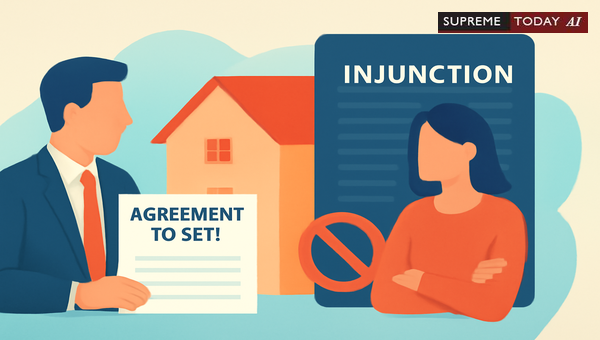
In the realm of property transactions, buyers often face uncertainty when entering into an . What happens if the seller tries to sell the property to someone else before executing the ? A common question arises: Whether Court can Granted Injunction against the Seller from Vehicle Purchased on Agreement—noting that while the query mentions 'vehicle,' the legal principles mirror those for immovable property under Indian law.
This blog post delves into the legal framework governing such scenarios, drawing from established principles under the , and . We'll examine when courts may grant a to restrain the seller (vendor) from (selling or transferring) the property pending a suit for . Note: This is general information based on case law and not specific legal advice. Consult a qualified lawyer for your situation.
An is a preliminary contract where the seller promises to transfer property upon payment of the balance consideration. However, it does not confer ownership or any interest/charge on the property itself. As held in key precedents, it merely gives the buyer (vendee) the right to seek of the contract. Until the is executed, the buyer cannot claim . 2022 0 Supreme(Pat) 615 1995 0 Supreme(Del) 372
An does not create any interest or charge on the property itself. It merely provides the right to the proposed purchaser to seek of the contract.
This distinction is crucial because without a vested interest, courts are cautious about freezing the seller's rights to deal with their own property.
To obtain a under , the plaintiff (buyer) must prove:1. : Strong initial evidence of their claim.2. : Harm to plaintiff outweighs harm to defendant if injunction is denied.3. : Damage that cannot be compensated by money. 2020 1 Supreme 57 1998 0 Supreme(Del) 328
If these are not established, the court typically denies the injunction, allowing the seller to proceed with alienation. The mere filing of a suit does not automatically restrain the seller; an explicit court order is required. 2021 0 Supreme(P&H) 235 2018 3 Supreme 483
In one case, the court emphasized: A plaintiff seeking an injunction must establish a , , and the likelihood of . If the plaintiff cannot demonstrate these factors, the court may deny the injunction. 2020 1 Supreme 57
If the property is jointly owned, a co-owner generally has the right to sell their without others' consent, absent any agreement to the contrary. Courts have ruled that buyers in suits fail if they cannot prove the property remains joint or that sale causes irreparable harm. 2021 0 Supreme(P&H) 801
A co-owner has the right to sell their share of the property. If a property is jointly owned, one co-owner can sell their interest without needing consent from the other co-owners... 2021 0 Supreme(P&H) 801
In a suit for , the buyer must demonstrate continuous to perform. Delay or inaction can doom the claim. For instance, in a case where the plaintiff withdrew an earlier injunction suit and delayed over a year, the court dismissed the appeal, noting: A plaintiff seeking must demonstrate to perform the contract, which was not established in this case. 2024 0 Supreme(P&H) 635
The plaintiff's inaction for over a year indicated lack of readiness. 2024 0 Supreme(P&H) 635
Courts stress ownership documents over agreements to sell for interim relief. In a dispute over land possession, the plaintiff's and inheritance proved prima facie ownership, upholding the injunction despite the defendant's claim. The court highlighted: The importance of , , and in deciding on ... limitations of documents like . 2024 0 Supreme(J&K) 182
Under , sales during pendency of a suit are subject to the suit's outcome (lis pendens). No separate injunction may be needed, but willful violation of an existing order can lead to contempt. 2009 0 Supreme(Del) 1277 2016 0 Supreme(Bom) 1313
One ruling noted: Sale of property during pendency of suit or appeal is hit by —In such cases there is no need to pass protective order under Order 39, Rule 1 of CPC. 2009 0 Supreme(Del) 1277
Plaintiffs choose defendants in injunction suits; third parties (e.g., subsequent buyers) aren't necessary if no relief is sought against them. 2024 0 Supreme(Telangana) 462
A plaintiff has the prerogative to choose parties in a suit and cannot be compelled to include a party against whom no relief is sought. 2024 0 Supreme(Telangana) 462
Other cases reinforce that sellers aren't automatically barred unless injunction is granted, and violations invite penalties under Order 39 Rule 2A CPC. 2011 0 Supreme(Mad) 3784
While rare without strong evidence, injunctions may be granted if:- Buyer proves readiness (e.g., funds ready, no delay). 2017 0 Supreme(Mad) 1190- Seller's alienation would defeat . 2019 0 Supreme(P&H) 2008- Balance consideration deposit is ordered to protect seller. 2009 0 Supreme(Del) 1277
However, pending suit alone doesn't prohibit sale; may prevail if not bound by injunction.
For Buyers:- File suit promptly with evidence of readiness (bank statements, notices).- Seek if urgency exists, but prepare for vacation if weak case.- Consider depositing balance sale price to tilt .
For Sellers:- Disclose encumbrances honestly.- If sued, challenge vigorously.- Note: Post-injunction sales risk lis pendens or contempt.
Key Takeaway: Courts prioritize equity; agreements to sell don't lock property without judicial intervention based on merits.
Generally, courts do not grant injunctions against sellers property under an unless the buyer establishes a strong , irreparable harm, and favorable . The pendency of a suit alone doesn't restrain alienation, protecting sellers' rights while allowing buyers recourse via . 2021 0 Supreme(P&H) 801 2020 1 Supreme 57
Stay informed on property laws to navigate these complexities. For tailored advice, engage a legal expert.
References:- 2022 0 Supreme(Pat) 615 1995 0 Supreme(Del) 372 2020 1 Supreme 57 1998 0 Supreme(Del) 328 2021 0 Supreme(P&H) 801 2021 0 Supreme(P&H) 235 2018 3 Supreme 483 2024 0 Supreme(P&H) 635 2024 0 Supreme(J&K) 182 2024 0 Supreme(Telangana) 462 2009 0 Supreme(Del) 1277
#PropertyLaw #Injunction #SpecificPerformance


The plaintiff filed a suit for possession of the suit property by way of specific performance of the agreement to sell with a consequential relief of permanent injunction. ... Furthermore, there is no explanation from the plaintiff with respect to the period of 01 year 04 months after the injunction suit was withdrawn because the #HL_....

This order will be binding on the parties those who are made parties in the present suit. This order is not binding on any Third Party who has interest in the Suit Property/Land. The plaintiff to pursue the matter and to abide by the direction under Order 39 Rule 3 of C.P.C. ... The plaintiff company had also developed the s....

to the pending suit. ... performance of the agreement to sell with respect to suit property dated 3.5.2005. ... It is his grievance that when he was about to fence the suit land, defendants tried to interfere with the same, hence he filed suit for permanent injunction and there is no question of grabbing suit #HL_STA....

(ii) whether the balance of convenience is in favour of passing the order of injunction; and (iii) whether the plaintiff will suffer irreparable injury if an order of injunction would not be passed as prayed for. ... The mere pendency of a suit does not prevent one of the parties from dealing with the property constituting the subject....

The agreement to sell has not been executed by the respondent/plaintiff, who is owner of suit property because on the basis of a Will, mutation in respect of land in question has been attested in his favour. Who can execute an agreement to sell is the owner and not the stranger. ... because the frame of the suit does not disclose it a....

In this conspectus, as above, I do not find any justifiable ground to entertain the instant first appeal from order and interfere in the rejection order of interim injunction application passed by trial court. ... Even, not executing the registered sale deed in pursuance of the agreement to sell. Thus, in absence of interim injunction plaintiffs are in....

(Oral)--The appellant/defendant has preferred the present appeal under Order 43 Rule 1(r) CPC against the order dated 21.09.2022 passed by learned ADJ-06, West District, Tis Hazari Courts, New Delhi in Suit No.942/2021, whereby an interim injunction has been granted in favour of the respondent/plaintiff ... The facts, in nutshell, are that the respondent has preferred the underlying suit....

The power of attorney was executed in favour of the defendant no. 1 only with a view to entrust the day to day conduct of administrative and procedural functions and not to enable the defendant no. 1 to sell the suit property. ... In a suit wherein the plaintiff prays for specific performance and if the defendant is not restrained from selling the property#HL_....

The power of attorney was executed in favour of the defendant no. 1 only with a view to entrust the day to day conduct of administrative and procedural functions and not to enable the defendant no. 1 to sell the suit property. ... In a suit wherein the plaintiff prays for specific performance and if the defendant is not restrained from selling the property#HL_....

The said suit is pending since 2015 and vide order dated 05.09.2022, the trial Court passed order below Exhs.6 and 7. ... in dispute in the suit,] the Court may by order grant a temporary injunction to restrain such act, or make such other order for the purpose of staying and preventing the wasting, damaging, alienation, sale, removal or disposition of....
Suit for permanent injunction restraining the defendant from claiming any right over the suit property on the basis of the aforesaid agreement to sell in any manner whatsoever and forever,'

Since the parties are aware of the pending suit, they specifically recorded that the defendants had not made any such agreement though it was the subject matter of the two suits filed by stranger. In the pending suit, the plaintiff has also obtained an order of injunction restraining the defendants from transferring the land to third parties. Hence, the defendants agreed to sell after the interim order in the suits imposing restriction on alienation is vacated by the Court an....

The Division Bench of Delhi High Court rejected the said application, affirming the order of the learned Single Judge. In the latest decision of the Apex Court in the case of Thomson Press (India) Ltd. (supra), once again the Apex Court had an occasion to deal with legal position. In this case, despite having notice and knowledge of injunction order passed by the Court prohibiting transaction or alienation of suit property pending suit, the suit property was purchased by the appellan....
When the suit was pending before this Court an order of injunction was granted in favour of the first respondent/plaintiff on 3.2.2010 restraining the appellants/defendants not to sell, settle, mortgage or encumber the suit schedule property. Originally, the above suit was filed before this Court in C.S. No. 1128 of 2009 and subsequently, the suit came to be transferred to the VI Additional City Civil Court, Chennai on the ground of pecuniary jurisdiction and the suit was re-....

If despite this fact the Plaintiffs, who are in the property business, are permitted to freeze transactions of the suit property, it would cause an equitable imbalance. Therefore, the Order directing the Plaintiffs to deposit the balance sale consideration was essential and was, therefore, rightly passed. As has already been observed, the reality is that regardless of whether an injunction has been passed or not, the Appellants/Owners/Defendants would not be in a position to sell the....


An indispensable Tool for Legal Professionals, Endorsed by Various High Court and Judicial Officers
Please visit our Training & Support
Center or Contact Us for assistance

Scan Me!
India’s Legal research and Law Firm App, Download now!


For Daily Legal Updates, Join us on :



 Back to top


