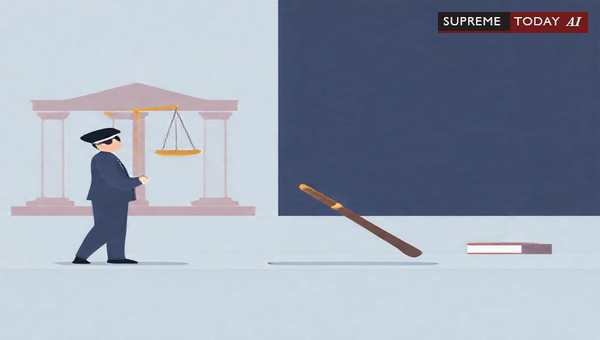
Rules and Regulations Regarding Demotion of Government Officials after Promotion
Promotion and Transfer Procedures - Promotions often involve complex procedures, including statutory requirements and eligibility criteria. For instance, a promotion to Chief Officer required prior promotion and qualification, and transfers or demotions must adhere to legal procedures to be valid. Orders of transfer or demotion challenged in courts emphasize the importance of following due process 2011 0 Supreme(Kar) 205.
Legal Framework for Demotion and Reversion - Reversion from higher posts without proper reappointment or without meeting qualification requirements is illegal. Orders reverting officials must be backed by proper authority and adherence to rules, including the necessity of qualifications and proper promotion procedures 1981 0 Supreme(Gau) 98.
Demotion and Mala Fide Transfers - Allegations of demotion or mala fide transfer, such as from Bhopal to Mainpat, require statutory compliance and can be challenged if the process violates rules or is motivated by malice. The appointment and demotion must follow prescribed statutory and qualification standards 2002 0 Supreme(MP) 623.
Compulsory Retirement and Demotion - Certain rules, such as Regulation 57(a)(i), grant authorities the power to compulsorily retire employees, but such actions must comply with regulations. Orders for compulsory retirement are subject to judicial review for legality and adherence to procedural rules 1997 0 Supreme(Raj) 1123.
Qualification and Competence in Promotions - Candidates promoted to higher posts must possess the necessary qualifications, and failure to do so can render reversion or demotion illegal. The rules emphasize that promotions are contingent upon meeting prescribed qualification standards 2019 Supreme(Online)(Ker) 93668.
Justiciability of Circulars and Orders - Administrative circulars or orders regarding service conditions, deputation, or demotion are not always justiciable unless they violate statutory rules or principles of natural justice. Officers must comply with circulars within stipulated timeframes, and orders must be issued following due process 1989 0 Supreme(J&K) 105.
Promotion Regulations and Selection Procedures - Promotion processes, such as those under the Indian Administrative Service or Income Tax Department, involve departmental promotion committees and adherence to promotion regulations. Non-inclusion of eligible candidates or violation of promotion criteria can be challenged 1981 0 Supreme(Gau) 98, 2021 0 Supreme(Ker) 560.
Seniorities and Demotion - Seniority lists and absorption orders must comply with government circulars. Any violation affecting seniority can be challenged, and courts may direct creation of additional posts to prevent illegal demotions 2020 0 Supreme(SC) 470.
Analysis and Conclusion
The regulation of demotion and reversion of government officials hinges on adherence to statutory rules, proper qualification, and due process. Orders of demotion or transfer must be supported by clear legal authority and must respect principles of natural justice. Violations, such as reversion without proper reappointment or demotion motivated by mala fide intent, are subject to judicial scrutiny and can be declared illegal. Administrative circulars provide guidance but are not always justiciable unless they conflict with statutory provisions. Overall, government officials' demotion and transfer are tightly regulated to prevent arbitrary actions and ensure legality and fairness in administrative decisions.
References: - 2011 0 Supreme(Kar) 205 - 1981 0 Supreme(Gau) 98 - 1997 0 Supreme(Raj) 1123 - 1989 0 Supreme(J&K) 105 - 2002 0 Supreme(MP) 623 - 2019 Supreme(Online)(Ker) 93668 - 2020 0 Supreme(SC) 470 - 2021 0 Supreme(Ker) 560