


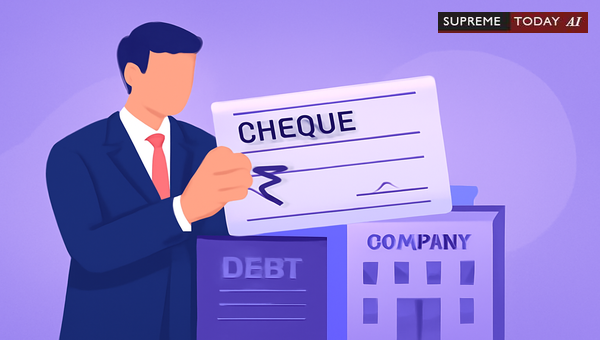
Director's Personal Cheque for Company Debt: Section 138 Liability?
In the complex world of business transactions, cheques are a common payment method, but what happens when they bounce? Particularly intriguing is the scenario where a director issues a cheque from a personal account—or even another company's account—to settle a debt owed by their primary company. A pressing question arises: Towards the Debt a Company the Director of the Company Issued Cheque of Another Company Whether the Second Company’s Cheque is Issued Towards ?
This issue often leads to legal battles under (NI Act), which penalizes due to insufficient funds. But does such a cheque automatically create liability for the director? This blog post delves into the legal nuances, drawing from key judgments and precedents to provide clarity for business owners, directors, and legal professionals. Note: This is general information and not specific legal advice; consult a qualified lawyer for your situation.
Main Legal Finding
Generally, a cheque issued by a director from his personal account towards a debt of the company does not automatically implicate the director for an offence under Section 138 of the NI Act unless the cheque was issued in discharge of a or liability of the company, and the director was in charge of and responsible for the conduct of the company's business at the time of issuance. 2025 2 Supreme 109
The core principle is that liability under Section 138 is personal to the drawer of the cheque. for directors under only kicks in under strict conditions, such as the company being named as an accused alongside specific averments about the director's role. 2022 8 Supreme 618
Key Points to Understand
- The cheque must be drawn on an account maintained by the person for the discharge of a debt or liability. 2025 2 Supreme 109
- If issued from a personal account by a director towards a company liability, under requires the company to be arraigned as an accused. 2025 2 Supreme 109 2022 8 Supreme 618
- Issuance of a personal cheque for a company's liability does not automatically make the director liable under Section 138 unless issued in the capacity of the company's debtor and for its liability. 2025 2 Supreme 109 2022 8 Supreme 618
- Courts emphasize that of directors depends on specific allegations that they were in charge of and responsible for the company's affairs at the relevant time. 2025 2 Supreme 109 2022 8 Supreme 618
- Mere issuance from a personal account to discharge a company's liability does not constitute an offence unless in the director's for a personal . 2025 2 Supreme 109 2022 8 Supreme 618
These points highlight that context matters—the account used, the debt's nature, and procedural compliance are pivotal.
Detailed Analysis: Nature of the Cheque and Account
Under Section 138, the cheque must be drawn on an account maintained by the drawer specifically for discharging the debt. When a director uses a personal account for a company debt, courts scrutinize whether it was issued in a or representatively. Typically, such cheques do not trigger personal liability unless the debt is the director's own. 2025 2 Supreme 109
For instance, if the cheque is from another company (as in the query), it raises questions about authorization and whether that second entity's account was used for a of the first company. Courts have clarified that without proof of the drawer's direct liability, no offence occurs. 2022 8 Supreme 618
Liability of Directors and the Company
The legal stance is clear: A director's personal cheque for company dues does not automatically invoke Section 138 liability unless it's for his personal debt. requires:
- The company as a co-accused.
- Specific allegations of the director being in charge and responsible at issuance. 2025 2 Supreme 109
Without these, prosecution fails. This protects directors from undue personal risk in genuine business scenarios.
Under
extends liability to those in charge of and responsible for the conduct of the business of the company. However, this is not automatic. The company must be prosecuted, and facts must show active involvement. Issuing from a personal or another company's account doesn't suffice alone. 2025 2 Supreme 109 2022 8 Supreme 618
Insights from Related Judicial Precedents
Key rulings reinforce this:
- In a landmark case, the court held that a cheque signed by a director from his personal account towards a liability of the company does not make him liable under Section 138 unless the cheque was issued in his for his personal debt. 2025 2 Supreme 109
- The ruled: In case of a cheque issued on behalf of a company by its authorized signatory, can only be attributed after the company is arraigned as an accused, and liability of directors depends on specific allegations that they were in charge of and responsible for the company's conduct at the relevant time. 2022 8 Supreme 618
Broader Case Law on Personal vs. Company Accounts
Other precedents align with this view. For example, when a cheque is issued from a company's account by a managing director, liability typically attaches to the company, not personally, absent personal debt. Conversely, personal account cheques signal personal obligations. 2021 Supreme(Online)(KER) 51584 2023 Supreme(Online)(DEL) 4065
Courts have noted: Cheque Issued by Company’s Managing Director - The cheque was signed by the respondent (Managing Director) on behalf of the company and issued from the company's account, not a personal account. Here, no personal liability arose as there was no company debt to the payee. 2021 Supreme(Online)(KER) 51584
In cases of personal account usage for company dues, liability hinges on capacity: When a cheque is issued from a personal account, it generally signifies a personal debt. If issued from a company account, it indicates a . 2024 Supreme(Online)(J&K) 1600 2024 Supreme(Online)(DEL) 31132
Further, the liability under hinges on whether the cheque was issued for a debt or liability of the company or in a . Without an existing debt to the payee, no liability. 2021 Supreme(Online)(KER) 51584 2021 Supreme(Online)(MAD) 39936
On : Directors aren't liable if the cheque is from a personal account not tied to corporate debt. 2023 Supreme(Online)(DEL) 16441
These cases underscore: Account type and debt ownership determine outcome.
Practical Recommendations for Businesses
To navigate these risks:
- Always issue cheques from the company's account in the company's name for corporate debts.
- If a director uses a personal cheque, document it as a loan or personal guarantee to clarify capacity.
- In complaints under Section 138, arraign the company and allege specific director responsibility.
- Verify the debt is legally enforceable by the drawer before relying on the cheque.
Proactive compliance avoids costly litigation.
Conclusion and Key Takeaways
In summary, a director issuing a cheque from a personal account or another company's account for the primary company's debt does not automatically trigger Section 138 liability. It requires proof of a personal , company arraignment for vicarious cases, and director responsibility. Courts prioritize substance over form, protecting innocents while enforcing genuine obligations. 2025 2 Supreme 109 2022 8 Supreme 618
Key Takeaways:- Personal account ≠ automatic personal liability for company debts.- needs company as accused + specific averments.- Choose the right account to match debt nature.
This analysis draws from established precedents, but laws evolve—stay informed. For tailored advice, consult a legal expert.
#Section138, #ChequeBounce, #DirectorLiability












