


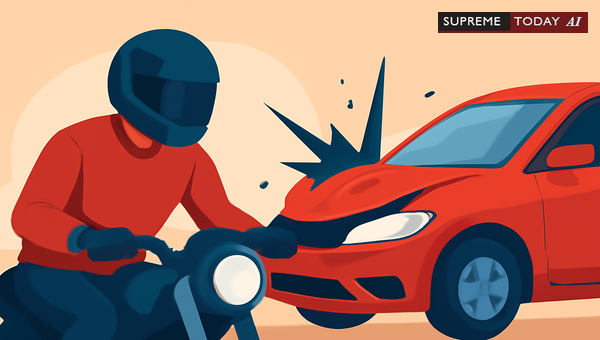
Does Not Wearing a Helmet Equal in India?
In the bustling streets of India, motorcycle accidents are unfortunately common, often sparking debates over fault. A frequent question arises: Does not wearing a helmet lead to ? Riders, accident victims, and even insurers grapple with this, especially when claims are denied or liability is contested. While helmet laws are strict, courts have consistently clarified that skipping a helmet doesn't automatically mean your driving was reckless.
This blog dives into Indian law, key judgments, and practical implications. We'll break down legal standards, judicial views, and why helmet non-compliance is typically a separate issue. Note: This is general information based on precedents, not specific legal advice. Consult a lawyer for your case.
Understanding Under Indian Law
is governed primarily by , which penalizes acts that endanger human life or cause injury through . To prove it, prosecutors must show the manner of driving was careless or dangerous, not just a safety oversight. 1982 0 Supreme(Raj) 431
Similarly, addresses , requiring evidence that the driver's actions were rash and directly caused the fatality. Courts emphasize: rashness means driving without proper care or in a way likely to cause hurt. Helmet absence alone doesn't fit this. 1982 0 Supreme(Raj) 431
As one ruling notes, does not always equate to over-speeding. Even though one may be driving within the speed limit, it is conceivable that one may still be driving rashly and negligently. 2021 0 Supreme(All) 1277
Helmet Laws: Mandatory But Separate Offenses
, and rules like , require helmets meeting ISI standards for two-wheeler riders and pillions. Violating this is a traffic offense with fines, but courts treat it distinctly from driving negligence. 2023 0 Supreme(Ker) 409
Judgments confirm: non-wearing of a helmet is a but doesn't prove rash driving unless linked to reckless maneuvers. In one case, the court held that neglecting to wear a helmet, although negligent in terms of safety, does not amount to rash or negligent driving unless the manner of driving itself was reckless. 2017 0 Supreme(HP) 291
The absence of helmet is a separate offence and does not automatically imply rashness in driving behavior. 2023 0 Supreme(Ker) 409
Judicial Clarifications: Helmet vs. Driving Negligence
Indian courts have repeatedly distinguished between safety gear lapses and driving behavior:
Primary Cause is Driver's Conduct: Tribunals often attribute accidents to the of the other vehicle. For instance, the accident occurred only due to by 1st respondent... fixed 15% on the appellant for not wearing helmet. Helmet non-use led to reduced compensation, not full liability.
- 2021 Supreme(Online)(MAD) 14674
Contributory, Not Causal: Though the accident occurred due to the by the driver of the lorry, since the rider... was not wearing helmet... Courts may deduct 10-20% for no helmet but pin main fault on the at-fault driver. 2023 Supreme(Online)(Tel) 26874
No Automatic Presumption: Mere non registration of vehicle would not result in accident unless there is ... In the absence of any definite stand regarding non wearing of helmet... Lack of helmet or license doesn't cause the crash. 2025 Supreme(Online)(Mad) 34433
Passive Act: Multiple precedents view helmet non-wearing as a passive act not establishing unless it directly worsened the accident. Focus remains on the driver's recklessness. 2023 0 Supreme(Telangana) 995 2022 Supreme(Online)(Kar) 57871 2023 Supreme(Online)(KAR) 1974
Another view: It is not the case of the Insurance Company that because of non-wearing helmet, the accident occurred. 2022 Supreme(Online)(Kar) 44458
Even in claims, Without wearing helmet, driving a vehicle amounts to violation of Motor Vehicle Rules... It shows the negligence on the part of the deceased. But this affects insurance, not accident causation. 2021 0 Supreme(Mad) 788
Exceptions: When Helmet Non-Use Matters More
While generally separate, courts may consider no helmet in:
: 10-25% deduction in compensation if it aggravated injuries. E.g., 15% for no helmet and no license.
- 2021 Supreme(Online)(MAD) 14674
Self-Negligence Claims: If the rider caused the accident via rash driving, no helmet strengthens the defense. The accident has occurred due to the of the claimant himself... not wearing the helmet. 2020 0 Supreme(Kar) 2037
Evidence of Recklessness: High speed, overtaking, or alcohol combined with no helmet can build a negligence case. But Mere speed is not indicative of . Facts matter. 2018 0 Supreme(Bom) 1821 2021 0 Supreme(Ker) 16
Courts stress: The question whether the accident occurred due to the ... would depend upon facts and circumstances of each case. 2018 0 Supreme(Bom) 1821
Implications for Riders, Insurers, and Claims
For Riders: Always wear helmets to comply with law and protect yourself. It minimizes injury severity and avoids compensation cuts.
For Claims: Prove the other driver's rashness via eyewitnesses, skid marks, or CCTV. Helmet absence rarely denies full claim.
Insurers: Can't reject solely on no helmet; must show driver's fault.
Enforcement tip: Pair helmet fines with proof of for IPC charges.
Key Takeaways and Recommendations
Not wearing a helmet does not inherently mean rash or negligent driving. It's a statutory breach, separate from driving manner. 2017 0 Supreme(HP) 291 1988 0 Supreme(SC) 436
Courts Focus on Driving Behavior: Speed, control, and road conditions determine rashness, not gear. 2024 0 Supreme(Kar) 1315 2023 0 Supreme(Ker) 409
Contributory Role: May reduce awards but doesn't shift primary blame.
Road Safety: Helmets save lives; wear them. But liability hinges on conduct.
Recommendations:- Gather evidence of the other driver's negligence in accidents.- Differentiate statutory violations from criminal rashness in court.- Promote awareness: Helmets mandatory, safe driving essential.
Conclusion
Under Indian law, not wearing a helmet does not lead to a presumption of . It's a safety lapse that may contribute to injury claims but requires proof of for liability under IPC Sections 279 or 304A. As courts affirm, negligence must be established based on the manner of driving. 2017 0 Supreme(HP) 291 1988 0 Supreme(SC) 436
Stay safe on roads—helmets on, caution high. For personalized advice, reach out to a legal expert.
References
- 2023 0 Supreme(Ker) 409 - Motor Vehicles Act provisions on helmets.
- 2017 0 Supreme(HP) 291 - Distinction between helmet neglect and rash driving.
- 1988 0 Supreme(SC) 436 - Helmet as statutory offense only.
- Additional cases:
- 2021 Supreme(Online)(MAD) 14674
, 2023 Supreme(Online)(Tel) 26874, etc.












