Searching Case Laws & Precedent on Legal Query.....!
Analysing the retrieved Case Laws
Scanned Judgements…!



Searching Case Laws & Precedent on Legal Query.....!
Analysing the retrieved Case Laws
Scanned Judgements…!
DNA Test in Partition Cases - Primarily used to establish whether plaintiffs are children of the deceased (e.g., Arimuthu) to determine their entitlement to property shares. Courts have the authority to order DNA tests in civil disputes, including partition, where relationship verification is contested. The tests are not ordered routinely but in appropriate cases with specific necessity, especially when paternity is disputed or evidence is insufficient. Sources: 2024 0 Supreme(Mad) 2376, ["- Supreme Court"], ["2025 Supreme(Online)(Kar) 35709"], ["2025 0 Supreme(Kar) 1397"], ["2023 0 Supreme(Kar) 654"], ["- Supreme Court"], ["2023 0 Supreme(Telangana) 453"], ["2025 Supreme(Online)(Mad) 73180"], ["2024 0 Supreme(P&H) 1099"]
Judicial Discretion and Conditions - Courts exercise caution before ordering DNA tests, considering factors like presumption under Section 112 of the Indian Evidence Act, the need for concrete evidence, and the possibility of oral/documentary proof. DNA testing is generally reserved for cases where relationships are genuinely disputed and cannot be conclusively proved through other evidence. Courts also consider the potential disadvantages and sensitivities involved. Sources: 2025 Supreme(Online)(Kar) 35709, ["2025 0 Supreme(Kar) 1397"], ["2023 0 Supreme(Telangana) 453"], ["2024 0 Supreme(P&H) 1099"]
Legal Principles and Restrictions - Courts emphasize that DNA tests should not be ordered as a routine measure. The petitioner must demonstrate a prima facie case or specific denial of paternity, and the necessity of the test must be established. In criminal or matrimonial contexts, DNA testing is more readily ordered, but in civil disputes like partition, it requires careful justification. Sources: 2025 Supreme(Online)(Kar) 35709, ["2025 0 Supreme(Kar) 1397"], ["2023 0 Supreme(Telangana) 453"], ["2024 0 Supreme(P&H) 1099"]
Court Procedure and Evidence - DNA test results are considered strong evidence but require proper scientific procedures and adherence to rules like Rule 6(2) of the DNA Bidhimala, 2018. The samples are collected under official supervision, and the reports are scrutinized in court to determine relationship validity. Disputes over DNA evidence can lead to objections and require detailed examination. Sources: - Supreme Court_SC_CIVIL_REVISION_4694_2022, ["2025 0 Supreme(Kar) 1397"]
Conclusion - In partition and civil disputes, courts balance the need for relationship verification through DNA testing against procedural and evidentiary requirements. DNA tests are permitted in appropriate cases with clear necessity, not as a routine measure, and courts exercise discretion based on the specifics of each case, ensuring fairness and scientific validity. Sources: Multiple references
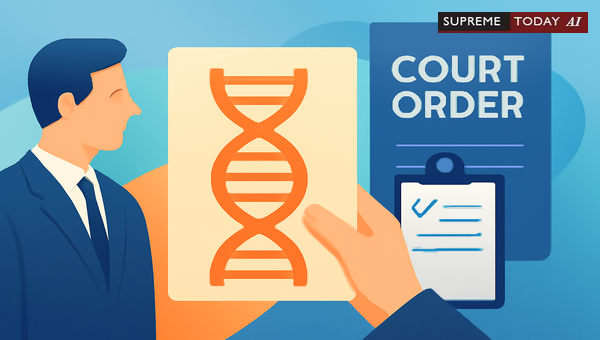
In family disputes over property division, questions about biological relationships can complicate matters. A common query arises: Can courts order a DNA test in ? Partition suits often involve heirs claiming shares based on familial ties, and contested paternity or lineage can stall resolutions. This post explores the legal principles governing DNA testing in such civil cases, drawing from key Indian judgments and related sources.
Understanding when courts exercise discretion to mandate DNA tests is crucial for litigants. While courts have authority, it's not blanket permission—specific conditions apply. Let's break it down.
Courts in India generally have discretion to order DNA tests in partition suits where familial or paternity disputes are central. This is not improper, especially when a party seeks testing to establish biological relations.
In 2018 0 Supreme(AP) 699, the court held that ordering DNA tests to resolve disputes related to matrimony or paternity in partition suits is appropriate and not improper. Similarly, the decision underscores that courts possess wide discretion to direct DNA testing to protect parties' rights in establishing marital relationships and paternity 2018 0 Supreme(AP) 699.
This aligns with broader civil litigation trends. For instance, in a Bangladesh civil revision
- 2024 Supreme(
- )(SC) 8835, the court noted that the plaintiffs have been able to prove a for holding DNA test and set aside a prior judgment to allow the test, citing provisions under the . Such precedents reinforce that DNA evidence can resolve inheritance claims efficiently.Court discretion is not absolute. DNA tests are typically ordered only upon a and when the evidence is relevant to core issues.
In one partition suit 2022 0 Supreme(Cal) 1107, the court dismissed a DNA test application due to the absence of a strong and potential adverse consequences, emphasizing the need to weigh necessity and implications. Courts balance factors like delays, privacy concerns, and test outcomes' impact.
Conversely, in 2018 0 Supreme(AP) 699 and 2018 0 Supreme(AP) 974, courts allowed tests where disputes directly involved familial relations, as they could conclusively settle the matter. A strong foundation—such as preliminary evidence of lineage—often tips the scale.
DNA testing shines in establishing paternity or familial relations, particularly when traditional evidence falls short. In partition suits, where shares hinge on blood ties, it's potentially decisive.
As highlighted in 2020 0 Supreme(Mad) 500, DNA tests are admissible even in disputed paternity scenarios lacking direct evidence, aiding in proving biological links. Courts value their scientific reliability, often requiring expert validation for results' admissibility.
DNA tests are ordered during civil proceedings. Courts direct parties to undergo testing, with results treated as . Samples are collected under supervision, analyzed by accredited labs, and opinions from forensic experts carry weight.
In related civil contexts, like
Sabina Yasmin Sweety and another VS Kajol Rekha being dead her heirs Shawkat Akbar and others. - 2024 Supreme(
- )(SC) 8828, courts reference rules such as , under , ensuring proper sample collection and testing protocols. This procedural rigor ensures fairness.Courts exercise caution to avoid unnecessary tests. Factors include potential emotional harm, costs, and delays. Without a solid , applications may fail 2022 0 Supreme(Cal) 1107.
While partition suits are civil, contrasts with criminal cases illustrate boundaries. In criminal proceedings 2019 0 Supreme(MP) 731, statutory frameworks govern DNA use, differing from civil discretion. Other cases, like those under 2022 0 Supreme(Gau) 210, 2021 0 Supreme(P&H) 906, 2020 0 Supreme(MP) 95, 2019 0 Supreme(Bom) 528, 2018 0 Supreme(Bom) 1289, show DNA's role in paternity proof via blood matching (e.g., As per finding of the FSL, the blood of baby matches with accused Sahidul Ali and the mother 2022 0 Supreme(Gau) 210), but these emphasize investigative needs over civil inheritance.
In 2021 0 Supreme(P&H) 906, courts affirmed : even in the absence of specific provisions, the trial court can use its inherent or ... to order a blood sample of the accused for DNA test. Though criminal-focused, this supports civil flexibility where justice demands.
US contexts 2023 Supreme(US)(ca5) 418 highlight procedural hurdles for post-conviction DNA, but Indian civil suits prioritize dispute resolution over such barriers.
In summary, while Indian courts are willing to leverage DNA technology in partition execution for clarity on lineage, decisions turn on facts, merits, and balanced interests. This evolves with scientific advancements, but privacy remains paramount.
Disclaimer: This post provides general information based on reported cases and is not legal advice. Laws and interpretations vary; consult a qualified attorney for your specific situation. References include 2018 0 Supreme(AP) 699 2018 0 Supreme(AP) 974 2022 0 Supreme(Cal) 1107 2020 0 Supreme(Mad) 500 2012 0 Supreme(Del) 1137 2019 0 Supreme(MP) 731
- 2024 Supreme(
- )(SC) 8835Sabina Yasmin Sweety and another VS Kajol Rekha being dead her heirs Shawkat Akbar and others. - 2024 Supreme(
- )(SC) 88282022 0 Supreme(Gau) 210 2021 0 Supreme(P&H) 906 2020 0 Supreme(MP) 95 2019 0 Supreme(Bom) 528 2018 0 Supreme(Bom) 1289. #DNATestPartition, #PartitionSuit, #FamilyLawIndia


In the present case, the DNA Test is only to ascertain whether the plaintiffs are born to Arimuthu and thereby whether they are entitled to a share in the properties, by way of partition. With the advancement of the technology, it is now possible for getting such a finding by sibling DNA Test. ... The defendants in a suit for partition, aggrieved by the order of the Trial Court ordering ....

the plaintiffs have been able to prove a prima facie case for holding DNA test. ... The impugned judgment and order is herby set aside and the application for holding DNA test is allowed. ... ) Ain, 2014 and submits that to resolve a dispute between the parties the Court can pass an order to hold DNA test.

In cases like partition and civil disputes, Courts are slow in ordering DNA test; the reasons being that there is a presumption under section 112 of Indian Evidence Act with regard to the paternity. ... For the purpose of proving genealogy tree or family tree, a party to the partition suit can always produce oral and documentary evidence and it is not necessary to conduct a DNA test for ....

is not appropriate to order a DNA test.” ... Hence DNA test, in the case at hand, was imperative. It is his submission that the children of defendant No.1 through his second wife/defendant No.2 is wanting to seek partition, though petitioner is a stranger to the family of the plaintiffs. ... In cases like partition and civil disputes, Courts are slow in ordering DNA #H....

The learned counsel submits that even though the DNA test report is in favour of the plaintiff - respondent, but the benefit of DNA test report has been eschewed at the instance of the learned counsel for respondent - plaintiff. ... With that, the samples of appellant and defendant were collected before the Registrar (Judicial) and sent for DNA test. The DNA t....

test. ... test done properly. ... test upon considering the provision as laid down under Rule 6(2) of the Deoxyribonucleic Acid (DNA) Bidhimala, 2018, which was been formulated through DNA Ain, 2014. ... In that suit plaintiff filed an application for DNA test of the child with the sample collection of the said Ain, this rule practically was corroborated for ....

Section 151 of C.P.C. to direct respondent Nos. 1 and 5 along with plaintiff to undergo DNA test by appearing before the Center for Cellular and Molecular Biology, Government of India, Hyderabad, by giving blood samples to conduct DNA test and direct the authorities to conduct test as to biological paternity ... test.” ... (iv) Merely because either of the parties have disputed a factum....

It cannot be proved by DNA test. Further, the petitioners failed to give any reason for their failure to file application for DNA test before the Trial Court. 7. Additional evidence cannot be allowed to be produced without sufficient cause. ... Test. ... For the reasons best known to them, they have not filed any application seeking DNA Test before the Trial Court. Howe....

unwillingness to get the DNA test conducted. ... Petitioner, the defendant of the case, cannot be compelled by respondent No.1-plaintiff to undergo the DNA test. The Court cannot order a DNA test as a matter of course and such a prayer cannot be granted so as to lead to a rowing inquiry so as to collect the evidence for the plaintiff. ... Obviously, therefore, any order for DNA....

... 16 No. 23-70005 requires that a subsequent habeas application “contain[] sufficient specific facts,” and that neither favors nor disfavors Chapter 64 DNA test results over DNA test results obtained through ... If anything, Chapter 64 makes it easier for convicted defendants to seek executive clemency since it expands the avenues by whic....

As per finding of the FSL, the blood of baby matches with accused Sahidul Ali and the mother i.e. victim girl vide exhibit-4. After collecting the blood EDTA vial it was sent to FSL. Blood examination for DNA test for mother, baby and accused father was advised. Ultra Sonography was advised where it was found normal pelvic study.
However, in AK Partap versus Central Bureau of Investigation, Crl. MC 4013 of 2017, decided on 7th July 2017, it has been observed that it is well settled by the Hon'ble Supreme Court that even in cases, where there is no specific provision in any law to authorize a particular course of action, the trial court can use its inherent or ancillary powers in a given situation to do justice. In such type of cases, taking of blood sample of accused for DNA test is necessary. After g....

However, the original copy of relevant memo showing taking of blood sample was not produced before the Court below and, therefore, the Court did not permit the prosecution to introduce the photocopy of this document. (viii)The appellant was last seen with the deceased and was duly identified by Nihal Choursiya (P.W.3). Appellant's blood sample was obtained for the purpose of DNA test. In addition, learned counsel for the appellant placed reliance on the statement of Dr. Sunil....

Blood sample of the said child was also taken for DNA test. All the collected blood samples were forwarded to the Forensic Laboratories for chemical analysis. After completion of the investigation charge-sheet was submitted in the Court of Sessions, Nanded being a special Court under the POCSO Act. [C] Victim girl was admitted in the hospital and she delivered a female child.

The DNA test has been done after obtaining samples. During the pendency of the trial, prosecutrix gave birth to a child.


An indispensable Tool for Legal Professionals, Endorsed by Various High Court and Judicial Officers
Please visit our Training & Support
Center or Contact Us for assistance

Scan Me!
India’s Legal research and Law Firm App, Download now!


For Daily Legal Updates, Join us on :



 Back to top


