Searching Case Laws & Precedent on Legal Query.....!
Analysing the retrieved Case Laws
Scanned Judgements…!



Searching Case Laws & Precedent on Legal Query.....!
Analysing the retrieved Case Laws
Scanned Judgements…!
Woman in a live-in relationship or domestic relationship is entitled to relief under the Domestic Violence (D.V.) Act, 2005, if subjected to domestic violence. The Act defines 'domestic relationship' broadly to include relationships where parties live or have lived together in a shared household, related by marriage, consanguinity, or a relationship in the nature of marriage ["2024 Supreme(Online)(Kar) 43519"] ["2018 0 Supreme(AP) 813"] ["2025 0 Supreme(Ker) 1468"].
Even after the termination of a marriage or a live-in relationship, a woman may still be entitled to remedies if acts of domestic violence occurred during the period of the relationship. The Act's provisions are retrospective in nature, allowing women who were in a domestic relationship at any point to seek relief, including monetary relief, protection orders, and residence orders ["2024 Supreme(Online)(Kar) 43519"] ["2018 0 Supreme(AP) 813"] ["2025 0 Supreme(Ker) 1468"] ["2023 0 Supreme(Bom) 41"].
The definition of 'aggrieved person' under Section 2(a) of the Act includes women who have been, or are, in a domestic relationship with the respondent and have been subjected to domestic violence. This includes women in marriage, live-in relationships, or even past relationships if violence occurred during the relationship's existence ["2018 0 Supreme(AP) 813"] ["2025 0 Supreme(Ker) 1468"] ["2023 0 Supreme(Jhk) 958"].
Women living in a shared household and who are victims of domestic violence can enforce their rights to reside under Section 17 of the Act, even if the relationship has ended, provided they had a right to reside or lived together in the shared household during the relationship ["2024 Supreme(Online)(Kar) 43519"] ["2023 0 Supreme(Jhk) 958"] ["2024 0 Supreme(All) 421"].
The Act also extends protections to women in relationships 'in the nature of marriage' and does not restrict relief to only legally married women. The focus is on the existence of a domestic relationship and acts of violence committed within that context ["2018 0 Supreme(AP) 813"] ["2025 0 Supreme(Ker) 1468"] ["2023 0 Supreme(HP) 284"].
Relief includes protection orders, residence orders, monetary relief, and compensation, which can be sought even if the woman is divorced or the marriage has ended, as long as the violence relates to the period of the domestic relationship ["2024 Supreme(Online)(Kar) 43519"] ["2025 0 Supreme(Kar) 199"] ["2024 0 Supreme(All) 421"].
Analysis and Conclusion:A woman living in a live-in or domestic relationship is entitled to relief under the Domestic Violence Act if she has been subjected to domestic violence during the relationship. The Act's provisions are inclusive of past relationships and do not require the relationship to be ongoing at the time of filing. Even divorced women or women whose relationships have ended can seek protection and relief if violence occurred during their domestic relationship. The key criteria are the existence of a domestic relationship during which violence took place, and the woman’s status as an 'aggrieved person' under the Act ["2024 Supreme(Online)(Kar) 43519"] ["2018 0 Supreme(AP) 813"] ["2025 0 Supreme(Ker) 1468"].
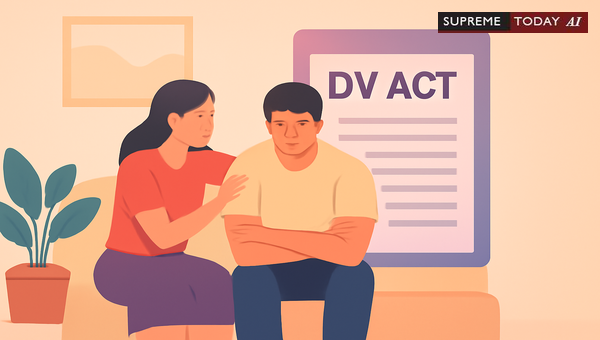
In modern India, live-in relationships are increasingly common, raising important legal questions about protections available to partners, especially women facing domestic issues. A frequent query is: A woman is live in relationship she is entitled for relief under Domestic Violence Act? The short answer is not automatically. Relief under the () depends on whether the relationship qualifies as a ',' specifically one '.' This blog post breaks down the legal nuances, clarifications, and practical advice, drawing from key judgments.
The aims to protect women from violence in domestic settings, offering remedies like protection orders, residence rights, and maintenance. defines a '' to include those between an '' (typically a woman) and the respondent, who live or have lived together in a in a relationship '.' 2024 0 Supreme(Bom) 49
However, not every cohabitation qualifies. The has emphasized that mere living together casually or temporarily does not suffice. The relationship must exhibit essential characteristics of marriage, proven positively by evidence. 2013 8 Supreme 122
To claim relief, courts evaluate factors such as:- Duration of the relationship: Long-term cohabitation may help, but length alone isn't enough.- : Evidence of living together as a family unit.- Pooling of resources: Shared finances, bank accounts, or mutual support.- Domestic arrangements: Handling household chores like spouses.- Sexual relationship: Intimate relations akin to marriage.- Socialization: Publicly presenting as a couple, with social acknowledgment.- Intention and conduct: Parties' intent for a permanent, marriage-like bond. 2013 8 Supreme 122
The Court has clarified: The defines relationship as requiring certain inherent or essential characteristics of a marriage, which must be positively proved. 2013 8 Supreme 122
In a pivotal case, the dismissed a woman's claim under the , ruling that her live-in relationship with a married man, even if long-standing, did not amount to one '' without these traits. The has clarified that a live-in relationship which is not does not amount to a relationship for the purposes of the . 2013 8 Supreme 122
This underscores that casual or non-permanent arrangements fall outside the Act's ambit. The onus is on the woman to provide 'positive proof.' Without it, courts typically deny relief. 2013 8 Supreme 122
While not automatic, some live-in relationships do qualify if they meet the threshold. For instance, courts have upheld maintenance claims where evidence showed a '' under , despite no formal marriage. A woman in a live-in relationship is entitled to maintenance under the , provided the relationship meets the definition of . 2024 0 Supreme(Chh) 488
In another ruling, the court affirmed: – Definition under includes relationships . The courts determined that the applicant's relationship with the respondent fell within this definition despite his claims of prior marriage. 2024 0 Supreme(Chh) 488
Broader interpretations include joint family setups: It would include not only family members living together when they are related by consanguinity, marriage or adoption but also those persons who are living together or jointly as a joint family. 2022 0 Supreme(Jhk) 1021 2022 5 Supreme 542
Even post-divorce or separation, past domestic violence can entitle a woman to relief, as an act of domestic violence once committed, subsequent decree of divorce will not absolve the liability. 2018 Supreme(Online)(Chh) 666
However, exceptions are limited. Casual cohabitations, same-sex relationships (as per older rulings), or those lacking permanency do not qualify. 2013 8 Supreme 122
If eligible, women gain significant rights:- Right to reside in the under , even without title. confers right on every woman in a to reside in irrespective of whether she has any right, title or beneficial interest. 2022 5 Supreme 542- Maintenance under , based on needs and respondent's capacity. Acquittal in related cases (e.g., 498A) doesn't bar DV claims if domestic violence is established. 2017 0 Supreme(P&H) 2702- Protection from , like depriving financial resources. 2017 0 Supreme(P&H) 2702
Courts stress the Act's gender-neutral aspects in some contexts, like proceedings against relatives, but primarily protect women. 2024 0 Supreme(Bom) 49
If facing violence:1. Gather evidence: Photos, witness statements, financial records, rental agreements showing cohabitation.2. Seek legal advice: Consult a lawyer to assess if your relationship meets the criteria.3. File under : Approach a Magistrate directly; a isn't always mandatory. 2022 5 Supreme 5424. Consider alternatives: for maintenance, even if doesn't apply.
Note: Outcomes vary by facts. This is general information, not legal advice—consult a professional for your situation.
Women in live-in relationships are not automatically entitled to relief unless they prove a 'relationship .' Key takeaway: Focus on evidence of marriage-like characteristics. While the law evolves—with courts sometimes recognizing qualifying live-ins—casual setups remain unprotected. 2013 8 Supreme 122
Key Takeaways:- Prove duration, shared life, and intent.- : No blanket coverage for all live-ins. 2013 8 Supreme 122- Eligible cases get residence, maintenance, protection.- Build strong evidence early.
Stay informed, protect your rights responsibly. For personalized guidance, reach out to a legal expert.
#DVAct, #LiveInRelationship, #WomensRightsIndia


Therefore, when any woman is in a domestic relationship as discussed above, is subjected to any act of domestic violence and becomes an aggrieved person, she is entitled to avail the remedies under the D.V. Act. ... The right to live in the shared household, even when the domestic relationship may have been severed for instance when a woman has been widowed owing to the death of her husband, entitles her to have remedies under the D....

Domestic relationship, as defined in Section 2 (f) of Act, 2005 is sufficient for the said purpose and if those in such a relationship live together or have lived together in a shared household, it would entitle the relief of maintenance under Section 2 (d) of the Act. ... An act of domestic violence once committed, subsequent decree of divorce will not absolve the liability of the Respondent from the offence committed or to deny the benefit to which....

domestic relationship as defined under the DV Act, 2005 and she is not entitled to the relief sought under the DV Act. ... If a woman has the right to reside in a shared household, she can accordingly enforce her right Under Section 17(1) of the D.V. Act. If a woman becomes an aggrieved person or victim of domestic violence, she can seek relief under the provisions of the D.V. ... Section 2(a) of the DV A....
Act but has at any point of time lived so or had the right to live and has been subjected to domestic violence or is later subjected to domestic violence on account of the domestic relationship, is entitled to file an application Under Section 12 of the D.V. Act.” ... If a woman has the right to reside in the shared household Under Section 17 of the D.V. Act and such a woman becomes an aggrieved person or victim o....

An act of domestic violence once committed, subsequent decree of divorce will not absolve the liability of the respondent from the offence committed or to deny the benefit to which the aggrieved person is entitled under the Domestic Violence Act, 2005 including monetary relief under S.20, child custody ... Apart from that a literal construction of the provisions would show that even if the woman was in the past in a relationship she would be #HL_STAR....

The DV Act stands on a separate footing from the laws discussed hereinabove. The DV Act provides relief to an aggrieved woman who is subjected to “domestic violence”. ... , the aggrieved woman who was subjected to domestic violence has remedies under the DV Act. ... The “aggrieved person” has been defined by Section 2(a) to mean any woman who is, or has been, in a domestic relationship with the respondent, and alle....

At the time of filling the application, she had suffered domestic violence; therefore, she was entitled to claim relief under the D.V. Act. ... Act but has at any point of time leave or had the right to leave and has been subjected to domestic violence or is later subjected to domestic violence on account of a domestic relationship is entitled to file an application under Section 12 of the D.V. Act. ... Learned cou....

; (q)“respondent” means any adult male person who is, or has been, in a domestic relationship with the aggrieved person and against whom the aggrieved person has sought any relief under this Act: Provided that an aggrieved wife or female living in a relationship in the nature of ... —In this Act, unless the context otherwise requires,— (a) “aggrieved person” means any woman who is, or has been, in a domestic relationship with the respondent and who alleges to have bee....

DV Act is intended to protect a woman from violence in the domestic relationship and is not a penal tool for deterrence. There must be cogent material that the respondent was in domestic relationship and he resorted to domestic violence. ... The right to live in the shared household, even when the domestic relationship may have been severed for instance when a woman has been widowed owing to the death of her husband, entitles her to....

This act has special feature with special provisions under law which provides protection to a woman live in violence free home. ... From the above stated submission made by counsel for the applicant the point to be determined by this Court is whether woman live in relationship is entitled to get maintenance under the Protection of Women from Domestic Violence Act, 2005 or not. 12. ... In fact, under the provisions of the DVC #HL_STA....

It would include not only family members living together when they are related by consanguinity, marriage or adoption but also those persons who are living together or jointly as a joint family such as foster children who live with other members who are related by consanguinity, marriage or by adoption. Therefore, when any woman is in a domestic relationship as discussed above, is subjected to any act of domestic violence and becomes an aggrieved person, she is entitled to avail the remedies under the DV Act.”

Therefore, when any woman is in a domestic relationship as discussed above, is subjected to any act of domestic violence and becomes an aggrieved person, she is entitled to avail the remedies under the D.V. It would include not only family members living together when they are related by consanguinity, marriage or adoption but also those persons who are living together or jointly as a joint family such as foster children who live with other members who are related by consanguinity, marriage or by adoption. The further question is, whether, such a domestic relationship shoul....

When there is a specific enactment of the Domestic Violence Act, 2005, Rule 49 of the Tamil Nadu Pension Rules, 1978 will take a backseat, as Domestic Violence Act, 2005, will come to the driver’s seat and the woman will have to be given protection and the Rule cannot supersede the Statute mentioned supra. In the light of the Domestic Violence Act, 2005, if the live-in-relationship is established, then the woman attains the status of a wife. The march of law happens only while considering the cohabitation that, continues after the death of the first wife.
Therefore, the offspring of such a relationship in the nature of marriage cannot be deprived of their status and rights particularly when Parliament has conferred rights to children of void or voidable marriage under Section 16 of the Act. 49. I hasten to add that the views expressed by this Court is not to give its imprimatur on relationship in the nature of marriage, where no solemnisation of marriage has occurred. The attributes of such a relationship may be spelt out by legislation in the form of an amendment to Section 16 or in any other way. 48. Further, under Domestic Violen....

The term 'economic abuse' has been defined and according to Sub Clause (A) of Clause (iv) to Explanation 1 appended to Section 3 of the Act, economic abuse is deprivation of all or any economic or financial resources to which the aggrieved person is entitled under any law or custom whether payable under an order of a Court or otherwise of which the aggrieved person requires out of necessity. A conjoint reading of the definition of the term 'aggrieved person', 'domestic violence' and 'domestic relation' under the DV Act, 2005 would lead one to the conclusion that if a woman is in a ....


An indispensable Tool for Legal Professionals, Endorsed by Various High Court and Judicial Officers
Please visit our Training & Support
Center or Contact Us for assistance

Scan Me!
India’s Legal research and Law Firm App, Download now!


For Daily Legal Updates, Join us on :



 Back to top


