


Relevancy of Deceased's to Father in Court
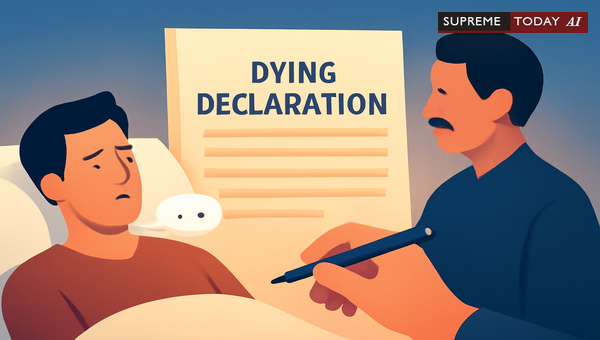
In high-stakes criminal cases, particularly those involving suspicious deaths or homicides, the final words of the deceased can become pivotal evidence. Imagine a scenario where a person, sensing their end is near, confides in their father about the cause of their impending death. Does this carry legal weight in court? The question at hand is: Relevancy of Given by Deceased to his Father Regarding his Death.
This blog post delves into the legal principles governing such statements, primarily under . We'll examine admissibility, reliability factors, counterarguments, and insights from judicial precedents. While this provides general information, it is not a substitute for professional legal advice—consult a qualified lawyer for case-specific guidance.
Legal Framework: Dying Declarations Under
Dying declarations are a cornerstone exception to the , allowing statements by deceased persons about the cause or circumstances of their death to be admissible in court. explicitly permits this, rooted in the ancient maxim —a person facing death is presumed not to lie. 2012 5 Supreme 81 2000 5 Supreme 205
Key elements for a valid :- Made by a person who is dead.- Concerns the cause of death or circumstances leading to it.- Relevant when the cause of death is in issue, such as in homicide trials. 2019 7 Supreme 641 1962 0 Supreme(Ori) 19
The shadow of impending death is by itself the guarantee of the truth of the statement made by the deceased regarding the causes or circumstances leading to his death. 2024 4 Supreme 751
Admissibility of the Deceased's Statement to His Father
When the deceased shares their with their father, it can qualify as a if it directly relates to the death's cause or surrounding events. Courts have recognized statements made to family members, including fathers or fathers-in-law, as . For instance, The statement made by the deceased to his father-in-law, PW19- K.K. Aggarwal disclosing the names of these appellants is . 2018 0 Supreme(P&H) 1535 2018 0 Supreme(P&H) 1517
Conditions for admissibility:- : The statement must be free from influence or prompting. 2022 0 Supreme(All) 1326 2012 5 Supreme 81- Relevance to transaction: It should illuminate threats, actions, or events contributing to the death. 1962 0 Supreme(Ori) 19 2000 5 Supreme 205- No strict formality required: Unlike confessions, dying declarations need not follow rigid procedures but must be voluntary. 2022 6 Supreme 321
In practice, such statements to a father are often scrutinized for proximity to death. The of the deceased regarding cause of his death is admissible in evidence under of the Indian Evidence Act. 2007 0 Supreme(Jhk) 350
Reliability Factors: Corroboration, Mental State, and Timing
While admissible, the evidentiary value hinges on reliability. Courts attach significant weight to dying declarations corroborated by witnesses or circumstantial evidence. 2022 6 Supreme 321 2012 5 Supreme 81
Critical factors:- Corroboration: Alignment with ocular testimony or medical evidence bolsters it. However, the would prevail over the statement of the deceased as to the cause of his death. 2023 0 Supreme(Bom) 13- Mental state: The declarant must be in a . Delirium or incoherence can undermine it. 2000 5 Supreme 205 2019 7 Supreme 641- Timing and apprehension of death: Statements made in close proximity to death or under imminent threat are preferred. Queries like whether the statement which was not made in close proximity of the death of the victim or while he was apprehending his death, can be treated to be his... highlight this scrutiny. 2025 0 Supreme(All) 2313
Delays erode credibility. Witnesses reporting events eight days after the death of deceased and giving statements then face doubt, especially on . 2022 0 Supreme(Kar) 1515 2022 0 Supreme(Kar) 694 2022 Supreme(Online)(Kar) 54372 2022 Supreme(Online)(Kar) 38309
Under English law influences, relevancy requires a hopeless condition and expecting an imminent death. 2024 0 Supreme(Pat) 415
Counterarguments and Limitations
Not all last statements are slam-dunk evidence:- Lack of direct accusation: Vague expressions of despair without implicating others may fall short. 2023 0 Supreme(AP) 933- Hostile witnesses: A father's testimony, if hostile, has no much relevancy, particularly if death manner is undisputed. 2022 Supreme(Online)(Kar) 54372 2022 Supreme(Online)(Kar) 38309- Conflicts with other evidence: Physical or eyewitness proof can override. 2023 0 Supreme(Bom) 13- Post-death recordings: Statements noted long after, like by police without proximity, are suspect. 2025 0 Supreme(All) 2313
Inconsistencies or lack of detail, such as a father not providing detailed statements under ... regarding his son's nature of illness proceeding the death, weaken cases. 2013 0 Supreme(Mad) 3601
Judicial Insights from Precedents
Courts balance these elements holistically. In one case, a father's inquiry and recorded statement detailed family context, aiding the narrative. 2017 0 Supreme(Del) 2497
Another emphasized natural witness evidence, including family statements, over contrived theories. 2018 0 Supreme(P&H) 1535
Overall, while powerful, dying declarations are not infallible—Such a statement would be relevant whatever may be the nature of the proceedings in which the cause of his death comes into question. The relevancy is not confined to the cause of hi.... 2024 4 Supreme 751
Key Takeaways and Recommendations
- Generally admissible if linked to death's cause and voluntary, per .
- Strengthened by corroboration, but vulnerable to overrides or timing issues.
- Strategically vital in homicides, but prepare for challenges on mental state and delays.
Recommendations for legal practitioners:- Document statements meticulously with timestamps and mental state notes.- Seek corroboration from multiple sources.- Anticipate defenses questioning proximity or .
In conclusion, the by a deceased to their father regarding their death is typically relevant as a , but its impact depends on context, timing, and supporting evidence. Courts weigh it carefully, presuming truthfulness under death's shadow yet demanding scrutiny. For tailored advice, engage legal experts.
References:2012 5 Supreme 81 2000 5 Supreme 205 2019 7 Supreme 641 1962 0 Supreme(Ori) 19 2022 0 Supreme(All) 1326 2022 6 Supreme 321 2023 0 Supreme(AP) 933 2023 0 Supreme(Bom) 13 2025 0 Supreme(All) 2313 2022 0 Supreme(Kar) 1515 2022 0 Supreme(Kar) 694 2022 Supreme(Online)(Kar) 54372 2022 Supreme(Online)(Kar) 38309 2024 4 Supreme 751 2024 0 Supreme(Pat) 415 2018 0 Supreme(P&H) 1535 2018 0 Supreme(P&H) 1517 2007 0 Supreme(Jhk) 350 2013 0 Supreme(Mad) 3601
#DyingDeclaration, #EvidenceAct, #LegalRelevancy















