


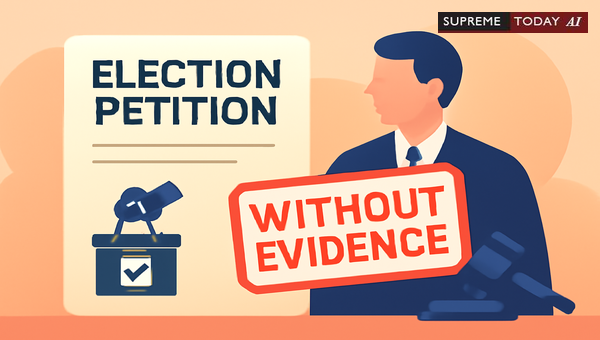
Election Petitions: No Dismissal Without Evidence Review
In the high-stakes world of electoral disputes, petitioners often face swift motions to dismiss their challenges. But can a court simply throw out an without even looking at the evidence? The answer, grounded in established legal principles, is generally no. This post explores the rule that election petitions cannot be dismissed without considering evidence produced, drawing from precedents and related case law.
Whether you're a candidate, voter, or legal professional, understanding this safeguard ensures fair adjudication of election disputes. We'll break down key principles, landmark cases, and practical tips while integrating insights from various judgments.
The Core Issue: Cannot Be Dismissed Without Considering Evidence Produced
Election petitions challenge the validity of elections under statutes like the . A common defense tactic is seeking , but courts typically must delve deeper. As per judicial mandates, an cannot be dismissed summarily without considering the evidence produced. The court must examine grounds, frame issues, record evidence, and give parties opportunities—except in narrow cases under specific rules like 2017 0 Supreme(MP) 954.
This principle upholds , preventing premature rejection of potentially meritorious claims. Dismissal may occur for lack of , but even then, evidence presentation is often required before a final call 2010 0 Supreme(MP) 96 2010 0 Supreme(MP) 99.
Key Legal Principles Governing Evidence Consideration
Courts follow strict yet fair protocols in election matters:
Mandatory Examination of Evidence: Judges cannot bypass evidence review. The has stressed that dismissing without this step is improper, especially when evidence is adduced 1996 0 Supreme(AP) 395 2016 0 Supreme(MP) 518.
Grounds for Potential Dismissal: Petitions lacking or particulars risk dismissal, but only after allowing evidence 2010 0 Supreme(MP) 96. Vague allegations may falter, yet petitioners get a chance to substantiate claims 2017 0 Supreme(Ker) 12 2015 0 Supreme(Ker) 306.
Pleading Standards: Petitioners must clearly state . Bald assertions invite scrutiny, but dismissal follows evidence opportunity. For instance, in cases involving annexures, if they form part of the petition, they need signing and verification; mere evidence documents do not 2023 0 Supreme(HP) 391. The court clarified: What would be noticed from a perusal of sub section 2 of of the Representation Act that it does not refer to a document, which is produced as evidence of the averments of the but to the averments of the 2023 0 Supreme(HP) 391.
These rules align with broader civil procedure but adapt to election law's urgency.
Landmark Case Law Reinforcing the Rule
Several decisions cement this protection:
: Reiterates no dismissal solely for absent without evidence presentation 2010 0 Supreme(MP) 96.
: Mandates deciding petitions on merits post-grounds examination and 2010 0 Supreme(MP) 99.
: Even in civil contexts, petitions warrant evidence review before dismissal 1996 0 Supreme(AP) 395.
These cases emphasize merits-based evaluation over technical knockouts.
Insights from Related Judgments: Pleadings, Presentation, and
Other rulings provide nuance, highlighting when petitions survive initial hurdles:
Pleading Deficiencies: Strict pleading rules apply, but not all lapses are fatal. In one case, lacking a document list wasn't grounds for dismissal if averments were complete: Where contents of documents are fully incorporated in the petition itself and the documents are produced merely as evidence of the averments made in the petition, non-supply of such documents would not be fatal 2010 0 Supreme(Raj) 193. Similarly, partial lack of particulars doesn't doom the entire petition; trial resolves it 2009 0 Supreme(Del) 1186.
Presentation Requirements: Petitions must often be personally presented, or risk dismissal. Under , , non-personal filing by the candidate is fatal, but objections must arise during trial 2024 0 Supreme(All) 1611.
Under : Non-compliance with (contents) is often fixable, unlike violations. Defects like unsigned copies by advocates aren't always lethal if served properly 2024 2 Supreme 305 2010 0 Supreme(Bom) 1198. The court noted: Equally, the cannot be dismissed because the petition is presented by the election petitioner through an Advocate 2010 0 Supreme(Bom) 1198.
Evidence in Appeals and Trials: must hear evidence, even at costs to petitioners: ready to hear any evidence which the petitioner might desire to bring forward, such evidence would have to be produced at the sole cost of the petitioner
. err by preempting trial merits 2023 5 Supreme 408.
Pleading: Essential details under are mandatory; absence leads to dismissal post-review, with costs for frivolous claims 2010 0 Supreme(Bom) 1198.
These cases show courts balance technicalities with substance, often favoring evidence-led decisions.
Practical Recommendations for Petitioners
To navigate these rules effectively:
Articulate Clearly: Avoid vagueness; specify particulars to withstand scrutiny 2017 0 Supreme(Ker) 12.
Prepare Robust Evidence: Anticipate motions; compile supporting documents early.
Counter : Argue for and , citing precedents like V. Narayanswamy2010 0 Supreme(MP) 99.
Address Common Pitfalls: Ensure personal presentation where required, verify annexures, and supply true copies 2024 0 Supreme(All) 28 2024 2 Supreme 305.
Remember, while these steps bolster chances, outcomes depend on case specifics.
Conclusion and Key Takeaways
Generally, election petitions cannot be dismissed without considering evidence produced, promoting democratic integrity through fair trials. Courts must frame issues and record proof before merits adjudication, barring exceptional procedural lapses.
Key Takeaways:- Evidence review is mandatory unless exceptions apply 2017 0 Supreme(MP) 954.- Clear pleadings are vital, but opportunities precede dismissal 2010 0 Supreme(MP) 96.- Leverage precedents to resist premature rejection.
This overview draws from cited judgments (e.g., 2017 0 Supreme(MP) 954 2010 0 Supreme(MP) 96 2010 0 Supreme(MP) 99 1996 0 Supreme(AP) 395 2017 0 Supreme(Ker) 12 2015 0 Supreme(Ker) 306 2016 0 Supreme(MP) 518) and related sources. It is for informational purposes only—not legal advice. Consult a qualified attorney for your situation.
Stay informed on election law to protect electoral rights.
#ElectionLaw, #ElectionPetition, #LegalInsights















