


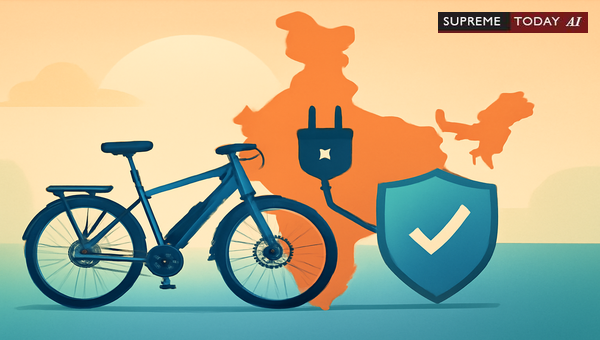
Legal Status of Electric Bicycles in India: Key Rules
Electric bicycles, or e-bikes, have surged in popularity across India as an eco-friendly and convenient mode of transport. But what is the legal status of an electric bicycle? Are they treated like regular bicycles, or do they fall under motor vehicle regulations? With varying local laws and increasing accident reports involving electric infrastructure, understanding these rules is crucial for riders, manufacturers, and authorities alike.
This comprehensive guide explores the classification, relevant laws, case insights, and practical considerations for e-bikes in India. Note that this is general information based on existing statutes and precedents—consult a legal professional for advice specific to your situation.
Definition and Classification of Electric Bicycles
An electric bicycle (e-bike) is generally classified as a bicycle equipped with an electric motor to assist with propulsion. However, its legal status hinges on specifications like motor power and top speed, which can vary by jurisdiction.
In India, the Motor Vehicles Act, 1988 plays a pivotal role. It defines a motor vehicle as any mechanically propelled vehicle. E-bikes with a motor power not exceeding 250 watts and a maximum speed of 25 km/h are often classified as bicycles, exempting them from license or registration requirements. Exceeding these limits may reclassify them as motor vehicles, subjecting them to stricter rules.
Relevant Legal Provisions
Motor Vehicles Act, 1988
This cornerstone legislation governs road usage:1. E-bikes meeting the 250W/25 km/h criteria are typically treated as bicycles.2. Riders must follow bicycle traffic rules, such as using cycle lanes where available.
Electricity Act, 2003
The legal profession's categorization under the Electricity Act as 'Domestic (Urban)' indicates that non-commercial activities, including personal e-bike use, may not attract commercial tariffs2020 0 Supreme(Cal) 27. This is relevant for charging e-bikes at home, emphasizing domestic usage.
Additionally, safety regulations under this Act and Central Electricity Authority guidelines mandate proper wiring and maintenance to prevent hazards, which indirectly impacts e-bike safety.
Case Law Insights on E-Bikes and Related Incidents
Indian courts have addressed e-bike-related issues primarily through accident liability, negligence in electric infrastructure, and illegal connections. While direct e-bike classification cases are emerging, precedents on bicycles and electricity provide valuable guidance.
Negligence and Liability in Electrocution Cases
Courts have established that negligence in maintaining electric lines can lead to liability under the Electricity Act, 2003 2023 0 Supreme(J&K) 339 2002 0 Supreme(Ker) 23. For instance, in multiple incidents, cyclists suffered fatal electrocution from exposed wires:- On 16.05.2007, at DDA Flats, Kalkaji, New Delhi, a rider lost his life when an exposed live electric wire fell down upon his bicycleMUNNI DEVI vs GOVT. OF NCT AND ANR. - Delhi-8432_2018)
MUNNI DEVI vs GOVT. OF NCT AND ANR. - Delhi
2021 0 Supreme(Del) 5. The petitioner sent a legal notice to BSES Rajdhani after a status report, highlighting electricity suppliers' duty.In another case, the deceased rode a bicycle at night post-rain on a water-inundated road, leading to electrocution. The court held respondents liable, stating: Any omission in preventing the discharge of high voltage renders them responsible for compensation 2023 0 Supreme(J&K) 658 2023 0 Supreme(J&K) 126.
Illegal Electric Connections and Bicycle Repairs
Cases reveal hazards from improper wiring:- Defendant No.3 took an illegal electric connection from his house to his bicycle repairing shop using damaged (कटा-फटा) electric wire, causing contact hazards 2025 Supreme(Online)(CHH) 602.- Similar issues arose where parties couldn't draw electric lines due to court status quo orders, underscoring legal constraints on electric setups 2025 0 Supreme(Ker) 2024.
These precedents extend to e-bikes: faulty charging or motor wiring could invite liability.
Other Notable Incidents
- A case involved petitioners carrying an electric motor on their bicycle for repair, facing allegations of theft, showing scrutiny on e-bike components
LALAM KHAN Vs The State - Patna
. - Courts dismissed claims where non-seizure of bicycles weakened prosecution but upheld eyewitness accounts in accidents 2018 0 Supreme(Mad) 2969.
Key Considerations for E-Bike Users
Usage Regulations
- Comply with limits: Stay under 250W and 25 km/h to avoid motor vehicle status.
- Adhere to traffic rules: No helmets mandated like motorcycles, but lights and reflectors are advisable, especially at night 2011 0 Supreme(Mad) 1915.
Liability in Accidents
If an e-bike crash occurs, factors like bicycle condition, traffic adherence, and infrastructure maintenance determine fault:- Negligent riding (e.g., without light in the bicycle) may shift blame to the rider 2011 0 Supreme(Mad) 1915.- Electricity authorities bear responsibility for exposed wires, as in cases where wire fell down upon his bicycleMUNNI DEVI vs GOVT. OF NCT AND ANR. - Delhi-8432_2018).- Non-seizure of the bicycle isn't fatal if eyewitnesses confirm details 2018 0 Supreme(Mad) 2969 2009 0 Supreme(MP) 221.
Safety Measures and Illegal Use
Avoid illegal connections: Cases like unauthorized motors or burglary tools with electric drills near bicycles highlight risks 2025 Supreme(HK)(HKDC) 192. Ensure compliant charging to evade tariffs or hazards 2025 0 Supreme(Ker) 2024.
Conclusion and Recommendations
The legal status of electric bicycles in India generally aligns with traditional bicycles if they meet motor power (≤250W) and speed (≤25 km/h) criteria under the Motor Vehicles Act, 1988. They evade motor vehicle formalities but must comply with traffic and electricity safety norms.
Accident liability often ties to negligence in electric infrastructure, with courts awarding compensation for failures like exposed wires or poor maintenance 2023 0 Supreme(J&K) 126. As e-bikes grow, expect evolving regulations.
Key Takeaways:- Verify local rules for classification.- Prioritize safety: Proper wiring, lights, and infrastructure awareness.- In accidents, document negligence (e.g., faulty wires) for claims.- Stay updated on legislative changes.
Disclaimer: This article provides general insights and is not legal advice. Laws vary by state; seek expert counsel.
References:- Motor Vehicles Act, 1988- Electricity Act, 2003- Cited cases: 2020 0 Supreme(Cal) 27, 2023 0 Supreme(J&K) 339, 2002 0 Supreme(Ker) 23, 2025 Supreme(Online)(CHH) 602, MUNNI DEVI vs GOVT. OF NCT AND ANR. - Delhi-8432_2018),
MUNNI DEVI vs GOVT. OF NCT AND ANR. - Delhi
, 2021 0 Supreme(Del) 5, 2023 0 Supreme(J&K) 658, 2023 0 Supreme(J&K) 126, 2025 0 Supreme(Ker) 2024, 2025 Supreme(HK)(HKDC) 192,LALAM KHAN Vs The State - Patna
, 2018 0 Supreme(Mad) 2969, 2011 0 Supreme(Mad) 1915, 2009 0 Supreme(MP) 221 #EBikeLawIndia, #ElectricBicycleLegal, #IndiaTrafficLaws















