


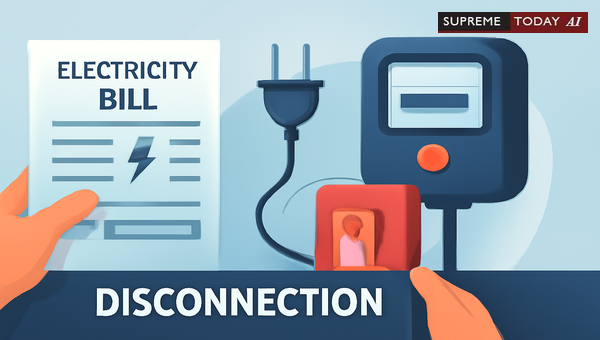
State Departments Can't Recover Electricity Dues After 2 Years: Key Legal Insights
Imagine receiving a notice from your state electricity department demanding payment for bills from years ago, threatening to cut off your supply. Can they do that legally? The question on many minds is: State departments can’t recover dues if more than two years have passed. This post dives into the legal framework, primarily under the , explaining why like disconnection become off-limits after this period, while offering practical guidance.
We'll explore statutory provisions, court interpretations, and related principles from government dues recovery cases to help you understand your rights. Note: This is general information based on legal precedents and should not be taken as specific legal advice. Consult a qualified lawyer for your situation.
Main Legal Finding
State departments generally cannot recover dues through , such as disconnection of electricity supply, if more than two years have passed from the date the dues first became due. This stems from under . 2024 0 Supreme(Bom) 686
The provision states: no sum due from any consumer under this Section shall be recoverable after the period of two years from the date when such sum became first due unless such sum has been shown continuously as recoverable as arrear of charges for electricity supplied. 2024 0 Supreme(Bom) 686 This aims to protect consumers from indefinite threats of service disruption.
Key Points on the 2-Year Limitation
- Explicit : Section 56(2) prescribes a strict two-year window for recovery actions. 2024 0 Supreme(Bom) 686
- Starting Point: The clock begins when electricity charges first became due, typically upon bill issuance or departmental acknowledgment. Without bills or acknowledgment in this time, the claim is barred. 1999 8 Supreme 319 1986 0 Supreme(Raj) 7
- No : Licensees or departments cannot disconnect supply or use similar coercive steps post-limitation, though might still be an option. 1986 0 Supreme(Raj) 7 2024 0 Supreme(Bom) 686
These rules ensure fairness, preventing perpetual leverage over consumers.
Detailed Analysis of Legal Provisions
Understanding 'First Due' and Billing Requirements
Courts interpret the limitation as starting from when charges first became due, often linked to billing or acknowledgment. The of two years commences from the date when the electricity charges first became due, which is generally when bills are issued or when the department has acknowledged the debt. 1986 0 Supreme(Raj) 7 If no bills or acknowledgments occur within two years, recovery is barred. 1999 8 Supreme 319
This prevents departments from reviving stale claims without prior action.
Restrictions on Disconnection and Coercion
Post two years, disconnection is explicitly barred. Departments cannot invoke laws like the , for forced recovery. The law restricts the licensee or department from disconnecting supply or taking coercive recovery steps after the expiry of the two-year period. 1986 0 Supreme(Raj) 7 Civil remedies may persist, but not aggressive tactics. 2024 0 Supreme(Bom) 686
Judicial Clarifications
Judgments reinforce strict adherence. In cases without timely billing or acknowledgment, actions like disconnection are invalid. 1999 8 Supreme 319 1986 0 Supreme(Raj) 7
Broader Context: Recoveries in Government Dues
This principle echoes in other government dues scenarios, highlighting a pattern against delayed coercive recoveries.
For instance, recoveries from retiral dues after extended delays are often impermissible. In one case, recovery from gratuity after more than two years from retirement was set aside, as the department failed to follow civil suit procedures. Petitioner attained the age of superannuation on . The period of six months expired on , however, respondents by the impugned action made recovery of the dues after more than two years from the date of retirement without following the prescribed procedure. 2017 0 Supreme(MP) 111 The court held: recovery made from gratuity dues of petitioner is uncalled for in law. 2017 0 Supreme(MP) 111
Similarly, withholding retiral dues without due process or after undue delays is deemed . Non-payment of retiral dues/GPF amount for last 17 years is not only purely but also plainly . 2024 0 Supreme(Chh) 113 Courts directed refunds with interest, emphasizing timely action. 2024 0 Supreme(Chh) 113
In pension schemes, cutoff dates and eligibility tied to timely claims prevent belated recoveries or denials. When a benefit is granted in relaxation of Scheme, it is open for the Government to put conditions for eligibility. 2020 0 Supreme(SC) 141 This underscores that governments must act within reasonable limits. 2020 0 Supreme(SC) 141
Even in non-retiral contexts, like excess payments, recoveries after years (e.g., ten years post-retirement) are unjustified. Having regard to the above, we are of the view that an attempt to recover the said increments after passage of ten years of his retirement is unjustified. 2024 Supreme(Online)(CAT) 3052
These cases illustrate a judicial reluctance to allow coercive or recoveries beyond limitation periods, aligning with electricity dues principles.
Exceptions and Counterarguments
- Acknowledgments Extend Time: Fresh acknowledgment within two years may extend the period, up to three years max. 1986 0 Supreme(Raj) 7
- Civil Remedies: Departments might file suits, but not disconnect. 2024 0 Supreme(Bom) 686
- No Misrepresentation: Recoveries from employees/retirees without fraud are barred, especially for . 2024 0 Supreme(MP) 597 (related desc)
Practical Recommendations for Consumers and Departments
- For Consumers: Check bill dates and challenge disconnections for dues over two years old. Demand proof of timely billing/acknowledgment.
- For Departments: Issue bills and record acknowledgments within two years to preserve rights. 2024 0 Supreme(Bom) 686 Avoid coercive steps post-limitation; opt for civil routes.
- Timely Action: Departments should ensure that bills are issued and acknowledgments are recorded within two years of the dues becoming first due. 1986 0 Supreme(Raj) 7
Key Takeaways
- Two-Year Bar on Coercion: No disconnections for electricity dues over two years without continuous arrears showing. 2024 0 Supreme(Bom) 686
- Consumer Protection: Courts prioritize fairness, barring delays. 1999 8 Supreme 319
- Proactive Steps: Both sides benefit from timely documentation.
In summary, while departments have recovery options, the , draws a clear line at two years for . Related precedents on retiral and other dues reinforce this, promoting accountability. Stay informed, act promptly, and seek professional advice for your case.
References:- 2024 0 Supreme(Bom) 686: Section 56(2) limitations.- 1999 8 Supreme 319: Billing and 'first due' interpretation.- 1986 0 Supreme(Raj) 7: restrictions.- Additional cases: 2017 0 Supreme(MP) 111, 2024 0 Supreme(Chh) 113, 2020 0 Supreme(SC) 141, 2024 Supreme(Online)(CAT) 3052
#ElectricityDues #LegalLimitation #ConsumerRights















