


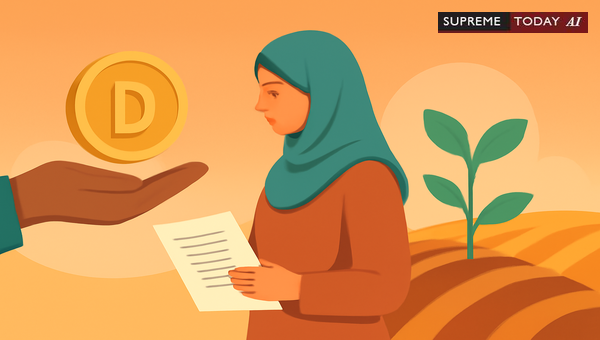
Enforcing Dower Promised as Agricultural Land in : A Guide for Muslim Wives
In Muslim marriages, the (marriage contract) holds significant legal weight, often detailing the —a mandatory obligation from husband to wife. But what happens when a husband promises agricultural land as dower and later refuses to transfer it upon demand? This is a common yet complex issue under Muslim personal law. If you're a Muslim woman facing this scenario—A Muslim woman was promised by her husband to give his agricultural land as dower, recorded in the —understanding your enforcement options is crucial.
This article explores the legal pathways, drawing from established precedents. Note: This is general information based on legal principles and should not be taken as specific legal advice. Consult a qualified lawyer for your case.
Understanding Dower (Mehr) Under Muslim Law
is not mere consideration for marriage but an effect of the contract imposed by the law on the husband
. It is a statutory and moral duty, classified as either (payable immediately) or (payable later, typically on divorce, death, or demand) 1980 0 Supreme(SC) 265 1981 0 Supreme(SC) 282 1997 0 Supreme(P&H) 1535.
dower, like the agricultural land in question, is treated as a debt against the husband. As clarified, dower on the dissolution of marriage by death or divorce is not a contingent debt because one of the two events is bound to happen 2014 7 Supreme 331. Importantly, while the wife generally cannot demand it before a triggering event, the husband can pay earlier, and refusal allows enforcement as a debt 2014 7 Supreme 331 1981 0 Supreme(SC) 282.
When specified in the , this promise creates a , making the land (or its value) recoverable like any debt 1980 0 Supreme(SC) 265 1981 0 Supreme(SC) 282.
The Evidentiary Role of the
The serves as of the dower agreement. The amount of the mahr is generally stated in the , or marriage contract 2007 0 Supreme(Del) 2240. Courts recognize it as proof of the obligation, supporting claims for recovery 1980 0 Supreme(SC) 265 1981 0 Supreme(SC) 282. Without it, the wife may need additional evidence, but its presence strengthens the case significantly 1980 0 Supreme(SC) 265.
Step-by-Step: How a Wife Can Enforce Dower if Husband Refuses
If the husband refuses on demand, the wife has clear remedies under civil law, as dower is enforceable as a debt 1980 0 Supreme(SC) 265 1981 0 Supreme(SC) 282. Here's the process:
1. Make a Formal Demand
- Start by issuing a written demand for the land or equivalent value. This documents refusal, essential for court.
- dower is payable upon dissolution of marriage by death or divorce, but it is also treated as a debt that the husband can pay at any time during his lifetime 1981 0 Supreme(SC) 282 1997 0 Supreme(P&H) 1535.
2. File a for Recovery
- Initiate a in the appropriate civil court for recovery of the dower (land or value). Courts can pass a decree directing transfer or payment 1980 0 Supreme(SC) 265 1981 0 Supreme(SC) 282.
- Dower 'Mehr' is an obligation imposed upon the husband... and is enforceable as a debt 1980 0 Supreme(SC) 265. The is key evidence.
3. Execute the
- If the husband ignores the decree, execute it via of his property, including other lands or assets 1980 0 Supreme(SC) 265 1981 0 Supreme(SC) 282.
- The wife stands akin to a , with full legal recourse.
Key Legal Precedents Supporting Enforcement
Courts consistently uphold these rights:- Dower as Debt: Mehr or dower... constitutes a legal obligation of the husband towards the wife... its payment is a statutory and moral duty 1980 0 Supreme(SC) 265 1981 0 Supreme(SC) 282 1997 0 Supreme(P&H) 1535.- Promises: Recorded agreements are binding contracts, enforceable via suit 1980 0 Supreme(SC) 265 1981 0 Supreme(SC) 282.- Related Contexts: In maintenance and divorce cases, dower rights persist. For instance, post-divorce, a wife retains dower claims alongside 2007 0 Supreme(Del) 2240. Even in (wife-initiated divorce), where she may relinquish part of dower, full enforcement remains possible if not waived
2025 0 Supreme(Guj) 1304.
While some sources discuss —where the wife offers to give up her claim to Mahr (dower) 2021 0 Supreme(Ker) 452—they affirm dower's independent enforceability unless explicitly forfeited. Agricultural land as dower is valid, provided it's specified 2014 7 Supreme 331.
Exceptions, Limitations, and Practical Tips
- Disputes: If the husband challenges validity, prove the promise via and witnesses 1980 0 Supreme(SC) 265.
- No Recording: Harder, but oral promises may be upheld with evidence 1980 0 Supreme(SC) 265.
- Timing: Wife typically demands post-event, but debt nature allows flexibility 2014 7 Supreme 331.
Recommendations:- Gather , demand notices, and property proofs.- File promptly to avoid limitation periods.- Seek counsel experienced in Muslim personal law.- Consider mediation, though court is binding.
Broader Context: Women's Rights in Muslim Law
Muslim law empowers wives beyond dower. In , her right is absolute and does not require her husband's consent per Quranic provisions, overriding traditions 2022 Supreme(Online)(KER) 50494. Post-divorce maintenance and child support further protect rights 2007 0 Supreme(Del) 2240. Enforcement aligns with these principles, ensuring financial security.
Key Takeaways
| Aspect | Action ||--------|--------|| Demand | Written notice to husband 1981 0 Supreme(SC) 282 || Suit | Civil recovery in court 1980 0 Supreme(SC) 265 || Decree | Execute via property attachment 1980 0 Supreme(SC) 265 1981 0 Supreme(SC) 282 || Evidence | primary 2007 0 Supreme(Del) 2240 |
In summary, a Muslim wife can robustly enforce dower like agricultural land through civil proceedings if documented in the . This upholds the sacred obligation of Mehr. Always consult a legal expert for tailored guidance, as outcomes depend on specifics.
References:1. 1980 0 Supreme(SC) 265: Dower as enforceable debt.2. 1981 0 Supreme(SC) 282: Mehr recovery via suit.3. 1997 0 Supreme(P&H) 1535: Nature of dower obligation.4.
: Dower as legal imposition.5. 2014 7 Supreme 331: dower as non-contingent debt. #DeferredDower #MuslimLaw #WifeRights












