


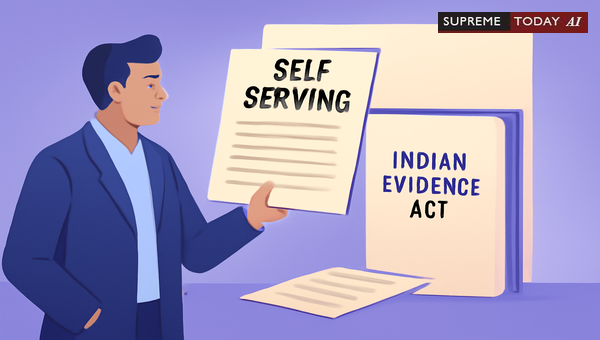
What Is a Document in Indian Law?
In legal proceedings, evidence plays a pivotal role in establishing facts and swaying judicial outcomes. However, not all documents carry equal weight. One category often met with caution is the document. If you've ever wondered, What is a document?, this comprehensive guide breaks it down, focusing on its treatment under Indian law. We'll explore definitions, legal standards, case examples, and practical insights to help you navigate this nuanced area of evidence law.
Understanding documents is crucial for litigants, lawyers, and anyone involved in disputes, as courts typically view them skeptically due to potential bias. This post draws from key judicial precedents and statutory provisions to provide clarity—remember, this is general information and not specific legal advice. Consult a qualified attorney for your situation.
Definition and Characteristics of Documents
A document is generally a piece of evidence created or produced by a party to bolster their own claims or defenses in a legal matter. These documents are often internal records, communications, or statements lacking independent verification, making them prone to skepticism in court.
Key Features
- Internal Nature: They typically consist of internal communications without external , such as memos or confirmations prepared solely by one party. For instance, a bunker confirmation relied upon without attribution to an independent party was deemed completely and unilateral 2018 0 Supreme(Bom) 1346 2015 0 Supreme(Bom) 534.
- Authenticity Concerns: Lacking stamps, dates, or traceability, these documents raise fabrication doubts. Courts note they may not have the necessary stamps of approval or may not be traceable to the relevant time period 2020 0 Supreme(Ker) 548.
- Risk of Manipulation: Easily altered or fabricated, they invite caution, as highlighted in rulings emphasizing their potential unreliability 2010 7 Supreme 955.
In essence, while relevant, documents alone rarely suffice to prove a case due to their inherent bias.
Legal Framework: and Beyond
Under Section 34, documents may be relevant if they relate to disputed matters and are regularly kept in business course. However, they cannot standalone to establish liability. Entries must be routine and corroborated; mere production fails the 2022 0 Supreme(Ker) 441 2024 0 Supreme(Ker) 661.
This provision underscores that such documents are admissible only under strict conditions, balancing relevance against self-interest.
Judicial Interpretation and Scrutiny
Indian courts consistently demand . For example:- Salary vouchers or employment records without supporting signatures lead to adverse inferences 2010 1 Supreme 123.- Undated addendums lacking context are dismissed as 2015 6 Supreme 385.
Broader scrutiny applies: Documents drawn to create evidence for the purpose of the present case, like a rent-related application omitting key ownership details, are rejected 2012 0 Supreme(All) 2809. Similarly, communications vesting rights in government land are seen as self serving, procured documents that do not bind third parties 2012 0 Supreme(Del) 746.
In adoption or inheritance disputes, statements omitting critical facts, such as adoption status in a fixed deposit request, are labeled 2010 0 Supreme(Mad) 1896.
and Limitations
evidence's weight hinges on compliance with evidentiary standards. Courts assess:- : Must be maintained routinely, not 2022 Supreme(Online)(KER) 61360 2022 Supreme(Online)(KER) 52933.- Relevance and Particularity: Vague or conclusory content is excluded, akin to U.S. parallels requiring 2021 Supreme(US)(ca5) 363.- Need: Unsupported, they hold little 2024 0 Supreme(Ker) 661.
Compelling production of self-incriminating documents may violate against . Courts cannot force accused parties under if it risks this right 2023 0 Supreme(Kar) 144 2023 0 Supreme(Chh) 61. This distinguishes from independent third-party documents, which face less resistance.
Real-World Examples from Case Law
Judicial precedents illustrate these principles:- : Excluded by an arbitrator for being internal and unvalidated 2020 0 Supreme(Ker) 548.- Counter-Foils: Lacking credibility as could be created by anyone 2020 0 Supreme(Ker) 1025.- Bunker Confirmations: Rejected as completely and unilateral, leading to plaint dismissal in 2018 0 Supreme(Bom) 1346 2015 0 Supreme(Bom) 534.- Telecom Application: A form to fabricate tenancy evidence, ignoring plaintiff ownership 2012 0 Supreme(All) 2809.- Government Land Letter: non-binding as a procured communication 2012 0 Supreme(Del) 746.- Fixed Deposit Request (): for omitting adoption details 2010 0 Supreme(Mad) 1896.
These cases show courts' uniform wariness, often drawing adverse inferences absent backup.
Practical Implications for Litigants and Lawyers
When handling documents:1. Prioritize : Pair with independent evidence like witness statements or third-party records.2. Enhance Authenticity: Ensure dates, signatures, and business routine compliance.3. Anticipate Challenges: Prepare arguments addressing bias perceptions.4. Procedural Caution: Avoid compelled production risking constitutional issues.
Legal practitioners should view these documents as supplementary, not foundational, to build robust cases.
Conclusion and Key Takeaways
documents, while potentially relevant under the , are treated cautiously due to bias risks. Courts demand , authenticity, and procedural fairness, as evidenced across numerous rulings 2020 0 Supreme(Ker) 548 2010 1 Supreme 123 2024 0 Supreme(Ker) 661.
Key Takeaways:- They support but rarely prove claims alone.- Always corroborate with external evidence.- Respect constitutional protections against .- Scrutinize for manipulation potential.
By understanding these nuances, parties can better position their evidence. For tailored guidance, seek professional legal counsel. This overview equips you with foundational knowledge grounded in Indian jurisprudence.
References: 2020 0 Supreme(Ker) 548 2020 0 Supreme(Ker) 1025 2022 0 Supreme(Ker) 441 2010 1 Supreme 123 2015 6 Supreme 385 2018 0 Supreme(Bom) 1346 2015 0 Supreme(Bom) 534 2012 0 Supreme(All) 2809 2012 0 Supreme(Del) 746 2010 0 Supreme(Mad) 1896 2024 0 Supreme(Ker) 661 2022 Supreme(Online)(KER) 61360 2022 Supreme(Online)(KER) 52933 2021 Supreme(US)(ca5) 363 2023 0 Supreme(Kar) 144 2023 0 Supreme(Chh) 61
#SelfServingDocument, #IndianEvidenceAct, #LegalEvidence















