Searching Case Laws & Precedent on Legal Query.....!
Analysing the retrieved Case Laws
Scanned Judgements…!



Searching Case Laws & Precedent on Legal Query.....!
Analysing the retrieved Case Laws
Scanned Judgements…!
Binding Nature of Family Court Orders - Generally, orders passed by Family Courts are not automatically binding on Gram Nyalaya Courts, as both operate under different jurisdictions and legal frameworks. However, in certain cases, Family Court orders may influence Gram Nyalaya proceedings if they pertain to related matters or if the Gram Nyalaya Court chooses to consider them, especially when the issues overlap or are part of ongoing disputes. The sources indicate that orders from Family Courts, Gram Nyalaya Courts, and Magistrate Courts can be interconnected, but they do not have a strict binding hierarchy ["2025 Supreme(Online)(Ker) 48567"].
Legal Proceedings and Court Interactions - The sources highlight that proceedings in Gram Nyalaya Courts and Family Courts are distinct, but courts sometimes refer to or consider orders from each other, especially in ongoing investigations or disputes. For example, orders from Gram Nyalaya Courts are subject to judicial review and can be challenged or monitored by higher courts, but they do not automatically override or bind Family Court decisions ["2024 Supreme(Online)(KER) 16631"], ["SAROJ KUMAR PADHY @ PADHI vs STATE OF ODISHA - Orissa"].
Judicial Discretion and Court Directions - Courts have the discretion to direct parties to appear, participate, or surrender before Gram Nyalaya Courts, and such directions are enforceable within that jurisdiction. The courts also consider the nature of the case, ongoing investigations, and procedural rules when issuing directions, but these do not imply that Family Court orders are binding on Gram Nyalaya Courts ["2025 Supreme(Online)(Ori) 2103"], ["SAROJ KUMAR PADHY @ PADHI vs STATE OF ODISHA - Orissa"].
Conclusion - While Family Court orders are not inherently binding on Gram Nyalaya Courts, they can influence proceedings if courts choose to consider them or if the issues are interconnected. Each court operates within its jurisdiction, but courts may refer to or rely on orders from other courts for guidance or procedural purposes. Ultimately, the binding effect depends on the context, nature of the case, and judicial discretion Overall synthesis from all sources.
References:- 2025 Supreme(Online)(Ker) 48567- 2024 Supreme(Online)(KER) 16631- 2025 Supreme(Online)(Ori) 2103- SAROJ KUMAR PADHY @ PADHI vs STATE OF ODISHA - Orissa_HC_ODHC010574442022- SAROJ KUMAR PADHY @ PADHI vs STATE OF ODISHA - Orissa_HC_ODHC010410472022
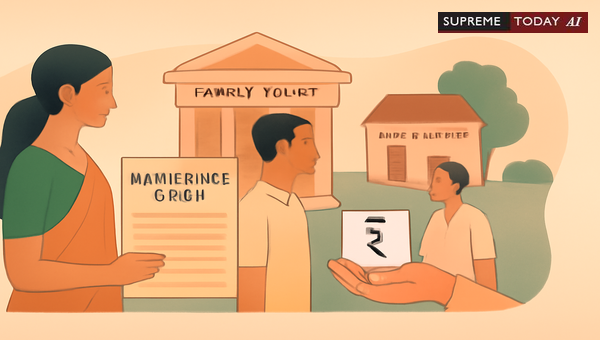
Maintenance orders under are crucial for ensuring financial support for wives, children, and parents. But what happens when you need to execute a order? Many individuals face challenges, especially when lower courts like or are involved. This guide breaks down the process, jurisdictional limits, and practical steps based on legal principles and precedents.
If you're wondering How to Execute an Order Passed by under Section 125 Cr P C, read on for clarity. Note: This is general information, not specific legal advice. Consult a qualified lawyer for your case.
Section 125 CrPC provides a speedy mechanism for maintenance, allowing Family Courts (established under the ) to pass orders for , , or . These orders are enforceable like but through .
orders primarily pertain to family law matters such as marriage, maintenance, child custody, and related issues, and are enforceable within the 's jurisdiction. 1966 0 Supreme(SC) 74
Execution typically follows , which allows the court that passed the order—or a transferred court—to enforce it via , salary, or even imprisonment for .
However, complications arise when local courts like come into play.
A key challenge: A order is not automatically binding on a Gram Nyalaya Court (or Gram Panchayat Court), as the two operate within different legal frameworks and jurisdictions.2025 4 Supreme 296
or Gram Nyalaya Courts deal with local administrative and property matters under statutes like the , and related rules. 2025 4 Supreme 296
Family Courts handle personal family disputes, while Gram Nyayalayas (under ) manage petty civil and criminal cases at the village level. There's no statutory provision making orders directly enforceable or binding in Gram Nyayalayas unless explicitly stated.
The provided documents do not explicitly address the binding effect of orders on Panchayat or Gram Nyalaya Courts. However, the general principle in Indian law is that different courts and tribunals have separate jurisdictions, and orders of one court are not automatically binding on another unless statutory provisions specify otherwise. 1996 0 Supreme(SC) 1855
For instance, in cases pending before Gram Nyayalayas, such as Case No.164 of 2015 in Kolnara or Case No.216 of 2022 in Sanakhemundi, courts have issued directions for appearance or handled offences independently, without reference to overriding orders.
Family arrangements and settlements are binding on the parties involved. A is an agreement between members of the same family, and such an arrangement and settlement is binding on the parties to the settlement. 1966 0 Supreme(SC) 74
These are limited to family law contexts and do not extend to Gram Panchayat functions like public property management. 2025 4 Supreme 296
Orders achieve finality within their jurisdiction if unchallenged. Orders which are not challenged and are not contrary to law become final and binding. 1996 0 Supreme(SC) 1855 But this doesn't cross jurisdictional lines.
In jurisprudence, family settlements bind only parties to them: 2019 0 Supreme(SC) 493 clarifies that family settlements are not necessarily required to be registered and are binding only among the parties to the settlement. 2019 0 Supreme(SC) 493
Gram Nyayalayas often handle independent matters. For example:- In a case from (2(b) C.C. Case No.15 of 2000), the declined interference, showing autonomy.
- Bail conditions in G.R. Case No.467 of 2025 emphasized cooperation with investigations, unrelated to overrides. 2025 Supreme(Online)(Ori) 2780- Quashing proceedings for via settlement was allowed if private in nature, highlighting case-specific resolutions without broader binding effects. 2023 Supreme(Online)(KER) 9090
Another case upheld police investigations in proceedings (S.T. No.493 of 2023), directing petitioners to pursue private complaints if needed. 2025 Supreme(Online)(Ker) 17964
While not automatically binding, exceptions exist:- Statutory Recognition: If a law explicitly states binding effect (e.g., property rights overlapping jurisdictions).- Higher Court Directions: High Courts can direct compliance, as in urgent orders for surrender in cases.
- Transfer of Execution: Use to transfer to a , bypassing if possible.
Limitations:- No direct enforcement in Gram Nyayalayas for family maintenance without legal linkage.- Property disputes in Panchayat areas may prevail locally unless challenged higher up.
To navigate this:1. Verify Jurisdiction: Confirm if has overlapping authority; typically, return to .2. Seek Transfer: File for execution transfer to a competent Magistrate.3. Higher Court Intervention: Approach under or for directions.4. Document Compliance: Maintain records of order and non-payment.5. Legal Aid: Use free services under Legal Services Authorities for maintenance claims.
Clarify the specific legal provisions governing the jurisdiction and binding effect of orders on Panchayat Courts in relevant statutes or rules. 1996 0 Supreme(SC) 1855
Executing a order under Section 125 CrPC requires understanding jurisdictional boundaries. In conclusion, based on the provided documents, a order is not inherently binding on a Gram Nyalaya Court unless specific statutory provisions provide for such binding effect.
Key Takeaways:- Execute primarily through the issuing or transferred Magistrate.- Gram Nyayalayas operate independently; no automatic binding.- Always check statutes and seek relief if needed.- Parties should verify enforceability before relying on orders in local forums.
For disputes involving both family and local issues, seek clarity on prevailing orders. This ensures smoother enforcement while respecting legal hierarchies.
Disclaimer: This article provides general insights based on legal documents and precedents. Laws vary by state, and outcomes depend on facts. Consult a legal professional for personalized advice.
#Section125CrPC, #FamilyCourt, #MaintenanceOrder


(HMA)No.191/2017, Annexure-6 order of the Family Court, Kottarakkara, in M.C.No.321/2013 , Annexure-5 order of the Gram Nyalaya, Chadayamangalam, in M.C.No.1/2016 and Annexure-7 judgment of the Judicial First Class Magistrate Court, Kadakkal, in span style="font-style ... the Family Court, Kottarakkara, the Gram #HL_....

EXHIBIT P2 TRUE COPY OF THE PROCEEDINGS, DOWNLOADED FROM THE WEBSITE OF THE HONOURABLE GRAM NYALAYA, IN RELATION TO S.T.NO. 624 OF 2019 ON THE FILE OF THE HONOURABLE GRAM NYALAYA, VADAVUCODE. ... NYALAYA, VADAVUCODE. ... Therefore, in the circumstances of the case, this Court is not inclined to issue any direction for speedy disposal of S.T.No.624/2019 on the files of the Gram....

Case No.11(A)/2020, pending before the Court of learned Nyay Adhikari Gram Nyalaya, Semiliguda, Koraput. 4. ... Further, it is directed that the Petitioner No.2 shall appear before the learned Nyay Adhikari Gram Nyalaya, Semiliguda, Koraput within fifteen days from today along with a copy of this order and shall continue to participate in the proceeding without any further default. ... K....

Case No.164 of 2015 pending in the court of learned Nayadhikari Gram Nyalaya Kolnara ORDER th September, direction to the petitioner to appear before the learned Nayadhikari Gram
Case No.216 of 2022 pending in the court of learned Nyayadhikari, Gram Nyalaya-cum-J.M.F.C., Sanakhemundi for commission of offence Order
Case No.149 of 2022 pending in the court of learned Gram Nyalaya, Brahmagiri for IN THE HIGH COURT ... However, it is directed that in the event the petitioner surrender before the learned court in seisin over the matter within a Urgent certified copy of this order
Before releasing the learned Court shall verify as to whether order of this Court has been assailed before the Apex Court and if so, the result thereof. 9. It is needless to state that the Petitioner Nos.1, 3 and 4 shall cooperate with the ongoing investigation. ... ORDER Order 16.07.2025 No. 01. 1. Heard learned counsel for the Petitioners and learned counsel for the ....

For this purpose, it would be open to the High Court to go by the nature of injury sustained, whether such injury is inflicted on the vital / delegate parts of the body, nature of weapons used etc. ... It would be open to the High Court to examine as to whether incorporation of S.307 IPC is there for the sake of it or the prosecution has collected sufficient evidence, which if proved, would lead to framing the charge under....
the petitioners are aggrieved by the order dated 19.02.2018 on which date the non-bailable warrant of arrest has been issued by the learned Nayaadihikari Gram Nyalaya-cum- J.M.F.C., Rajnagar in 2(b) C.C.Case No.15 of 2000 ... Considering the submissions made and on going through the impugned order, this Court is not inclined to interfere with the impugned order. ... ....

This Court considered the contentions of the petitioner. Admittedly, the petitioner is an accused now in S.T. No.493 of 2023 on the file of the Gram Nyalaya Court, Chavara. ... This Honourable Court may be pleased to dispense with filing of the English translation of vernacular documents as per order dated 04.08.2022, A N D v. And to issue such other reliefs as this Honourable #HL_START....


An indispensable Tool for Legal Professionals, Endorsed by Various High Court and Judicial Officers
Please visit our Training & Support
Center or Contact Us for assistance

Scan Me!
India’s Legal research and Law Firm App, Download now!


For Daily Legal Updates, Join us on :



 Back to top


