


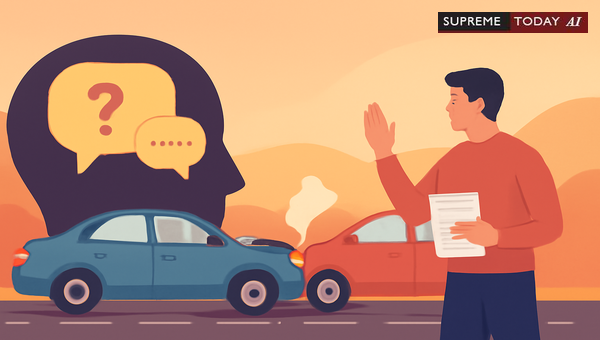
Key Eyewitness Questions in 304A IPC Cases
Road accidents resulting in death often lead to charges under , which punishes causing death by not amounting to . In such cases, eyewitness testimony plays a pivotal role in establishing the accused's negligence. But what are the important questions and aspects to ask an eyewitness in a 304A IPC offence case? This blog explores crucial interrogation points, drawing from judicial precedents and evidentiary principles to help lawyers, investigators, and claimants build a strong case.
Note: This is general information based on legal precedents and not specific legal advice. Consult a qualified lawyer for your case.
Understanding Section 304A IPC and the Role of Eyewitnesses
Section 304A IPC applies when death results from rashness or negligence, typically in motor vehicle accidents involving speeding, reckless overtaking, or failure to maintain control. Courts require that the accused's act was rash or negligent, assessed through the —including eyewitness accounts, vehicle inspections, and circumstances. 2024 0 Supreme(AP) 920
Eyewitness testimony is often the cornerstone, corroborating physical evidence like vehicle damages or skid marks. As courts emphasize, negligence isn't proven by a single piece of evidence, such as police vehicle inspections alone, but by a holistic view. 2018 0 Supreme(Tri) 101 The validity of police vehicle inspections, like those noting front-left corner damage on a bus, gains strength when aligned with eyewitness statements describing the collision manner. 2024 0 Supreme(AP) 920
What are the important questions and aspects to be asked to the eye witness of a 304A IPC offence case? Probing the right details can distinguish negligence from mere accident.
Essential Questions on Accident Circumstances
Start with the basics to establish credibility and context:
- Where exactly were you standing or positioned when the accident occurred? This verifies visibility and vantage point. Poor visibility might weaken testimony.
- What time was it, and what were the weather/road conditions? Factors like rain, fog, or poor lighting can influence negligence findings. 2017 0 Supreme(Raj) 1219
- Describe the vehicles involved: types, colors, registration numbers if noted. Accurate identification prevents challenges, as seen in cases where driver identity was disputed due to inadequate witness corroboration. 2025 Supreme(Online)(Ker) 17241
These questions set the scene, ensuring the witness's account aligns with other evidence like police reports.
Probing Rash or Negligent Driving
Courts focus on speed, manner of driving, and control. Key questions include:
- What was the approximate speed of the offending vehicle? Was it unusually high for the road/traffic? High speed is a hallmark of rashness. In one case, evidence of speed was crucial beyond assumptions. 2018 0 Supreme(Tri) 101
- Did the driver attempt to brake, swerve, or honk before impact? Absence of evasive action suggests negligence.
- Was the driver overtaking, changing lanes rashly, or driving on the wrong side? Reckless maneuvers, like suddenly accelerating, have led to convictions. 2019 0 Supreme(Chh) 327
Eyewitnesses describing a driver rashly and negligently starting a tractor, dragging a worker into a thrasher, highlighted such acts. 2021 0 Supreme(MP) 343 2021 0 Supreme(MP) 197
Victim's Position and Sequence of Events
Detail the incident timeline:
- Where was the victim (pedestrian, cyclist, or vehicle occupant) just before the impact?
- How did the collision happen—front-on, side-swipe, or under wheels? Vehicle damage reports, like front bumper harm, corroborate if the eyewitness says the jeep dashed the bus on the left front corner. 2024 0 Supreme(AP) 920
- What happened immediately after? Did the driver stop or flee?
In pedestrian deaths, witnesses confirming the victim was hit while crossing or alighting strengthen claims. 2017 0 Supreme(Raj) 1219 2019 0 Supreme(Chh) 327
Driver Identification and Behavior
Proving the accused was driving is critical:
- Did you clearly see the driver's face, clothing, or unique features?
- Was the driver using a phone, intoxicated, or distracted?
alone fails without firm identification. In a mini lorry case, and poor ID led to acquittal under (related to 304A). 2025 Supreme(Online)(Ker) 17241
Corroboration with Physical Evidence
Eyewitness accounts must sync with inspections:
- Did you notice skid marks, debris, or vehicle positions post-accident?
Police inspections aren't invalid but must integrate with testimony. Damages analyzed alongside photos and witnesses inferred accident dynamics. 2024 0 Supreme(AP) 920 Courts set aside convictions without collective proof. 2024 0 Supreme(AP) 920
Challenges and Aspects
Defense often attacks reliability:
- Any obstructions or distance affecting your view?
- Have you discussed the incident with others, potentially influencing memory?
- Prior acquaintance with parties?
In claims under , eyewitnesses supported negligence despite insurance disputes over permits or licenses. 2017 0 Supreme(Mad) 2575 2019 0 Supreme(Chh) 327
Integrating Other Evidence Sources
Beyond eyewitnesses:
- Vehicle inspection reports (e.g., Ex.P.10 noting bumper damage) corroborate but aren't sole proof. 2024 0 Supreme(AP) 920
- Photographs, medical reports, and site plans.
- Mechanical fitness, speed estimates from experts.
In thrasher-tractor cases, negligence in starting the vehicle was key, with insurance liability upheld as 'use of vehicle.' 2021 0 Supreme(MP) 343 2021 0 Supreme(MP) 197
Prosecution must avoid reliance on mere circumstances; conclusive evidence is needed. 2025 Supreme(Online)(Ker) 17241
Key Takeaways for 304A IPC Cases
- Holistic evidence rules: Eyewitness testimony on speed, rashness, and circumstances, backed by inspections, proves negligence. 2018 0 Supreme(Tri) 101 2024 0 Supreme(AP) 920
- Ask targeted questions: Focus on position, speed, actions, and ID to build unshakable testimony.
- Challenges: Fabricated reports or uncorroborated claims fail.
- Recommendations: Lawyers should prepare witnesses thoroughly, cross-verify with police reports, and emphasize totality.
In summary, effective questioning of eyewitnesses can tip the scales in 304A IPC cases. While police vehicle inspections are valid corroborative tools, it's the integrated narrative—from What did you see? to How fast was it going?—that convicts. Always seek professional legal counsel for case-specific strategies.
#304AIPC, #EyewitnessTestimony, #NegligenceLaw















