


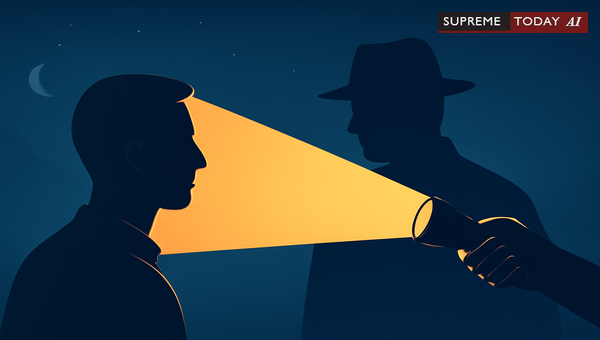
No on Darkness in : Insights from
In criminal trials, often forms the cornerstone of the prosecution's case. But what happens when the incident occurs in darkness? Is there a legal presumption regarding darkness that automatically weakens such testimony? This question arises frequently in Indian jurisprudence, where courts grapple with the reliability of identifications made under poor lighting conditions.
Disclaimer: This article provides general information based on judicial precedents and is not intended as legal advice. Consult a qualified lawyer for advice specific to your situation.
The Core Question: Presumption Regarding Darkness
The legal query at hand is straightforward: presumption regarding darkness. In the relevant Indian jurisdiction, there is no specific regarding darkness. Instead, courts recognize the inherent difficulties of identification in low-light conditions and stress the need for to establish guilt . Identification based solely on faint light, such as from a bulb, is considered inherently weak unless backed by details on the light source—like wattage, location, and distance—along with surrounding circumstances. 2017 0 Supreme(Raj) 2327
This judicial approach ensures fairness, preventing convictions on shaky visual testimony alone. Let's delve deeper into the principles, key cases, and practical implications.
Judicial Recognition of Darkness as a Hindrance
consistently acknowledge that darkness complicates human perception. In one pivotal case involving acquittal under (murder), the prosecution relied on identification in darkness from a bulb's light. The court criticized the lack of specifics: failure to provide details such as wattage, location, and the distance the light traveled, making the identification weak and unreliable. 2017 0 Supreme(Raj) 2327
This isn't isolated. In another matter, a witness admitted: it was darkness at that time when he had gone to the house of the accused... but could not identify that person due to darkness. 2017 0 Supreme(P&H) 2193 Such statements underscore how courts view unaided dark identifications skeptically.
Key Challenges in Darkness-Based Identification
- Visibility Limitations: Recognition by silhouette, even of known villagers, cannot be accepted with certainty, especially amid rain or clouded skies without moonlight. 2009 0 Supreme(Pat) 930
- Lack of Light Details: Absence of evidence on lighting (e.g., wattage or source strength) undermines the case. 2017 0 Supreme(Raj) 2327
- Need for Corroboration: Courts demand more than bare testimony—think (TIP), recoveries, or forensic links. 2014 0 Supreme(Del) 273
Evidence Requirements: Building a Strong Case
For darkness identifications to hold, prosecutors must furnish sufficient evidence about the light source and circumstances. Mere claims of seeing the accused under dim light won't suffice. The court in the referenced acquittal case held: for identification in darkness to be accepted, there must be sufficient evidence supporting the circumstances. Without it, reliance on such evidence risks a serious miscarriage of justice. 2017 0 Supreme(Raj) 2327
Supporting precedents reinforce this:- In a courtyard incident during summer nights, courts noted it cannot be said that there was total darkness, partly because victims knew the assailant (husband stabbing family). Still, consistency in eyewitness accounts was pivotal. 2007 0 Supreme(Bom) 653- Another ruling highlighted: occurrence admittedly took place in the darkness, cautioning that sole eyewitness testimony must be wholly reliable. 2007 0 Supreme(Pat) 523- Temporary lighting, like a borrowed connection, was scrutinized for adequacy: there must have been sufficient darkness... he had taken temporary electric connection. 2006 0 Supreme(All) 2685
When Courts Uphold Acquittals
Courts are reluctant to disturb unless there's gross misappreciation of evidence. In darkness scenarios with weak ID, acquittals stand firm. For instance, silhouette recognition in pitch dark was dismissed due to poor visibility. 2009 0 Supreme(Pat) 930
Exceptions: When Darkness ID Holds Up
While darkness generally weakens evidence, exceptions exist:- Strong Corroboration: Positive TIP identification, recovery of stolen property, or forensic matches can bolster it. 2014 0 Supreme(Del) 273- Known Assailants: If the perpetrator is familiar (e.g., family), identification gains credence despite low light. 2007 0 Supreme(Bom) 653- Additional Factors: Medical evidence aligning with testimony or non-hostile witnesses can tip the scales. 2007 0 Supreme(Pat) 523
In corruption raids, darkness was noted but didn't derail cases with chemical tests (e.g., hand washes turning pink), shifting the burden under . 2014 0 Supreme(Del) 3150 2014 Supreme(Online)(DEL) 5000
Broader Judicial Approach to Weak Evidence
The prevails. Weak ID alone can't convict. Courts adopt a cautious stance:- Suspicion vs. Proof: Suspicion, no matter how strong, cannot be a substitute for proof. 2006 0 Supreme(All) 2685- Acquittal Standards: Don't interfere lightly with trial court findings absent clear errors. 2017 0 Supreme(Raj) 2327
In land dispute murders, undisclosed light sources and enmity led to acquittals: Source of light leading to identification of appellants not disclosed by prosecution. 2009 0 Supreme(Pat) 930
Practical Recommendations for Stakeholders
For Prosecutors:
- Document light details meticulously: wattage, position, distance.
- Secure TIPs and recoveries early.
- Anticipate defense challenges on visibility.
For Defense Lawyers:
- Cross-examine on lighting inconsistencies.
- Highlight lack of corroboration.
- Argue for acquittal if ID is sole pillar.
For Courts:
- Scrutinize darkness claims rigorously.
- Demand probative evidence beyond visuals.
Conclusion and Key Takeaways
In summary, Indian law offers no regarding darkness, but a pragmatic judicial presumption: identifications therein are frail without robust support. Courts prioritize justice by requiring proof beyond doubt, as echoed across cases like 2017 0 Supreme(Raj) 2327, 2009 0 Supreme(Pat) 930, and others.
Key Takeaways:- Darkness inherently doubts ID reliability—corroborate heavily.- Detail light sources or risk acquittal.- Innocence presumed; weak evidence favors the accused.
Stay informed on evolving precedents. For tailored guidance, reach out to legal experts.
References:1. 2017 0 Supreme(Raj) 2327: Core case on light source deficiencies.2. 2014 0 Supreme(Del) 273: TIP and circumstantial support.3. 2009 0 Supreme(Pat) 930: Silhouette recognition limits.4. 2017 0 Supreme(P&H) 2193, 2007 0 Supreme(Bom) 653, 2007 0 Supreme(Pat) 523, 2006 0 Supreme(All) 2685: Varied darkness scenarios.
#DarknessIdentification #IndianLaw #EyewitnessID












