


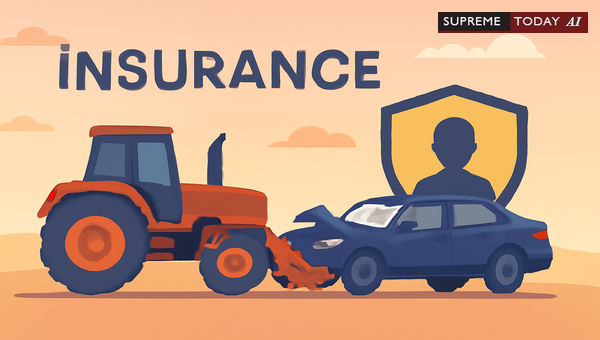
Harvester Accident Claims Under Section 166: Understanding Limits
In the world of agricultural operations, harvesters and similar machinery play a vital role. However, accidents involving these vehicles can lead to complex legal battles, especially when it comes to insurance claims. A common question arises: Can you file an accidental claim against a harvester under , if only a liability-only (Act only) policy is in place?
The short answer is that insurer liability is typically restricted to under such policies. This means coverage does not automatically extend to the owner, operator, or other non-third parties unless a or specific endorsement exists. This post dives deep into the legal framework, court interpretations, and practical implications, drawing from key judgments to help you navigate these claims effectively.
Main Legal Finding: Third-Party Limits Under Act Only Policies
Under , an —also known as a —is mandated to cover third-party liabilities exclusively. It does not extend protection to the vehicle owner or other persons involved unless explicitly stated. Courts have repeatedly affirmed this principle in Section 166 claims, which allow victims to seek compensation from insurers, owners, or drivers.
As clarified in judicial rulings, A policy in terms of is not intended to cover persons other than third parties. 2012 8 Supreme 32 Similarly, liability under Section 166 is confined to against third persons or property damage. 2007 1 Supreme 609
This limitation holds true even for specialized equipment like harvesters. If the policy is Act only, the insurer's responsibility is limited to third-party claims arising from the machinery's use. 2007 0 Supreme(SC) 1601
Nature of Insurance Policies Under Section 147
Section 147 requires every motor vehicle policy to insure against , including death, bodily injury, or property damage caused by the vehicle. However, an stops there—it excludes the owner's own risks.
Key characteristics include:- Third-party focus: Covers victims external to the insured vehicle or party. 2012 8 Supreme 32- No automatic owner coverage: The owner or operator (e.g., harvester driver) is not protected unless a comprehensive or is issued. 2007 3 Supreme 136- Judicial emphasis: The primary purpose of such policies is to insure against third-party liabilities, and coverage for the owner or others is not presumed unless specified. 2007 3 Supreme 136
In one case, the rejected a claim by legal heirs of a vehicle owner killed in an accident, holding that standard policies do not cover the owner's personal accident unless specifically endorsed. This aligns with rulings like New India Assurance Co. Ltd. v. Prabha Devi, where Section 147 was interpreted strictly. 2014 0 Supreme(Cal) 843
Liability in Section 166 Claims Involving Harvesters
Section 166 empowers (MACT) to award compensation in road accidents. Yet, the insurer's role hinges on policy terms. For harvester accidents:
- Insurers are liable only for third-party claims if it's an . 2007 0 Supreme(SC) 1601
- Owner or operator claims fail without comprehensive coverage. 2012 8 Supreme 32
- Courts stress: Liability of the insurer is to the extent of indemnification of the insured against the respondent or a third person or in respect of damages of property. 2007 1 Supreme 609
Consider a scenario where a harvester collides with a third party—the insurer pays out. But if the claim is from the harvester's owner or operator against themselves, recovery is barred under Act only terms. This was echoed in cases denying jurisdiction where policies lacked motor legal liability coverage, like the Rasta Apatti Kavach policy, which fell outside MV Act protections. 2018 0 Supreme(Gau) 1746
Integrating Lessons from Related Motor Accident Cases
Broader Section 166 jurisprudence reinforces these limits. In claims for accidental deaths, tribunals assess compensation based on income, multipliers, and —but only if policy coverage applies. For instance:
- Claimants in a case sought Rs.96,13,756/- for a death, with appeals focusing on dependency and like consortium. 2023 0 Supreme(Bom) 1231
- assessments (e.g., Rs.6,500/month +40% , of 18) were used, but insurer liability still tied to policy scope. 2020 0 Supreme(Kar) 923
- In another, parents and siblings claimed for a mason's death, with courts notionally fixing income at Rs.9,000/month and adding , yet emphasizing policy evidence.
Shambugowda VS T. Malikarjuna
These cases highlight that while compensation calculations are standardized, the insurer's payout obligation remains policy-dependent. Claims against the owner-driver alone, without third-party involvement, may not be maintainable if no other vehicle is implicated. 2023 Supreme(Online)(MAD) 24761
Exceptions and Special Cases
Coverage may extend beyond third parties in these situations:- Comprehensive/package policies: Explicitly include owner/operator risks. 2012 8 Supreme 32- Specific endorsements: Contractual clauses covering additional persons. 2009 3 Supreme 707- Future-dated policies with consent: Where insurers agree to broader terms post-accident. 2009 3 Supreme 707
However, exceptions are narrow. Mere inference from general principles won't suffice—policy documents must explicitly state coverage.
Practical Recommendations for Stakeholders
To avoid pitfalls in harvester-related claims:- Verify policy type: Confirm if it's Act only or comprehensive before filing.- Gather evidence: Produce policy copies to establish coverage scope in MACT proceedings.- Owners/operators: Opt for comprehensive policies to protect against personal claims.- Claimants: Target third-party angles where possible; explore owner liability separately if uninsured.- Legal strategy: Focus on policy terms during tribunals, as courts prioritize explicit clauses. 2007 3 Supreme 136
Key Takeaways and Disclaimer
In summary, accidental claims against a harvester under Section 166 with an are generally limited to third-party liabilities. Owners and operators lack automatic coverage, as affirmed across multiple rulings. Always review policy details meticulously.
Important Disclaimer: This article provides general information based on judicial precedents and is not a substitute for professional legal advice. Consult a qualified lawyer for case-specific guidance, as outcomes may vary by facts and jurisdiction.
For more on motor accident claims, stay tuned to our blog.
#MVActSection166, #HarvesterClaims, #ActOnlyPolicy












