


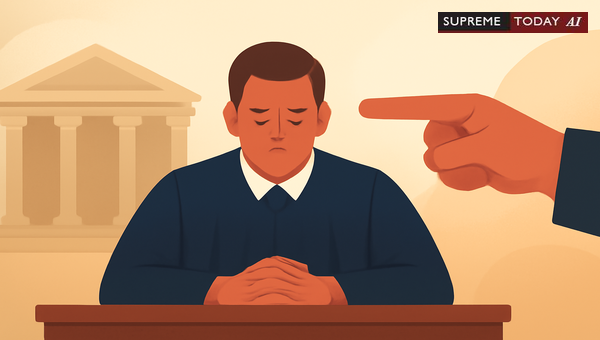
Judge Working Unfairly and Biased: What You Need to Know
In the hallowed halls of justice, trust in the judiciary is paramount. But what happens when a judge appears to work unfairly and biased? The question Judge Working Unfair and Biased strikes at the heart of , raising concerns about that can erode . This blog post explores the legal principles governing , signs of bias, real-world examples, and practical steps you might consider. Note: This is general information only and not specific legal advice. Always consult a qualified lawyer for your situation.
Overview of Judicial
Judges serve as impartial referees, ensuring decisions are based on objective criteria without personal bias or prejudice. This is crucial for upholding in the judiciary 1998 4 Supreme 191. The principle of fairness requires that be exercised impartially and within legal bounds. Any perception of bias can undermine the legitimacy of proceedings 2002 1 Supreme 391 2009 0 Supreme(Raj) 525.
When litigants feel a judge is unfair or biased, it often stems from decisions that seem influenced by personal sentiments rather than law. Courts emphasize that must reflect justice, , and restraint, with sobriety in expressions and decisions 2011 2 Supreme 174.
Key Legal Principles on Bias and Unfairness
Defining Bias in Judicial Context
Bias refers to partiality or preference affecting a judge's decision-making. Judges must not let personal feelings influence judgments 2002 1 Supreme 391. A litigant typically needs to show a , assessed from circumstances like the judge's actions or statements suggesting lack of 1989 0 Supreme(SC) 358 2009 0 Supreme(Raj) 525.
The test often applied is the from the standpoint of a fair-minded observer. For instance, in one case, the presence of a board member supervising candidates' Ph.D. courses tainted the selection process with bias 2020 0 Supreme(UK) 10.
Standards of
Judges are expected to base rulings on objective analysis, not personal perceptions or emotions. Judgments reflecting such influences lack and foster perceptions of unfairness 2011 0 Supreme(Raj) 164 2011 2 Supreme 174. In employment inquiries, processes must be fair, giving the accused a reasonable defense opportunity 2015 0 Supreme(SC) 254 2019 0 Supreme(Raj) 761.
Evidence of Unfairness in Decisions
High Courts have faced criticism for judgments seemingly driven by personal biases over objective standards, sacrificing fairness 2011 0 Supreme(Raj) 164 2011 2 Supreme 174. Additional sources reveal patterns:
Procedural Irregularities: Courts have quashed chargesheets from unfair procedures 2024 Supreme(Online)(GUJ) 12178. Biased comments affected employee grading, with unfair delays in responses 2024 Supreme(Online)(CAT) 2684.
Arbitrary Decisions: One decision was deemed arbitrary and inconsistent, violating fairness principles 2023 0 Supreme(SC) 1138. Failure to examine evidence properly led to unfair conclusions 2023 0 Supreme(All) 1001.
Bias in Evaluations: In recruitment, improper weightage and unfair candidate evaluations indicated bias 2023 0 Supreme(Chh) 235 2025 0 Supreme(Ker) 2694.
Unfair Labour Practices: Allegations of misconduct and bias in employment disputes highlight procedural violations 2023 0 Supreme(Bom) 567 2023 0 Supreme(Bom) 320.
From specific cases:- A circular discriminating against married daughters for nominations was struck down as wholly unfair, unreasonable and gender biased under 2009 0 Supreme(Kar) 450.- Interference by a judge in a resignation matter was criticized as erroneous, noting the employee's sense of unfair rating 2024 0 Supreme(SC) 300.- Awards ignoring vital evidence were set aside as perverse and unfair 2024 0 Supreme(Mad) 2597.
These examples underscore systemic concerns, with courts often setting aside biased or arbitrary orders to enforce .
Integrating Broader Insights from Case Law
rulings reinforce vigilance against bias. In , the Court clarified that investigations by the FIR-lodging officer aren't automatically biased, rejecting broad propositions 2008 0 Supreme(Mad) 257. Similarly, directions by High Courts must not be unjust or unreasonable 2008 0 Supreme(SC) 1200.
In advocate performance assessments, submissions alleging unfairness to the were dismissed, affirming judges' expertise 2005 0 Supreme(Pat) 216. Yet, where bias is evident—like in tainted interview boards—selections are invalidated 2020 0 Supreme(UK) 10.
What to Do If You Suspect Bias
Allegations against a judge should be treated seriously, as they threaten . Here's a general roadmap:
Document Everything: Note specific instances of perceived bias, such as prejudicial statements, unequal treatment, or ignored evidence.
Gather Evidence: Collect records showing , like prior relationships or inconsistent rulings.
Seek Review Mechanisms: Consider appealing the decision or filing for recusal if bias appears mid-case.
Formal Complaints: If substantial evidence exists, lodge a complaint via judicial oversight bodies, like the Chief Justice or relevant conduct rules.
Legal Recourse: Challenge via writ petitions or higher appeals, emphasizing principles of .
Remember, courts apply the rigorously, ensuring only real risks of bias warrant intervention.
Conclusion and Key Takeaways
Maintaining judicial is foundational to democracy. While judges generally uphold high standards, instances of perceived unfairness or bias demand scrutiny. Key takeaways:
- Judges must act objectively to preserve public trust 1998 4 Supreme 191.
- Document bias evidence meticulously for formal challenges 1989 0 Supreme(SC) 358.
- Courts recognize and remedy procedural unfairness, as seen in diverse cases 2020 0 Supreme(UK) 10 2009 0 Supreme(Kar) 450.
If facing such issues, prioritize professional legal guidance. Upholding fairness strengthens justice for all.
References:- 1998 4 Supreme 191 2002 1 Supreme 391 1989 0 Supreme(SC) 358 2011 2 Supreme 174 2011 0 Supreme(Raj) 164 2015 0 Supreme(SC) 254 2019 0 Supreme(Raj) 761 2024 0 Supreme(SC) 300 2024 0 Supreme(Mad) 2597 2020 0 Supreme(UK) 10 2009 0 Supreme(Kar) 450 2008 0 Supreme(SC) 1200 2008 0 Supreme(Mad) 257 2005 0 Supreme(Pat) 216
#JudicialBias, #HighCourtFairness, #LegalRights












