


When a Hindu Bridegroom Is One Month Short of 21 — Validity, Nullity and the Wife's Available Remedies
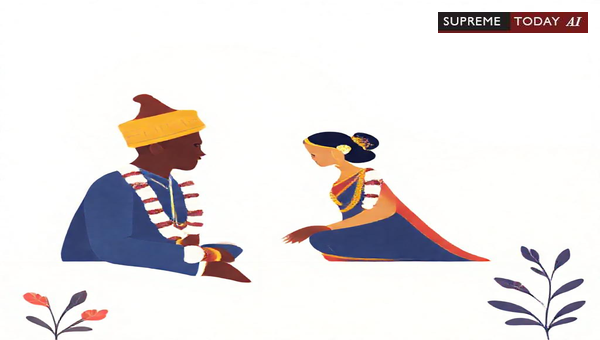
Imagine a couple who marries according to Hindu rites with the full blessing of both families. The bride is 21 years old; the bridegroom is 20 years and 11 months old — a month away from the statutory age. Years later, a dispute arises and the question is squarely posed: what remedy is available to a Hindu wife when she was 21 at the time of marriage, but the husband was only 20 years and 11 months old? The answer is more layered than most people expect, because the age requirement sits in an awkward corner of the , and interacts with the , and the maintenance statutes.
The Statutory Age Condition for a Hindu Marriage
Section 5 of the lays down the conditions for a valid Hindu marriage. Under the — — the bridegroom must have completed the age of 21 years and the bride the age of 18 years at the time of marriage. A bridegroom aged 20 years and 11 months has plainly not completed 21 years, even though the shortfall is a single month. As courts have bluntly observed, in the absence of any effective method of stopping ageing process of the parties, time cannot be retroactively cured — the deficiency existed at the moment of solemnization 2016 0 Supreme(Guj) 1333.
The bride, at 21 years, satisfies her age requirement without difficulty. So the contravention here is one-sided: only the bridegroom's age is deficient.
Is the Marriage Void or Voidable?
This is where precision matters, because the consequence determines the wife's remedies.
- permits either party to seek a where the marriage contravenes the conditions in Clauses (i), (iv) and (v) of Section 5 — that is, a living spouse at the time of marriage, parties within , or sapinda relationship. Notably, the age condition in is not among the clauses enumerated in Section 11 2014 0 Supreme(All) 2014.
- Under , a marriage involving a male below 21 years is treated as of the contracting party who was a child, with the petition generally required within two years of that party attaining majority. Judicial discussion of the interplay between the two statutes — including Full Bench consideration by the — has emphasised that a declaration of invalidity ordinarily requires a petition to be filed; the defect does not automatically dissolve the marriage 2021 0 Supreme(P&H) 1474.
- That said, some judicial observations have treated marriages in breach of Section 5 read with Section 11 as null and void, and older reasoning described any post-1955 marriage contravening the specified conditions of Section 5 as null and void 2014 0 Supreme(All) 2014. The safer, more widely accepted position today is that an under-age bridegroom marriage is voidable, not .
For the wife in this scenario, the practical starting point is therefore this: she may seek a by instituting appropriate proceedings, but unless and until a competent court grants such a decree, the marriage continues to subsist.
What Remedies Does the Wife Have?
1. A petition for a . Either party may approach the for a declaration that the marriage is invalid on account of the age contravention. Either spouse — including the wife — can initiate this, and it is typically the principal remedy flowing directly from the age defect 2014 0 Supreme(All) 2014.
2. Maintenance — only if the marital status is sustained. The expression wife in the maintenance statutes refers to a . The Supreme Court has held that a woman whose marriage is void does not acquire the status of a wife and is not competent to maintain an application under 1985 0 Supreme(SC) 207 and 1991 0 Supreme(SC) 177. Similarly, protects only a legally wedded Hindu wife 1985 0 Supreme(SC) 207.
This produces a paradox worth noting: the very that vindicates the age objection simultaneously strips the woman of the status on which maintenance claims rest. If the marriage stands (because no nullity petition is filed or the petition fails), the wife can pursue maintenance as a wife under Section 125 CrPC and , subject to the usual defences — for instance, a wife who refuses to live with her husband without sufficient cause may lose her claim under 2024 0 Supreme(Jhk) 52.
3. Divorce if the marriage subsists. Where no nullity petition succeeds, the parties remain husband and wife, and ordinary matrimonial remedies — divorce by mutual consent under , or contested divorce on grounds such as cruelty under — remain open 2021 0 Supreme(P&H) 1474.
Practical Considerations and Limitations
- Timing matters. Under the Prohibition of Child Marriage Act framework, a party seeking to avoid a marriage on the ground of being a child at the time generally must act within two years of attaining the relevant age. Delay may render the remedy illusory 2016 0 Supreme(Guj) 1333.
- Proof of age. Courts scrutinise documentary evidence — birth certificates, Aadhaar cards, school records — when the age at marriage is disputed 2021 0 Supreme(P&H) 1474.
- Children of the marriage. , so a nullity decree does not bastardise offspring.
- A one-month shortfall is still a shortfall. There is no de minimis exception; the statute requires that the bridegroom has completed 21 years, and courts construe this strictly 2010 3 Supreme 528.
Key Takeaways
- A Hindu marriage where the bridegroom was 20 years and 11 months old breaches the age condition in of the , even though the bride's age of 21 satisfies the statute.
- The primary remedy is to seek appropriate judicial relief — a or a declaration that the marriage is voidable — with the procedural route depending on whether the court treats the defect as attracting Section 11 or the 2014 0 Supreme(All) 2014 and 2021 0 Supreme(P&H) 1474.
- Maintenance under Section 125 CrPC and Section 18 of the Hindu Adoptions and Maintenance Act depends on the claimant holding the status of a 1985 0 Supreme(SC) 207 and 1991 0 Supreme(SC) 177; if the marriage is annulled, that status — and with it the maintenance claim — generally falls away.
- If the marriage is not annulled, the wife retains the full suite of matrimonial remedies, including divorce and maintenance.
Because the void-versus-voidable characterisation can decisively change the outcome, anyone facing this situation should obtain a considered opinion from a qualified advocate on the current position in their jurisdiction before filing proceedings.
#HinduMarriageAct #VoidMarriage #DecreeOfNullity #MaintenanceRights #IndianLaw












