


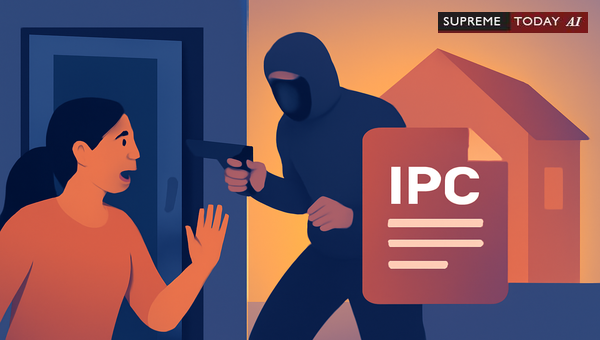
IPC Charges for Home Attack by Unknown Assailants
Introduction
Imagine returning home after a long day, only to be ambushed by unknown individuals in the safety of your own space. This terrifying scenario raises a critical question: A man is attacked by unknown peoples at his home. Help me to find charges that can file against them. Such incidents are unfortunately not uncommon, especially in India, where home invasions and assaults demand swift legal action under the .
In this comprehensive guide, we'll explore the potential charges that can be filed against such attackers. Drawing from key IPC sections and real-world case insights, we'll break down the legal framework, considerations for prosecution, and tips for victims. Note: This is general information based on Indian law and is not a substitute for professional legal advice. Consult a qualified lawyer for your specific case.
Overview of Legal Charges
When unknown persons attack someone at their home, the charges depend on factors like the severity of injuries, weapons used, intent, and whether the home was trespassed. Typically, police file an under relevant IPC sections, which can lead to arrest and trial. The goal is to punish the offenders and deter future crimes.
Key charges often include , causing grievous hurt, , house trespass, , and if a group is involved. These are supported by , , and . 2012 0 Supreme(Bom) 1960
Potential IPC Charges Against the Attackers
Here's a detailed list of applicable charges, explained with legal context:
() If the attack shows clear intent to kill—such as using deadly weapons or inflicting life-threatening injuries—Section 307 applies. For instance, If the attack involved serious injuries or the use of a deadly weapon, charges under Section 307 () may be applicable. This section addresses situations where there is an intention to kill or cause grievous hurt. 2012 0 Supreme(Bom) 1960
() Grievous hurt includes fractures, emasculation, or injuries causing permanent disfigurement. Attackers can be charged if they deliberately cause such harm. If the injuries sustained by the victim are classified as grievous, the attackers can be charged under , which deals with . 2013 0 Supreme(Bom) 247 In group attacks, this may combine with (). 2024 0 Supreme(Pat) 1012
or (Section 351/323 IPC) Even without grievous injuries, any act causing fear of harm or actual hurt qualifies. If the attack involved physical harm without the intent to kill, charges under Section 351 () may be appropriate. This section covers any act that causes apprehension of violence. 1994 0 Supreme(SC) 280
() Entering a home unlawfully with intent to triggers this. If the attackers unlawfully entered the victim's home with the intent to commit an offense, they can be charged under for . 2012 0 Supreme(Bom) 1960 Related sections like 449 or 451 may also apply for . 2024 Supreme(Online)(P&H) 139
() Threats during the attack add this charge. If the attackers threatened the victim during the , charges under for can be considered. 2018 0 Supreme(Chh) 486
() For group attacks: If the attack was carried out by a group, charges under for may apply, especially if the group had a common intention to commit an offense. 2005 1 Supreme 250
Additional charges from case precedents include (hurt by dangerous weapons), 450 (house-trespass to commit offense), or even 120B () in planned mob attacks. 2024 Supreme(Online)(P&H) 139
Insights from Real Cases Involving Unknown Attackers
Indian courts have handled numerous similar incidents, providing valuable precedents. For example, in one case, Unknown persons had attacked them at a distance of 1.5 km from his village. He had become unconscious at the spot after receiving injuries. 2019 0 Supreme(P&H) 2067 Though not exactly at home, it highlights charges for serious assaults by unknowns.
Another incident: Pw-1 Mahaveer Kumar deposed in his statement that an unknown person attacked his nephew Vishal by a sharp-edged weapon, when he closed his shop and was about to enter his home. 2019 0 Supreme(Raj) 1911 Here, sharp weapons led to hurt charges.
In home invasions, like where assailants entered and assaulted, courts have upheld Sections 323, 325, and 149. The prosecution successfully proved charges under Sections 323 (causing hurt) and 325 read with 149 IPC (causing grievous injuries in a group) against some accused. 2024 0 Supreme(Pat) 1012
Mob attacks with weapons like kirpans or rods often invoke 307 or 324, but weak evidence leads to acquittals. Multiple sources describe attacks by unknown individuals armed with weapons like kirpans, dandas, iron rods, and arval, entering homes or attacking persons, causing injuries. 2023 0 Supreme(P&H) 2505 2021 0 Supreme(Mad) 2005
Even in cases of unknown criminals: The informant further came to know that when both of them arrived at Jankia Gomti unknown criminals attacked upon them. 2004 0 Supreme(Pat) 219 Investigations focus on identifying via CCTV, hairs, or weapons left behind, as in The police had taken the hairs of his head which were cut. 2019 0 Supreme(P&H) 2067
These cases underscore that while unknowns complicate identification, charges can proceed on . proof under Sections 450, 324, or 307 is often framed initially. 2024 Supreme(HK)(HKDC) 58
Key Considerations for Filing Charges
Evidence is Crucial: Eyewitnesses, medical reports (MLC), CCTV footage, and forensics strengthen the case. The strength of the case will depend on the evidence available, including eyewitness accounts, medical reports, and any forensic evidence.
Proving Intent: Courts examine weapons, attack ferocity, and statements. Without it, lesser charges like 323 apply.
Unknown Attackers: File FIR with 'unknown persons'; allows arrests on reasonable suspicion. or tech aids help later.
Bail and Investigation: Victims can seek protection if fearing reprisals. A person seeking relief (of ) continues to be a man presumed to be innocent. 2023 0 Supreme(AP) 28
Police must investigate promptly; delays can weaken cases, as seen where the prosecution has failed to establish nexus or sufficient evidence. 2021 0 Supreme(Mad) 978
Conclusion and Key Takeaways
Attacks at home by unknown assailants can invoke serious IPC charges like Sections 307, 325, 452, 506, and 141, tailored to the facts. Success hinges on solid evidence and intent proof. Victims should immediately report to police, get medical aid, and preserve scene evidence.
Key Takeaways:- File FIR detailing all facts for multiple charges.- Seek legal help for charge sheet review.- Use precedents for stronger arguments.
Stay safe, know your rights, and act decisively. For personalized guidance, contact a local advocate. References: 2012 0 Supreme(Bom) 1960 2013 0 Supreme(Bom) 247 1994 0 Supreme(SC) 280 2018 0 Supreme(Chh) 486 2005 1 Supreme 250 2024 0 Supreme(Pat) 1012 2019 0 Supreme(P&H) 2067
#IPCLaw, #HomeAttackCharges, #LegalRightsIndia















