Searching Case Laws & Precedent on Legal Query..!
Scanned Judgements…!



Searching Case Laws & Precedent on Legal Query..!
Scanned Judgements…!
Illegal Arrest - If an arrest is made without proper authority, a warrant, or in violation of statutory procedures (e.g., Sections 41, 42, 50, 52A of NDPS Act, or Cr.P.C.), it is considered illegal and can vitiate the trial, leading to the accused’s acquittal or immediate release ["
SHRI. EREN EZUNG vs THE STATE OF NAGALAND - Gauhati
"], ["2023 Supreme(Online)(KER) 15000"], ["SANJIT JENA @ SANJI vs STATE OF ODISHA - Orissa"].Effect on Trial and Evidence - An illegal arrest or search, especially when conducted by unauthorized officers or without following due process, can impact the prosecution case. However, mere procedural lapses like delayed reporting or non-communication of grounds do not necessarily vitiate the trial unless they result in prejudice or violate fundamental rights ["SANJIT JENA @ SANJI vs STATE OF ODISHA - Orissa"], ["2025 Supreme(Online)(Ori) 552"].
Grounds of Arrest - Failure to communicate the grounds of arrest as mandated by law (e.g., Supreme Court decision in Vihaan Kumar v. State of Haryana) renders the arrest illegal, entitling the accused to immediate release and potentially affecting the trial's validity ["2025 Supreme(Online)(Ker) 27544"], ["2025 Supreme(Online)(Ker) 40187"].
Procedural Non-Compliance - Non-compliance with procedural requirements such as reporting within 48 hours or following statutory procedures does not automatically vitiate the trial unless it causes prejudice or breaches constitutional rights ["2025 Supreme(Online)(Ori) 552"], ["SANJIT JENA @ SANJI vs STATE OF ODISHA - Orissa"].
Impact on Evidence - Evidence obtained through illegal arrest or search, if conducted unlawfully, may be inadmissible, and the trial could be considered unfair. Nonetheless, evidence collected legally, even if procedural irregularities occur, may still be used unless the irregularity prejudices the accused ["SANJIT JENA @ SANJI vs STATE OF ODISHA - Orissa"], ["2023 Supreme(Online)(KER) 15000"].
Special Considerations - In cases involving sensitive circumstances (e.g., arrests of women or during night hours), proper procedures (e.g., involving female officers or prior permission) must be followed to uphold legality; violations can invalidate arrest and impact the trial ["2023 Supreme(Online)(KER) 15000"].
Analysis and Conclusion:An illegal arrest—such as one made without proper authority, warrant, or in violation of statutory safeguards—can indeed vitiate a trial, especially if it infringes on constitutional rights or results in the collection of evidence unlawfully. However, procedural lapses that do not cause prejudice or breach fundamental rights may not automatically invalidate a trial. The key determinant is whether the illegality affects the fairness of the proceedings or the admissibility of evidence. Proper adherence to legal procedures ensures the validity of arrest and trial, but procedural irregularities alone do not necessarily lead to trial vitiation unless they compromise the accused's rights or the integrity of the process.
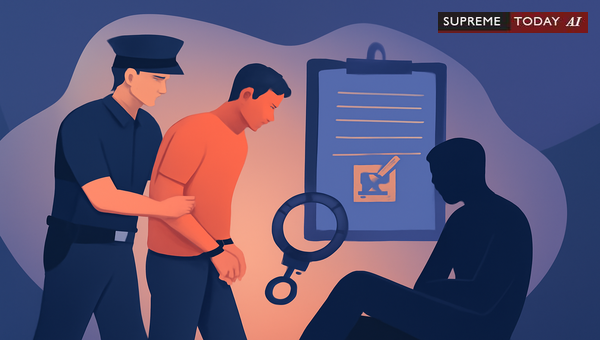
Imagine being arrested without proper authority or without being informed of the grounds for your detention. What happens to the subsequent trial? This is a critical question in criminal law: Does ? The answer is nuanced but leans toward yes—illegal arrests often taint proceedings, render evidence , and can lead to the quashing of the entire case. In this comprehensive guide, we break down key judicial precedents, constitutional safeguards, and practical implications to help you understand this complex issue.
Drawing from landmark court judgments, we'll explore how during arrest impact trial validity. Note that this is general information based on legal principles and should not be considered specific legal advice. Always consult a qualified attorney for your situation.
An arrest is deemed illegal if it violates statutory or constitutional procedures. This includes arrests without a proper warrant, by unauthorized officers, or without informing the accused of the grounds of arrest. As held in multiple rulings, such as 2000 7 Supreme 430, an arrest or search made under warrant issued by an unauthorized officer or without proper authority is per se illegal.
Under (1) of the Constitution of India, every person arrested must be informed as soon as may be of the grounds for their arrest. Failure to do so renders the arrest illegal. For instance, in 2025 Supreme(Online)(KER) 15365, the court emphasized: The failure to inform an arrested person of the grounds for their arrest constitutes a violation of their under (1) of the Constitution, rendering the arrest illegal. The court further ruled that non-compliance vitiates the arrest, leading to the release of the accused.
Similarly, 2023 0 Supreme(Del) 10698 states: When such warrant for arrest or for search is issued by a Magistrate who is not empowered, then such search or arrest if carried out would be illegal.
Courts have consistently held that illegal arrests undermine the foundation of a trial. In 2000 7 Supreme 430, it was observed that proceedings based on illegal arrests amount to an and can cause grave hardship to the accused, potentially vitiating the trial itself. 1984 0 Supreme(Raj) 174 reinforces this by noting that illegal detention affects the legality of the detention and proceedings, though it does not automatically grant bail.
Evidence procured through or search is generally suspect and . 2000 7 Supreme 430 highlights that such evidence can lead to the vitiation of conviction or the . In cases, 2000 0 Supreme(Ker) 497 clarifies: breaches of do not necessarily vitiate the entire trial but can render the recovery suspect and may impact the conviction if the illegal procedure was the sole basis for conviction.
The in 1994 0 Supreme(Gau) 50 added nuance: or search does not automatically invalidate the seizure or investigation, but the evidence may be examined with caution.
From other sources,
notes: If there is a contravention that would affect the contravention of the same would affect the prosecution case and vitiate ... The non-compliance of the said Sections would lead to vitiation of trial under certain circumstances.
When illegality is evident, courts invoke to quash FIRs or proceedings. 2000 7 Supreme 430 exemplifies this: the Court exercised this power to prevent the perpetuation of illegality and to avoid hardship to the accused, quashing proceedings initiated on illicit material collected through .
echoes: and would affect the prosecution case and consequently vitiate the trial. ... Hence non production of the accused persons at the time of seizure and arrest.
under Articles 21 (right to life and liberty) and 22 (protection against arrest and detention) are paramount. Violations, such as non-compliance with informing grounds of arrest, make proceedings vulnerable. 2025 0 Supreme(SC) 262 and 2025 0 Supreme(SC) 1890 underscore that arrests without breach these safeguards.
In
, it's noted: The omission may not vitiate the trial as such, but conviction in a case under the . ... Therefore, it is for the accused to establish prejudice which is to be done at the trial.
Recent laws like the , under , mirror (1), mandating grounds of arrest be furnished. Non-compliance, as in 2025 Supreme(Online)(KER) 15365, leads to arrests being declared illegal.
Not every procedural lapse dooms a trial. Courts require proof of . Technical violations without material impact may not vitiate proceedings, especially if evidence was obtained in good faith. However, core violations—like unauthorized warrants or failure to inform grounds—typically do. 2023 0 Supreme(Del) 10698 cautions: a mere non-compliance or failure to strictly comply by itself will not vitiate the prosecution.
In summary, an generally vitiates a trial by rendering evidence tainted, proceedings abusive, and convictions vulnerable to challenge. While not automatic in every case, the impact is profound, as affirmed in rulings like 2000 7 Supreme 430 and 1984 0 Supreme(Raj) 174. Upholding procedural integrity safeguards justice and prevents hardship.
Key takeaways:- Illegal arrests breach Articles 21 and 22, often leading to quashed proceedings.- Evidence admissibility hinges on prejudice and judicial scrutiny.- Always demand compliance with arrest protocols.
This analysis draws from established precedents but is for informational purposes only. Legal outcomes depend on specific facts—seek professional advice tailored to your case.
Word count: Approximately 1050
#IllegalArrest, #CriminalTrial, #LegalRights


If there is a contravention that would affect the contravention of the same would affect the prosecution case and vitiate ... The questions considered above arise frequently before the trial courts. ... The non-compliance of the said Sections would lead to vitiation of trial under certain circumstances.

Magistrate or is made by any officer not empowered or authorised, it would per se be illegal and would affect the prosecution case and consequently vitiate the trial. ... Where criminal proceedings are initiated based on illicit material collected on search and arrest which are per se illegal and vitiate not only a conviction and sentence based on such material but also the tri....

The omission may not vitiate the trial as such, but conviction in a case under the NDPS Act. ... Therefore, it is for the accused to establish prejudice which is to be done at the trial. ... The powers to detain, search and arrest have been thereafter if the officer thinks proper arrest can be span style="font-family

When such warrant for arrest or for search is issued by a Magistrate who is not empowered, then such search or arrest if carried out would be illegal. ... If such arrest or search is made under the provisions of the NDPS Act by anyone other than such officers, the same would be illegal. ... However, a mere non-compliance or failure to strictly comply by itself will not vitiate the prosec....

(vi) Any lapse or delay in compliance of Section 52A by itself would neither vitiate the trial nor would entitle the accused to be released on bail. ... Report of arrest and seizure.—Whenever any person makes any arrest or seizure under this Act, he shall, within forty-eight hours next after such arrest or seizure, make a full report of all the particulars of such arrest or seizure to h....

The State Of Haryana and Another [2024 SCC Online SC 4702] the Supreme Court has categorically observed that the failure to communicate the grounds of arrest will vitiate the arrest and once the arrest is held to be vitiated, the person arrested is entitled to be released immediately ... The State Of Haryana and Another [2024 SCC Online SC 4702] the arrest has to be deemed illegal. 6....

The State Of Haryana and Another [2024 SCC Online SC 4702] the Supreme Court has categorically observed that the failure to communicate the grounds for arrest will vitiate the arrest and once the arrest is held to be vitiated, the person arrested is entitled to be released immediately ... It was also submitted that, the grounds for arrest have never been informed to him and therefore, in the light of the....
BNSS at the time of the arrest of the accused and that the trial court had already dismissed the bail applications filed by the accused. 8. Chapter V of BNSS , 2023 deals with the arrest of persons.

and would affect the prosecution case and consequently vitiate the trial. ... Hence non production of the accused persons at the time of seizure and arrest. ... after such arrest or seizure make a report of the particulars of arrest or seizure to his of Criminal Procedure, 1973 shall vitiate not only conviction and /
Since the arrest itself is illegal, which would vitiate even the trial entitling the accused to acquittal, the same can be considered at the time of considering the bail application. Section 60A of the Cr. P.C. is also violated. He relies on the judgment of the Bombay High Court in Bharati S. ... The use of evidence collected in breach of the safeguards provided by the Act at the trial would render the #H....


An indispensable Tool for Legal Professionals, Endorsed by Various High Court and Judicial Officers
Please visit our Training & Support
Center or Contact Us for assistance

Scan Me!
India’s Legal research and Law Firm App, Download now!


For Daily Legal Updates, Join us on :



 Back to top


