


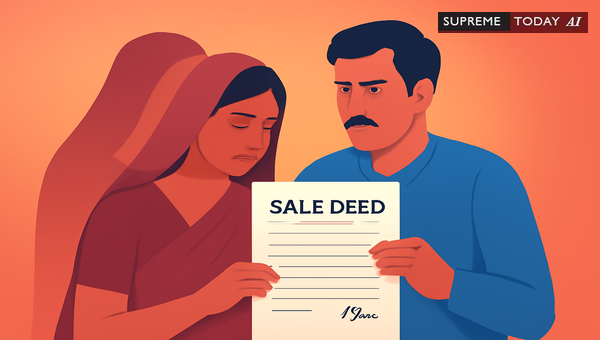
Validity: Are Illiterate Women's Signatures Binding?
In the realm of property transactions, few issues evoke as much concern as the vulnerability of illiterate or elderly individuals, particularly women, who may sign documents without fully grasping their implications. Imagine an uneducated, old woman—perhaps deaf and mute—being asked to sign a in blank or without understanding its contents. Is such a transaction legally enforceable? This question, by Illiterate Women, lies at the heart of numerous court battles in India, highlighting protections against exploitation.
Property law in India places significant safeguards for such vulnerable parties, emphasizing consent, comprehension, and fairness. This blog delves into key legal principles, court rulings, and practical insights to help you navigate these complexities. Note: This is general information based on precedents and not specific legal advice. Consult a qualified lawyer for your situation.
Understanding the Core Legal Protection
The law offers robust protection to illiterate women, especially those in helpless or dependent states. Courts have consistently ruled that transactions lacking genuine understanding—due to , , or —are generally invalid or . An uneducated, old woman who is dumb and deaf, signing only in blank or without comprehension, is entitled to special safeguards. The to the other party to prove she understood the document and executed it voluntarily.1954 0 Supreme(Cal) 123
Key Principles from Case Law
- Vulnerability Recognition: Illiterate or uneducated women, particularly in dependent positions, are shielded from fraudulent deals. Even if not strictly (secluded women), those in helpless circumstances qualify for protection. They must demonstrate understanding of the deed's nature and effect; failure renders it . 1954 0 Supreme(Cal) 123
- Invalid: Mere signing in blank or without reading contents does not validate a transaction. Courts stress that the executing party must prove voluntary comprehension. For instance, where an illiterate woman was unaware, the deal conferred an and was struck down. 1954 0 Supreme(Cal) 123 2022 6 Supreme 291
- and : If induced by or , the becomes . A classic example: a woman misled into signing was protected, declaring the transaction invalid. 1990 0 Supreme(SC) 131
These rulings underscore that courts scrutinize such deals closely, prioritizing equity over technical execution.
The Perils of Signing Blank or Documents
A recurring theme in disputes is signatures on blank sheets or plain , often exploited to fill details later. Under Indian law, this practice is fraught with risks and typically deemed invalid, especially for illiterate signatories.
- Agreements Problematic: Sale agreements must be on with proper stamping. Signing plain lacks legal binding and leads to ownership disputes. Courts view it as evasion of duties, rendering documents unenforceable. For example, a defendant entrusted jewels to her brother, who got her to sign marked for a sale—deemed invalid. 2024 Supreme(Online)(MAD) 38615
- No Substitute for Registration: Even with partial payments or agreements, failure to register a properly stamped means no . Cases show complainants paying advances but denied registration, leading to claims of non-performance. Execution and registration remain pending, highlighting delays' consequences. 2025 Supreme(Online)(SCDRC) 32853 2025 Supreme(Online)(SCDRC) 32849
One source notes: The plaintiff has also asked the defendant to sign in a at the point marked by him. Such tactics fail in court, as they bypass and mandates. 2024 Supreme(Online)(MAD) 38615
Registration: The Cornerstone of Valid Sale Deeds
Proper registration is non-negotiable for immovable property transfers. Amendments in states like Tamil Nadu target executions to prevent revenue loss and ambiguities.
- Mandatory Steps: Sale deeds require stamping, execution before witnesses, and sub-registrar registration. GPA holders or agents cannot bypass this; extracts confirm validity only post-registration. 2024 0 Supreme(AP) 281
- Disputes Over or : Illiterate women often claim signatures are forged or obtained unwittingly. One witness stated: She gone to the extent of saying that she did not sign in Ex.A1 sale agreement and since she is an illiterate, it is very easy to sign her name. Courts invalidate such claims lacking proof. 2012 0 Supreme(Mad) 2941
- Capacity and Verification: Even semi-literate individuals must verify documents. A case affirmed: She knows that a is necessary... without verification of document, she could not say what was the document. This shows courts assess comprehension capacity. 2018 0 Supreme(Ori) 90
Failure here, as in delayed registrations despite payments, invites litigation. 2021 Supreme(Online)(MP) 6251 2022 0 Supreme(Mad) 3776
Exceptions: When Transactions Hold Up
Not all cases favor invalidation. Courts may uphold deeds if:- Proven voluntary understanding and execution occur.- Independent witnesses explain contents.- The woman is educated or fully aware, reducing vulnerability.
For instance, proper stamp paper purchase for deeds signals intent, though rescission is possible. 2018 0 Supreme(Mad) 1685
Practical Recommendations for Safe Transactions
To avoid pitfalls:- Provide Legal Aid: Ensure illiterate women receive independent advice before signing.- Witnesses and Explanation: Execute in presence of neutral parties; read/explain contents aloud.- Avoid : Always use stamped paper; register promptly.- Scrutinize Disputes: If challenged, courts examine influence, , or ignorance—often siding with the vulnerable.
Sources warn: Agreements on are not legally valid for transfer of immovable property. 2024 0 Supreme(Mad) 2300
Conclusion and Key Takeaways
The execution of sale deeds by illiterate women demands utmost caution. While technical signing may occur, validity hinges on comprehension, , and formalities like stamping and registration. Courts protect the vulnerable, invalidating exploitative deals via or . 1954 0 Supreme(Cal) 123 1990 0 Supreme(SC) 131
Key Takeaways:- Illiterate women's transactions are presumptively scrutinized; prove understanding or risk nullity.- Shun —opt for stamped, registered deeds.- , , or voids deals.- Always involve lawyers and witnesses for equity.
By heeding these, parties safeguard rights and foster trust in property dealings. For tailored guidance, seek professional legal counsel.
(Word count: 1028. References drawn solely from cited documents.)
#SaleDeedValidity, #PropertyLawIndia, #IlliterateWomenRights












