


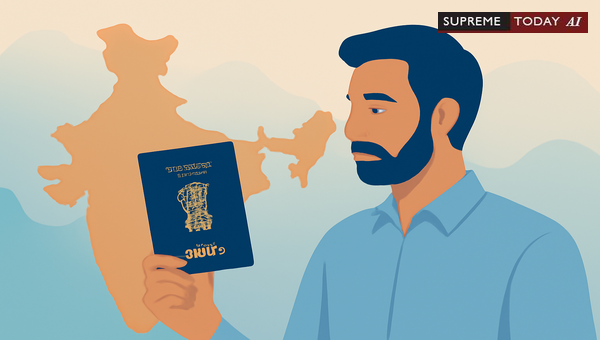
Can Foreigners Get Indian Passports Under Section 20?
In an increasingly globalized world, questions about travel documents often arise for non-citizens residing in or connected to India. One common query is: Whether Indian Passport can be Issued to Foreigner under Section 20 of Indian Passport Act. This issue touches on citizenship laws, government discretion, and considerations. While Indian passports are primarily for citizens, , opens a narrow door for non-citizens under exceptional circumstances.
This blog post breaks down the legal framework, key judicial interpretations, and practical insights. Note: This is general information based on legal precedents and not specific legal advice. Consult a qualified attorney for personalized guidance.
Legal Framework:
The governs the issuance, variation, and revocation of passports in India. Section 20 specifically states:
The may issue a passport or travel document to a person who is not a citizen of India if it is of the opinion that it is necessary to do so in the .
This provision grants the broad discretion. Unlike citizens, who generally have a right to passports upon meeting eligibility criteria, non-citizens must demonstrate that issuance serves the . This could include scenarios like political asylum, humanitarian needs, or national security matters. However, it's not a guaranteed right and is applied sparingly.
: The Core Requirement
The cornerstone of Section 20 is the test. Courts have emphasized that this is a subjective determination by the government, varying by case specifics.
- Political Asylum or Refugees: In cases involving refugees, such as a Sri Lankan refugee married to an Indian citizen, courts have noted the government's discretion but stressed fulfilling citizenship requirements first. 2023 0 Supreme(Mad) 837
- Humanitarian Contexts: For instance, a Malaysian citizen involved in a kidney transplant case concealed their foreign status, leading to legal issues under the . This highlights risks when foreigners seek benefits without transparency. 2025 Supreme(Online)(Ker) 45573
Issuance is not automatic. The government weighs factors like residency, ties to India, and broader implications.
Case Law Interpretations: When Is It Granted or Denied?
Indian courts have clarified Section 20 through various judgments, consistently upholding government discretion while protecting statutory citizenship rules.
1. Denial for Lack of Citizenship
In a notable case, a child born in India to British citizens (who had renounced Indian citizenship) was denied a passport. The court ruled:
holding an does not confer the right to a passport.
The judges stressed that (OCI) have limited rights, and passport issuance is not a . Citizenship is governed by the , where voluntary acquisition of foreign citizenship typically terminates Indian citizenship under Section 9. 2022 0 Supreme(Ker) 143 2022 0 Supreme(Ker) 305
2. Grants in
Conversely, courts have directed issuance where is clear. In one High Court case:
granting passport to the petitioner under is not going to prejudice the interest of the country. On the other hand, it would serve .
2023 Supreme(Online)(MAD) 3806
This liberty was granted to a petitioner, illustrating that factors like long-term residency or family ties can tip the scales.
3. Surrogacy and Parental Rights
Surrogacy cases add complexity. Children born via surrogacy to foreign parents are not automatically citizens. Passport authorities may issue identity certificates (not passports) naming the surrogate mother, enabling exit from India without conferring citizenship. 2009 0 Supreme(Guj) 609
parents of the children are not Indian citizens and therefore, children are also not Indian citizens as per .
4. Other Limitations
- Aadhaar and Residency: Foreigners without valid passports or visas struggle with identity proofs like Aadhaar, reinforcing passport prerequisites. 2025 Supreme(Online)(Bom) 5887
- Exit Permits: Analogies to exit permits under show similar discretionary refusals. 2019 0 Supreme(AP) 248
- Historical Rules: Pre- laws under the , required passports for entry, setting precedents for strict controls. 1997 0 Supreme(Del) 183
Courts reinforce: Indian passports are for citizens as per the Citizenship Act. Foreigners or those with foreign citizenship (e.g., British, Malaysian) are ineligible unless exceptional applies. 2022 Supreme(Online)(Ker) 72968 2022 Supreme(Online)(KER) 66319
Integrating Citizenship Act Provisions
Passport eligibility aligns with the :
| Provision | Key Implication for Passports ||-----------|-------------------------------|| Section 3 | Citizenship by birth requires Indian parents. Foreign-born children of non-citizens ineligible. 2024 0 Supreme(Bom) 887 || Section 8 | Minors' citizenship tied to parents; provisos limit issuance if foreign custody. 2022 0 Supreme(Ker) 143 || Section 9 | Voluntary foreign citizenship terminates Indian status. 2023 0 Supreme(Mad) 837 |
provide visa-free travel but no passport rights. 2016 0 Supreme(Ker) 515
Practical Recommendations
If you're a foreigner seeking an Indian passport:1. Demonstrate : Provide evidence like humanitarian needs, long residency, or national contributions.2. Check Citizenship First: Ensure no unresolved citizenship claims under the Act.3. Seek Judicial Review: Approach High Courts if denied, citing precedents like 2023 Supreme(Online)(MAD) 3806.4. Alternatives: Consider , emergency travel documents, or identity certificates for exit. 2009 0 Supreme(Guj) 609
Legal counsel is essential to navigate guidelines.
Conclusion and Key Takeaways
Under Section 20, Indian passports may be issued to foreigners if the deems it necessary for , but this is rare and discretionary. Courts prioritize citizenship status, denying claims based solely on birth in India, parental history, or OCI status. Precedents like 2016 0 Supreme(Ker) 515 2023 0 Supreme(Mad) 837 2025 Supreme(Online)(Mad) 23865 show a consistent pattern: citizenship is prerequisite; exceptions are limited.
Key Takeaways:- Primary Rule: Passports for Indian citizens only.- Exception: Section 20 for non-citizens in .- No Automatic Rights: For OCI, surrogacy children, or renounced citizens.- Seek Advice: Government discretion means case-by-case evaluation.
Stay informed on evolving laws. For more on Indian immigration, explore our related posts.
References:- 2016 0 Supreme(Ker) 515 2023 0 Supreme(Mad) 837 2025 Supreme(Online)(Ker) 45573 2025 Supreme(Online)(Bom) 5887 2023 Supreme(Online)(MAD) 3806 2022 0 Supreme(Ker) 143 2022 0 Supreme(Ker) 305 2019 0 Supreme(AP) 248 2009 0 Supreme(Guj) 609 1997 0 Supreme(Del) 183 2024 0 Supreme(Bom) 887 2025 Supreme(Online)(Mad) 23865 2023 Supreme(Online)(Mad) 58634 2022 Supreme(Online)(Ker) 72968 2022 Supreme(Online)(KER) 66319
#IndianPassport, #PassportActSection20, #IndianCitizenship












