




Understanding the Ingredients of
In the evolving landscape of Indian criminal law, the has replaced the , introducing nuanced provisions to address modern offenses. One common query from legal enthusiasts and practitioners alike is: What are the ingredients of u/s 106 Bharatiya Nyaya Sanhita? This section, often invoked in cases involving rash or negligent acts leading to death, is crucial for understanding liability in accidents and similar incidents.
While the official text of BNS provides the statutory framework, judicial interpretations from recent cases offer valuable insights into its application. This post breaks down the essential elements (or 'ingredients') of Section 106 BNS, drawing from bail applications and court rulings. Note that this is general information and not specific legal advice—always consult the statute and a qualified lawyer for case-specific guidance.
What is Section 106 of BNS, 2023?
Section 106 of the Bharatiya Nyaya Sanhita, 2023, generally deals with causing death by not amounting to . It mirrors the erstwhile but is adapted to the new codal scheme. Unlike more serious offenses like murder (), it applies when death results from negligence without intent to cause death or knowledge of its likelihood.
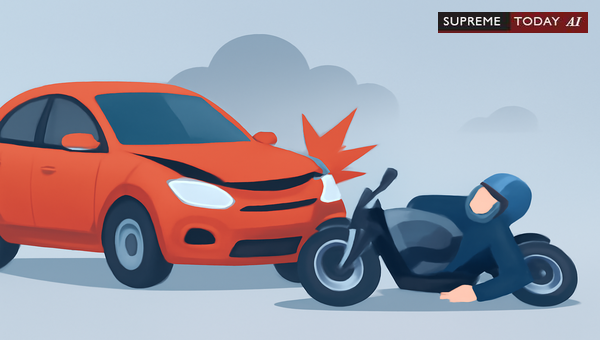
The provided legal documents do not explicitly list the ingredients in a single source, focusing instead on procedural aspects like bail. However, case references reveal its frequent use alongside traffic laws or other negligence scenarios. For instance, in a bail application under , an FIR was registered under and against a tractor driver accused of causing a motorcyclist's death. 2025 Supreme(Online)(Chh) 10431
The court emphasized the favoring liberty over detention, subject to conditions, highlighting how Section 106 fits into rash driving cases. 2025 Supreme(Online)(Chh) 10431
Key Ingredients of the Offense Under Section 106 BNS
To establish an offense under Section 106 BNS, prosecutors typically need to prove the following core ingredients, inferred from statutory language and judicial precedents:
: The act must be performed with rashness (gross negligence) or negligence (failure to exercise reasonable care). In motor vehicle cases, this includes overspeeding, reckless driving, or ignoring traffic rules. For example, F.I.R. was registered under Sec. 105, 106 of the Bhartiya Nyaya Sanhita (B.N.S.) and Sec. 184, 146/196 of . 2025 Supreme(Online)(Chh) 10431
Causation Leading to Death: There must be a direct link between the act and the death. Mere negligence without resulting in death does not suffice.
Not Amounting to : The act lacks intention to cause death or knowledge that it is likely to cause death (distinguishing from Sections 100-104 BNS).
These elements are assessed on facts, with courts granting bail if evidence is weak. In another case, an under involved and , where the applicant apprehended arrest for alleged negligence in electricity-related death. 2025 Supreme(Online)(Chh) 5476
Related Contexts and
Section 106 often intersects with evidentiary rules. In a murder bail case under , courts referenced (equivalent to Evidence Act Section 106) on for facts within special knowledge. The court noted, rests on the prosecution; insufficient evidence can lead to bail, granting bail due to lack of . 2025 Supreme(Online)(Pat) 3185
This underscores that for Section 106 BNS, the prosecution bears the initial burden, but the accused may need to explain facts peculiarly within their knowledge.
Judicial Interpretations and Case Examples
Recent judgments provide practical illustrations:
Motor Vehicle Rashness: In the tractor driver case, the applicant argued no prior record and evidence doubts. The court balanced gravity against bail rights, imposing trial conditions. The court emphasizes the favoring liberty over detention, subject to reasonable conditions during trial. 2025 Supreme(Online)(Chh) 10431
Electricity Theft/ Negligence: FIR under for potential death from unauthorized connections, showing its broad application beyond roads. 2025 Supreme(Online)(Chh) 5476
Distinction from Grave Offenses: Unlike (rape/murder), Section 106 is in some scenarios but triable by Magistrate if punishment is up to 5-10 years. Bail is often granted post-charge-sheet if no flight risk. 2025 0 Supreme(Cal) 170
Note: Some discussions link nearby sections like 85/86 BNS (matrimonial cruelty, akin to IPC 498A) to evidentiary burdens, but Section 106 stands distinct. Documents on Sections 85/86 highlight legislative reviews but no direct tie to 106. 2025 0 Supreme(Jhk) 224 2024 4 Supreme 347
Procedural Aspects: Bail and Trials Under BNS
Bail Applications: Frequently filed under (regular bail) or 482 (anticipatory). Courts deny if contraband/large recoveries, but favor liberty in negligence cases. 2025 Supreme(Online)(Chh) 6456
Charge Framing: Post-investigation, charges under 106 BNS require evidence like eyewitnesses or forensics. In one appeal, Central Government competence under was key for sentence enhancement. 2025 0 Supreme(Cal) 170
Compounding Limits: Grave negligence (punishable up to 10 years) resists quashing via compromise. 2024 0 Supreme(MP) 456
Comparison with IPC Section 304A
| Aspect | IPC 304A | BNS 106 ||--------|----------|---------|| Punishment | 2 years RI/fine | Up to 5-10 years (contextual) || Cognizable | Yes | Yes || Bailable | Yes (generally) | Yes, with conditions |
This continuity aids transition, but BNS emphasizes victim rights.
Key Takeaways and Recommendations
- Ingredients Summary:
- Rash/negligent act.
- Resulting death.
Absence of culpable intent.
Section 106 BNS applies typically to accidents, requiring proof of negligence beyond civil standards.
For precise text, refer to the official BNS gazette. Judicial trends favor bail in weak cases, prioritizing liberty. 2025 Supreme(Online)(Chh) 10431 2025 Supreme(Online)(Pat) 3185
In matrimonial or other disputes, related sections like 85/86 may arise, but 106 focuses on negligence-death nexus. Always verify with primary sources, as analyses here are from cited documents. 2025 0 Supreme(Jhk) 224 2024 4 Supreme 347
Disclaimer: This overview is for informational purposes. Legal outcomes vary; seek professional advice.
#BNS106 #BharatiyaNyayaSanhita #CriminalLaw












