


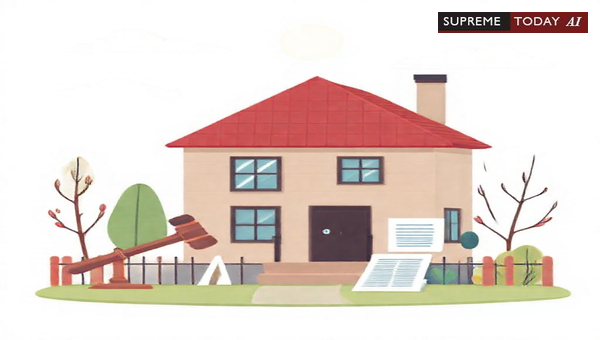
What Ingredients Must a Plaintiff Prove to Recover Possession of Property in India
A recurring question in civil litigation is: what are the ingredients to be proved to get of property by the plaintiff? The answer depends on the nature of the suit. A title-based suit for possession demands proof of ownership, while a summary suit under , 1963 turns entirely on possession and , with title being irrelevant. Understanding which ingredients apply to your case is often the difference between a decree and dismissal.
The Core Ingredients in a Title-Based Possession Suit
Courts have consistently held that to recover possession, the plaintiff must prove entitlement to possession, the manner of that entitlement, and the specifics of dispossession or the wrongful nature of the defendant's occupation 2025 0 Supreme(SC) 508. In practical terms, this means:
- Title or lawful possession: The plaintiff must establish ownership through title deeds, registered instruments, or documented . Revenue records alone are insufficient to confer title 2025 0 Supreme(SC) 508.
- Burden on the plaintiff: In a suit for declaration and , the rests squarely on the plaintiff. The plaintiff must succeed on the strength of their own case; the weakness of the defendant's case is not enough 2025 0 Supreme(Telangana) 1415 and 2026 Supreme(Online)(Mad) 55538.
- Identity of the property: The suit property must be tangibly identified, often through a commissioner's report or clear boundaries, before possession can be decreed 2012 0 Supreme(Mad) 1097.
- Specific pleadings and evidence: Cogent evidence matching the pleadings is essential. A few bits and pieces of evidence without proper pleading cannot be appreciated by the court 2025 0 Supreme(Kar) 2221.
If the plaintiff fails to establish title through independent, credible evidence, the relief of declaration and cannot be granted 2026 Supreme(Online)(Mad) 55538. For instance, where a plaintiff claimed title through a chain of oral partitions and gifts but produced no contemporaneous records, tax receipts, or valid deeds, the claim failed because each link in the chain must be independently proved 2026 Supreme(Online)(Mad) 55538. Similarly, an oral gift of immovable property requires a registered instrument under , 1882, and delivery of possession; without these, no title passes 2026 Supreme(Online)(Del) 17966.
What Happens Once Title Is Established
A title suit for possession has two parts: first, adjudication of title, and second, adjudication of possession. Once the plaintiff proves title, the burden shifts to the defendant to demonstrate why they should not be ejected 2025 0 Supreme(Gau) 2346. The Supreme Court's decision in makes clear that when a suit is based on title, the plaintiff cannot be non-suited unless the defendant proves for the prescriptive period 2025 0 Supreme(Gau) 2346.
The Court in further held that once legal title is established, possession by any other person is presumed to be under and in subordination to that legal title 2025 0 Supreme(Gau) 2346.
Possession Without Title: The Section 6 Remedy
A plaintiff who was wrongfully dispossessed can sue for restoration of possession without proving title at all. Under , 1963, the only questions are possession and dispossession 2024 0 Supreme(Cal) 1441. The ingredients are:
- on the date of dispossession – the plaintiff must prove possession specifically on the date of the alleged dispossession, particularly where the defence asserts prior loss of possession to a third party 2026 0 Supreme(Bom) 283.
- Dispossession without consent – the plaintiff must have been dispossessed otherwise than in due course of law 2024 0 Supreme(Cal) 1441.
- Suit within six months of the dispossession 2026 0 Supreme(Bom) 283.
If any of these ingredients is missing, the court must dismiss the summary suit, though the plaintiff remains free to file a fresh suit based on title, since sub-section (4) of Section 6 does not bar such a remedy 2026 0 Supreme(Bom) 283. Even in possession-based suits, however, title disputes between strangers to the title mean the person in is generally entitled to recover 2024 0 Supreme(Ori) 41.
Rebutting and Defences
Defendants often resist ejectment by pleading . Courts require strict proof of the ingredients:
- – a conscious intention to possess hostilely against the true owner.
- Open, continuous, and hostile possession for the statutory period.
- Specific pleading of in the written statement; mere long possession without pleading the commencement of hostility does not ripen into title 2026 0 Supreme(Mad) 992 and 2026 Supreme(Online)(Del) 17966.
deserves special mention. A caretaker or licensee holds property under a revocable permission, and such possession can never mature into against the true owner, no matter how long it lasts 2026 0 Supreme(Mad) 992 and 2026 0 Supreme(Del) 976 and 2026 Supreme(Online)(Del) 17966. An admission of caretaker status is legally significant and supports an by the owner 2026 0 Supreme(Del) 976.
Choosing the Right Remedy
The plaintiff must frame the suit correctly:
- A title-holder may sue for , ejectment of an ex-lessee, or a mandatory injunction requiring the occupant to remove themselves 2022 5 Supreme 657.
- A plaintiff seeking a perpetual injunction must prove actual possession on the date of filing the suit 2025 0 Supreme(Kar) 2221.
- A bare mandatory injunction to remove a structure without claiming possession may be barred under ; the proper remedy is a suit for possession or ejectment 2026 2 Supreme 401.
- Where the defendant is in possession and disputes the plaintiff's title, a declaration of title is mandatory before can be granted 2019 0 Supreme(P&H) 1356.
Successful plaintiffs may also claim past and future until actual delivery of possession 2000 0 Supreme(Guj) 335.
Key Takeaways
The ingredients a plaintiff must prove for generally reduce to this: establish title or prior lawful possession, prove the wrongful character of the defendant's occupation, identify the property with precision, and plead and evidence each element specifically. Once title is shown, the defendant must justify continued occupation, typically by proving , which courts scrutinize strictly. Because outcomes turn heavily on pleadings and facts, this article is general information only and specific litigation strategy may require professional evaluation of your documents.
#RecoveryOfPossession #PropertyLaw #AdversePossession #SpecificReliefAct #CivilSuits









