


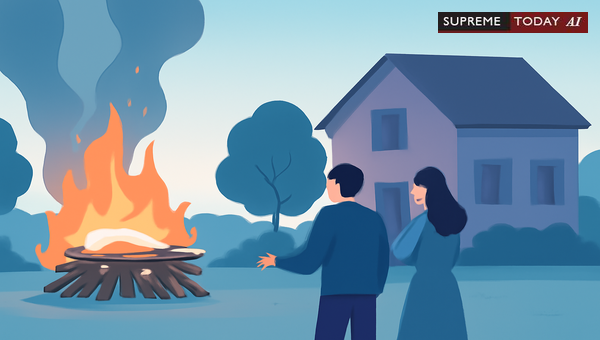
Against Burning Dead Bodies Near Homes: A Guide to Law
Imagine living in a peaceful residential neighborhood, only to be constantly disturbed by the smoke, odor, and distress of burning dead bodies nearby. This isn't just an inconvenience—it's a potential that may address through an . If you're facing the question: to Prevent Caused by Burning of Dead Bodies Near the Residential House, this post breaks down the legal pathways, key cases, and practical steps.
While this article provides general insights based on legal precedents, it is not a substitute for professional legal advice. Consult a qualified lawyer for your specific situation.
Understanding in Residential Areas
occurs when someone's use of their property unreasonably interferes with your enjoyment of your own land, causing substantial discomfort or injury. In the context of burning dead bodies (often at cremation grounds or ghats), issues like foul odors, smoke, health risks, and emotional distress can qualify as actionable nuisance. The interference must be more than trivial—it needs to be . 1999 0 Supreme(Mad) 167
Courts assess factors like proximity to homes, frequency of the activity, and local context. For instance, if the site is near schools or densely populated areas, the case strengthens significantly. 2015 0 Supreme(Del) 70
Legal Grounds for Seeking an
Under , you can seek a to stop the nuisance. To succeed, demonstrate:- Real and substantial injury: Not just minor annoyance, but proven health impacts or severe discomfort. 1999 0 Supreme(Mad) 167 2010 0 Supreme(Bom) 1215- Impending or ongoing harm: Evidence like medical reports, photos of smoke, or resident testimonies is crucial.
Remedies for typically include , , or . As noted, The remedies for are (1) (2) and (c) . In Order to obtain an , it must be shown that the injury complained of as present or impending is such as by reason of its gravity, or its permanent character, or both cannot be adequately compensated in . 2019 0 Supreme(J&K) 121
Landmark Cases on Cremation and Nuisance
have ruled on similar disputes, balancing community rights with individual comfort:
: Cremation grounds aren't nuisances if operated reasonably without negligence. Plaintiffs must prove substantial, not nominal, injury. 2008 0 Supreme(Raj) 2125
Vasant Kunj Residents Welfare Association Case: Residents successfully argued against burning bodies near homes and schools, citing widespread disruption. This highlights community impact as a key factor. 2015 0 Supreme(Del) 70
: An was granted for a flour mill in a residential area due to significant inconvenience, emphasizing locality. 1987 0 Supreme(AP) 539
: Injunctions should prevent material discomfort without overly restricting mitigation efforts. 1968 0 Supreme(Ori) 140
Additional precedents reinforce regulation:- In a case under the and , courts upheld prohibitions on burning ghats endangering health, noting, The State is fully competent to prohibit religious practices which endanger health. Even religious beliefs (like cremation on riverbanks for salvation) are subject to . 2015 0 Supreme(Ker) 667- Municipal actions, like in Mandideep, mandate preventing unregulated burning and plantation to curb odors: Municipal Council Mandideep take immediate action to prevent any unregulated burning of dumping waste... to prevent the odour nuisance. 2023 Supreme(Online)(NGT) 542
These cases show courts prioritize health and residential peace over unregulated practices.
Integrating Regulatory and Angles
Beyond common law nuisance, leverage local regulations:- Health and safety statutes: Violations of norms (e.g., distance from residences) bolster claims. 2000 0 Supreme(Ker) 176- Urban planning laws: Cases like the conversion of open spaces near burning ghats (e.g., Bhairo Ghat in Kanpur) into commercial uses have been struck down for violating master plans. 2019 0 Supreme(All) 377
In one , allotments for multiplexes on lands marked as parks near cremation sites were deemed illegal, underscoring protection of open spaces. 2019 0 Supreme(All) 377
Criminal angles may arise if burning involves illegality, as in cases with evidence trails from burning bodies, but civil injunctions focus on prevention. 2017 0 Supreme(MP) 809 2019 0 Supreme(All) 135
Key Findings: When an is Likely
- Substantial Injury Test: Prove health risks or severe discomfort—mere smell isn't enough unless significant. 2008 0 Supreme(Raj) 2125 1999 0 Supreme(Mad) 167
- Proximity Matters: Near homes, schools, or parks? Stronger case. 2015 0 Supreme(Del) 70
- Reasonableness Defense: Defendants may argue traditional practices, but negligence voids this. 2008 0 Supreme(Raj) 2125
- Community vs. Individual: Resident associations amplify claims.
Practical Recommendations to Secure Relief
- Gather Robust Evidence:
- Resident affidavits on health issues (e.g., respiratory problems from smoke).
- Photos/videos of smoke/odor.
Medical records.
Check Local Laws:
- Review municipal rules on crematoria distances.
Cite breaches, like unregulated burning. 2023 Supreme(Online)(NGT) 542
File the Suit:
- Approach for permanent prohibitory .
Seek interim relief to halt activities pending trial.
Consider Alternatives:
- Negotiate relocation or modern crematoria (electric/gas) to mitigate.
Conclusion and Key Takeaways
Courts generally support injunctions against from burning dead bodies near residences if substantial injury is proven. Precedents like Vasant Kunj and Muhammad Mohidin Sait provide a roadmap, while regulations add teeth. Protect your home by acting swiftly with evidence.
Key Takeaways:- Prove substantial, not trivial, harm. 1999 0 Supreme(Mad) 167- Leverage proximity and community impact. 2015 0 Supreme(Del) 70- Combine nuisance law with health regs for stronger claims.
References: 1968 0 Supreme(Ori) 140 1927 0 Supreme(Nagpur) 26 2010 0 Supreme(Bom) 1215 2008 0 Supreme(Raj) 2125 2000 0 Supreme(Ker) 176 1999 0 Supreme(Mad) 167 2015 0 Supreme(Del) 70
1987 0 Supreme(AP) 539 2023 Supreme(Online)(NGT) 542 2019 0 Supreme(J&K) 121 2015 0 Supreme(Ker) 667
This is general information; seek tailored legal counsel.
#PrivateNuisance #LegalInjunction #NuisanceLaw















