


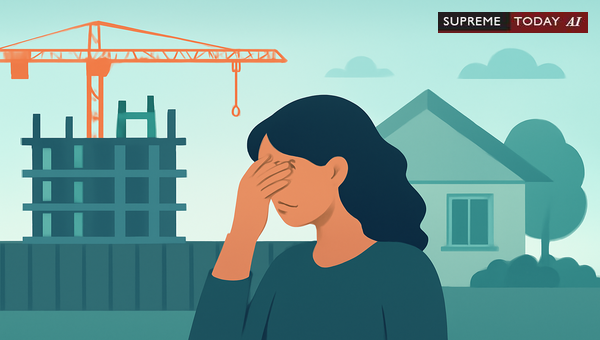
Against Renovation Work Affecting Privacy: A Legal Guide
Living in close-knit neighborhoods often means dealing with neighbors' construction or renovation projects. But what happens when these works invade your privacy, such as by opening windows that overlook your private spaces? Many homeowners wonder: Can an be granted against renovation work in a way affecting the privacy?
This is a common dispute in India, where clash with privacy concerns. While property owners generally have the freedom to alter their homes, courts may intervene if privacy rights—often rooted in custom—are substantially infringed. This blog post breaks down the legal principles, key case laws, and practical steps, drawing from established precedents. Note: This is general information, not specific legal advice. Consult a qualified lawyer for your situation.
Understanding the Right to Privacy in Property Disputes
The right to privacy is a fundamental concern, but it's not absolute. Courts recognize that it can be restricted by custom, law, or necessity. In the absence of any established custom or law, property owners have the right to make alterations to their property, including opening windows, even if it affects the privacy of adjoining owners. 1975 0 Supreme(J&K) 63
However, if a plaintiff can establish a , an may be granted to protect it. This requires proving that the renovation work substantially interferes with privacy. For instance, constructions allowing observation into private areas like bathrooms have been deemed a substantial invasion, potentially warranting relief. 1968 0 Supreme(All) 230
Under the , plaintiffs must plead and prove such customary rights to seek a against a neighbor's construction. 1997 0 Supreme(AP) 1012 1917 0 Supreme(All) 217
Key Requirements for an
To succeed, plaintiffs typically need to show:- Existence of a in the locality.- Substantial infringement by the renovation (e.g., new windows or structures enabling prying eyes). 1997 0 Supreme(AP) 1142 1970 0 Supreme(Kar) 180 1930 0 Supreme(All) 75
Principles Governing Temporary Injunctions
Temporary injunctions are governed by (CPC). They are granted only if the applicant has a enforceable by . Temporary is an equitable remedy as well as it is governed by law. A temporary can be granted only if the person seeking has a , capable of being enforced by way of . Therefore, equitable principles are of very much importance in granting or rejecting . 2019 0 Supreme(Mad) 34 2019 0 Supreme(Mad) 183
Courts evaluate three core factors:1. Case: Strong evidence of privacy infringement.2. : Weighing harm to plaintiff vs. defendant.3. : Proof that damages alone won't suffice. 2019 0 Supreme(Mad) 255
In one case, plaintiffs failed to establish these, leading to dismissal of their petitions against trusteeship interferences, with courts stressing expeditious trial disposal. 2019 0 Supreme(Mad) 34
Conversely, where conditions like family arrangements are fulfilled without fraud evidence, injunctions are upheld. 2019 0 Supreme(Mad) 183
Case Law Insights: When Injunctions Succeed or Fail
Courts balance with privacy. If privacy is substantially invaded—e.g., direct views into private spaces—injunctions may issue. 1968 0 Supreme(All) 230
But failure to prove customary rights often dooms claims. In such scenarios, courts dismiss suits, allowing renovations to proceed. 1997 0 Supreme(AP) 1008 1997 0 Supreme(AP) 1012 1973 0 Supreme(All) 125
Additional precedents highlight nuances:- Renovation liberties granted without affecting adjacent properties, under court supervision. 2025 Supreme(Online)(Cal) 971- No for good-faith renovations, even if technically violating orders: requires deliberate disregard of court orders; good faith actions related to renovations do not constitute . 2025 Supreme(Online)(Cal) 1861- Amendments to plaints for mandatory injunctions allowed even at evidence stage, without . 2015 0 Supreme(P&H) 1750
These cases underscore that injunctions aren't automatic; evidence and equity matter.
Balancing Rights: Convenience and Harm
Courts often tip the scales via . If no irreparable harm is shown, requests are denied. 2019 0 Supreme(Mad) 255
For example, in disputes over renovations causing electricity issues, courts found no malicious intent, directing apologies and compensation instead of findings. 2025 Supreme(Online)(Cal) 1861
Property owners aren't wholly unrestricted. Customary privacy—proven via local practices, witness testimonies, or historical precedents—can override. Gather photos, neighbor affidavits, and expert opinions on locality norms.
Practical Recommendations for Plaintiffs
To build a strong case:- Document Everything: Photos/videos of pre- and post-renovation views, privacy impacts.- Prove Custom: Evidence of longstanding privacy expectations (e.g., no prior windows).- Seek Temporary Relief Early: File under CPC Order 39, emphasizing urgency.- Consider Alternatives: Negotiate screens or modifications before litigation.
Defendants should ensure works minimize impacts and comply with permissions. Courts favor minimal interference.
Conclusion and Key Takeaways
Injunctions against renovation work affecting privacy are possible but hinge on proving customary rights and substantial interference. Without these, courts typically allow works to continue, prioritizing . 1997 0 Supreme(AP) 1012
Key Takeaways:- Privacy isn't absolute; custom is crucial. 1975 0 Supreme(J&K) 63- Establish case, balance, and irreparable harm for temporary relief. 2019 0 Supreme(Mad) 34- Document locality practices and infringements meticulously.- Courts balance equities—good faith matters. 2025 Supreme(Online)(Cal) 1861
Neighbor disputes can escalate quickly. Early legal consultation prevents costly battles. For tailored advice, reach out to a property law expert.
Citations:1975 0 Supreme(J&K) 63 1997 0 Supreme(AP) 1142 1970 0 Supreme(Kar) 180 1930 0 Supreme(All) 75 1968 0 Supreme(All) 230 2019 0 Supreme(Mad) 255 1997 0 Supreme(AP) 1012 1973 0 Supreme(All) 125 1997 0 Supreme(AP) 1008 2025 Supreme(Online)(Cal) 971 2025 Supreme(Online)(Cal) 1861 2019 0 Supreme(Mad) 34 2019 0 Supreme(Mad) 183 2015 0 Supreme(P&H) 1750
#PrivacyRights #InjunctionLaw #NeighborDisputes















