


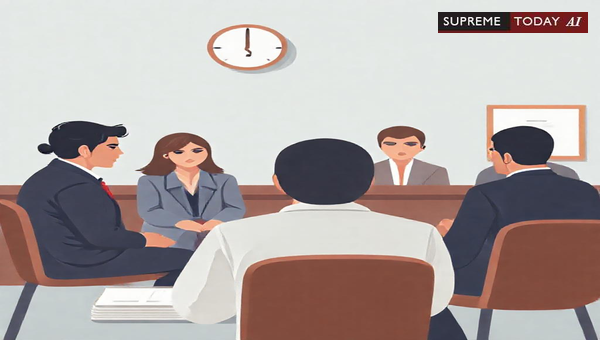
When an Contradicts Himself: Do Deposition Inconsistencies and Medical History Destroy the Prosecution Case?
A recurring defence argument in Indian criminal trials is that inconsistencies in the deposition of an , or a variation between the story narrated in court and the alleged history given to the treating doctor, fatally undermine the prosecution. The question is whether such discrepancies—particularly the history of the incident recorded by a doctor—can by themselves demolish a case built on the testimony of a witness who was himself injured in the occurrence. Indian courts have answered this question with remarkable consistency, though with important limits.
The Special Evidentiary Status of an
The has repeatedly held that the testimony of an carries a special status and inherent reliability. Because the witness sustained injuries at the time and place of the occurrence, his presence at the scene carries an that cannot be said of a purely chance witness. In , the Apex Court observed that an would not ordinarily spare the actual assailant and falsely implicate a third person, and that such testimony should be relied upon unless major contradictions justify rejection 2026 0 Supreme(All) 446. This principle was reaffirmed in , where it was stressed that convincing evidence is required to discredit an 2026 Supreme(Online)(HP) 3163.
The practical consequence is this: or inconsistencies in the deposition of an are not fatal to the prosecution case and should be disregarded 2026 Supreme(Online)(Mad) 18059.
Discrepancy Versus Contradiction: The Critical Distinction
Courts draw a firm line between and :
- arise naturally from errors of memory, observation, or narration when a witness is examined at length. They do not render the testimony unreliable 2022 0 Supreme(MP) 493 and 2024 0 Supreme(SC) 459.
- are omissions or variations in material particulars that strike at the core of the prosecution story. Only these can be used to discredit the witness 2026 0 Supreme(All) 446.
In , the court held that a contradiction in the statement of a witness may be fatal, but a minor discrepancy or variance in evidence will not make the prosecution's case doubtful 2024 0 Supreme(SC) 459. Similarly, a contradiction in the number of injuries was held not fatal where the eyewitness account consistently attributed the stabbing to the accused 2024 1 Supreme 745.
The History Given to the Doctor: How Much Weight Does It Carry?
A frequent defence contention is that the history of the incident recorded by the treating doctor differs from the witness's deposition, and that this variation is fatal. The case law suggests otherwise. In a Gujarat decision involving an injured eyewitness, it was held that minor contradictions between the evidence of the witness and the doctor who treated the injured are not fatal to the prosecution case 2026 Supreme(Online)(Mad) 18059. The court there refused to appreciate the witness's statement in a piecemeal fashion by picking one sentence, noting that her injuries were proved and her capacity as an eyewitness was uncontroverted 2009 0 Supreme(Guj) 327.
Further, it was held that the failure to mention a particular weapon or detail in the complaint or in the history given at first instance does not bar the prosecution from proving those facts through later evidence, especially where recoveries or forensic reports corroborate them 2009 0 Supreme(Guj) 327.
However, the picture is not one-sided. Where the medical history given by the complainant contains glaring inconsistencies—combined with other lapses such as non-examination of independent witnesses and non-recovery of the alleged weapon—courts have treated the accumulated doubts as undermining the prosecution version 2025 Supreme(Online)(Guj) 12822. And where contradictions between the witnesses and the medical or documentary record are truly major, acquittals have followed 2024 0 Supreme(Pat) 1026.
Medical Evidence Versus Ocular Testimony
When medical evidence and the 's account are at variance, the accepted test is whether the medical evidence positively makes the improbable and unreliable. Medical evidence is opinion evidence; it does not usually override consistent, trustworthy eyewitness testimony. Courts have held that just because the autopsy surgeon's opinion suggests more injuries than narrated, or the recovered weapon seems insufficient, the prosecution version cannot be negated where the eyewitness account is consistent 2024 1 Supreme 745. Likewise, in a prosecution under , injuries on the prosecutrix were held sufficient corroboration, and the absence of spermatozoa was not accepted as ruling out sexual intercourse 1999 9 Supreme 155.
, Falsus in Omnibus: No Automatic Rejection
Indian courts do not strictly apply the maxim that a witness false in one thing is false in everything. The , applying on contradictions, held that the court must sift the chaff from the grain and may rely on the credible portion of a witness's testimony even if portions relating to other accused are rejected 2025 Supreme(Online)(HP) 3487. Exaggerations and embellishments are discarded, but not the whole evidence 2026 Supreme(Online)(HP) 3163.
When Inconsistencies Do Become Fatal
The protection given to testimony is not absolute. It may fail where:
- Major contradictions in material particulars go to the root of the case 2026 0 Supreme(All) 446.
- The witness is related or interested, and corroboration is absent while contradictions abound 2024 0 Supreme(Pat) 1027.
- The deposition is internally inconsistent or so improbable that no reasonable inference of guilt can be drawn 2022 0 Supreme(Cal) 218.
- The prosecution fails to explain injuries on the accused, casting doubt on the genesis of the occurrence 2009 0 Supreme(All) 3746.
- The witness lacks —for instance, where bloodstained clothes were allegedly smeared but never seized 2024 0 Supreme(Guj) 411.
Key Takeaways
- Inconsistencies in the deposition of an , and variations in the alleged history given to the doctor, are generally not fatal to the prosecution case unless they amount to affecting the core of the story 2026 0 Supreme(All) 446 and 2026 Supreme(Online)(Mad) 18059.
- Courts read the witness's evidence as a whole, testing whether it has a , rather than picking sentences piecemeal 2009 0 Supreme(Guj) 327 and 2024 0 Supreme(Jhk) 478.
- Medical evidence rarely overrides consistent ocular testimony; it becomes decisive only when it positively renders the eyewitness account improbable 2013 6 Supreme 238.
- The accused may still secure acquittal where contradictions are major, witnesses are interested and uncorroborated, or the investigation leaves serious gaps 2024 0 Supreme(Pat) 1026 and 2025 Supreme(Online)(Guj) 12822.
This article reflects general principles drawn from judicial precedents and is not specific legal advice; outcomes always depend on the facts and evidence of each case.
#InjuredWitness #CriminalLaw #EvidenceAct #ProsecutionCase #WitnessTestimony









