


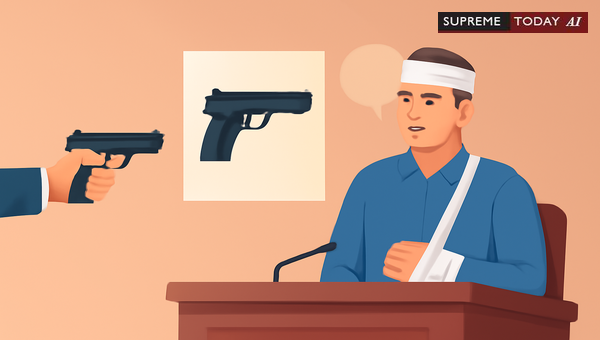
Injured Witness Fails to Identify Weapon: Does It Matter in Court?
In criminal trials, often forms the backbone of the prosecution's case. But what happens when an injured witness, who was at the scene and suffered harm, cannot identify the weapon used? This raises a critical question: Injured Failed to Identify the Weapon Whether this Evidence is Relevant. Many defendants challenge the reliability of such testimony, arguing it creates . However, courts generally assess the overall rather than dismissing evidence outright. This post delves into legal principles, case applications, and strategies to strengthen cases despite this gap.
Understanding Eyewitness in Criminal Cases
Testimony from injured witnesses carries significant due to their direct involvement. Courts recognize that their presence at the crime scene enhances reliability, making them unlikely to falsely implicate others. As established in key rulings, The testimony of injured witnesses is generally considered reliable and is given significant in court 2024 2 Supreme 529 2021 0 Supreme(Bom) 3.
Yet, challenges arise when specifics like weapon identification are missing. The failure to pinpoint the weapon does not automatically discredit the witness. If a plausible explanation exists—such as poor visibility in dark conditions—courts may still uphold the testimony's 2003 0 Supreme(HP) 44. This principle ensures justice isn't derailed by minor gaps, provided the core account remains consistent.
Factors Courts Consider
- Proximity and Presence: Injured parties are deemed credible due to their stake in the event.
- Explanation for Gaps: Poor lighting or shock can justify inability to identify details without undermining the whole narrative.
- Consistency: Matching statements across witnesses bolster reliability.
Role of Circumstantial and
like weapon recovery isn't always required. Prosecutions can rely on if it's credible and consistent. For example, Even in the absence of linking a specific weapon to the crime, the prosecution can still establish a case based on , provided that the overall evidence is credible and consistent 2024 0 Supreme(Chh) 18 2022 0 Supreme(Cal) 575. Injuries corroborated by eyewitnesses can suffice.
Non-recovery of the weapon further doesn't doom the case. The non-recovery of the weapon does not necessarily undermine the prosecution's case if there is sufficient from eyewitnesses 2024 2 Supreme 529 2023 0 Supreme(Cal) 984. Courts prioritize holistic proof over isolated elements.
often bridges gaps. In one case, From the said evidence, it is established that the injured did suffer grievous injuries most of which were possible by a sharp edged weapon... The injured has also received fracture on his head which as per the , is possible by striking against a hard object 2024 0 Supreme(J&K) 407. Such reports indicate weapon type indirectly, supporting testimony even without identification.
Case Studies: When Testimony Holds Despite Weapon ID Failure
Real-world applications illustrate these principles. Consider scenarios where courts acquitted or convicted based on broader evidence:
Medical Corroboration Triumphs: Even without direct weapon ID, consistent medical findings upheld convictions. The reveals injuries on the injured compatible with the weapon used. Both the material witnesses... have fully supported the prosecution case by offering a consistent, coherent and convincing narration 2017 0 Supreme(All) 462. Here, injured witness reliability prevailed.
Light Conditions Don't Always Discredit: No doubt... as there is no source of light, that she could not identify the accused—yet testimony stood because other factors like post-incident actions corroborated it 2025 Supreme(Online)(Guj) 12625.
Overpowers Motive Gaps: In a murder case, When the wife had given , explaining the mode of occurrence along with the weapon used by the accused and when the Doctor has given evidence that it is possible to cause those injuries using spade, nothing more is required to be proved 2018 0 Supreme(Mad) 402. A single trustworthy witness, backed by medicals, sufficed.
Conversely, failures occur when evidence chains break:
Weak Eyewitnesses Lead to Acquittal: Courts reverse convictions if testimony is questionable, like when an injured party was heavily drunk and could have caused injuries by falling, with no motive or corroboration (from Ranbir Penal Code case summary).
Recovery Flaws Undermine Cases: This evidence is insufficient to prove the recovery of weapon. The very purpose of requiring a Panch to witness the recovery is to see that independent witnesses vouch for the fact 2022 0 Supreme(Raj) 1179. Without proper links, even recovered items fail.
and Inconsistencies: They have failed to identify the accused persons as the culprits and have also failed to identify the weapon of offence led to acquittals when key witnesses turned hostile 2012 0 Supreme(Del) 2434.
Discrepancies in Weapon Claims: The evidence of PW6, who is the Doctor clearly shows that he did not find any injury caused by sharp weapon, as alleged by the injured highlighted mismatches dooming claims 2017 0 Supreme(Gau) 869.
These examples show courts weigh the totality: Conviction requires , especially when relying on that is questionable (from case desc in other sources).
Application to Your Scenario
In cases where the injured party failed to identify the weapon due to poor visibility, courts typically find it doesn't render testimony unreliable. The injured witness's inability to identify the weapon due to poor visibility (e.g., dark conditions) does not render their testimony unreliable 2003 0 Supreme(HP) 44. Bolster with:
- Medical reports detailing injury types, suggesting weapon class 2024 0 Supreme(Chh) 18.
- Other eyewitnesses or circumstantial links.
Defenses may attack gaps, but prosecutions succeed by building complete chains. In circumstantial cases, establish motive, relationship, and unbroken evidence 2022 0 Supreme(Raj) 1179.
Key Takeaways for Legal Practitioners and Victims
- Focus on Corroboration: Pair testimony with medicals, forensics, or multiples witnesses.
- Explain Gaps Reasonably: Visibility or trauma justifications preserve .
- Holistic Assessment: Courts view evidence as a whole, not isolated failures.
While these principles guide generally, outcomes vary by facts. This is not legal advice—consult a qualified attorney for case-specific guidance.
In conclusion, an injured witness's failure to identify the weapon rarely negates their evidence's relevance if explanations hold and corroboration exists. The failure of the injured party to identify the weapon does not automatically negate the relevance of their testimony—courts prioritize credible narratives supported robustly. Strengthening with diverse proofs ensures justice prevails.
References:- 2024 2 Supreme 529 2021 0 Supreme(Bom) 3 2003 0 Supreme(HP) 44 2024 0 Supreme(Chh) 18 2022 0 Supreme(Cal) 575 2023 0 Supreme(Cal) 984 2024 0 Supreme(J&K) 407 2025 Supreme(Online)(Guj) 12625 2022 0 Supreme(Raj) 1179 2018 0 Supreme(Mad) 402 2017 0 Supreme(Gau) 869 2017 0 Supreme(All) 462 2012 0 Supreme(Del) 2434
#EyewitnessTestimony #CriminalEvidence #LegalCredibility















