


Is Applicable in Indian Criminal Cases?
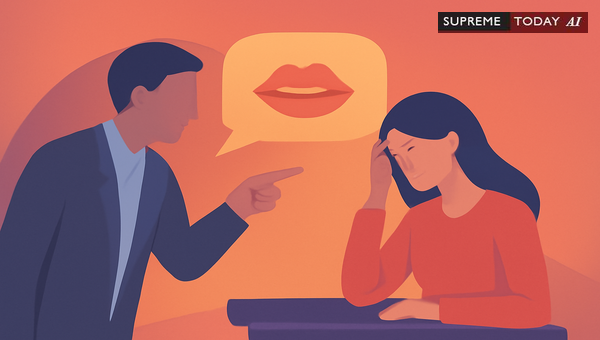
In today's workplace and social environments, subtle remarks can carry heavy legal weight. But whether is applicable in criminal cases under Indian law remains a critical question for victims, employers, and legal professionals alike. —indirect suggestions or hints, often with sexual or defamatory undertones—can blur the lines between harmless banter and criminal offense. This post explores its role primarily in sexual harassment under , while touching on contexts, drawing from judicial precedents and statutory definitions.
Note: This is general information based on legal principles and is not specific legal advice. Consult a qualified lawyer for your situation.
What is in a Legal Context?
refers to an indirect or implied meaning, often more suggestive than explicit. In law, it gains traction when words appear innocent on the surface but convey a defamatory, sexual, or harmful imputation to those with special knowledge or context. Courts assess based on the ordinary reasonable person's perception, not just literal interpretation. 2018 0 Supreme(Guj) 493
For instance, This is not limited to the literal and obvious meaning but includes any inference which the ordinary, reasonable reader would draw from the words. 2018 0 Supreme(Guj) 493 This principle extends to criminal law, where context determines criminality.
in Sexual Harassment Cases: Section 354A IPC
Under Indian law, prominently features in sexual harassment prosecutions. criminalizes , defined as , demands, or any other physical, verbal, or non-verbal conduct of a sexual nature. fits here when remarks indirectly suggest sexual intent. 2016 0 Supreme(MP) 628 2019 0 Supreme(Gau) 1279 2019 0 Supreme(Gau) 1147
Key Legal Principles
Courts have clarified that no physical contact is required. causing discomfort or humiliation suffices. The emphasis lies on:- Unwelcomeness: Victim's perception is pivotal.- Sexual colouring: Suggestive nature implying advances. 2016 0 Supreme(MP) 628 2019 0 Supreme(Gau) 1279- Context: Workplace dynamics or repeated instances amplify impact.
As noted, such remarks or , if , can amount to sexual harassment, even without physical contact or assault. 2016 0 Supreme(MP) 628 2019 0 Supreme(Gau) 1279
Judicial Interpretations
Indian courts recognize as actionable if it humiliates or harasses. In relevant precedents, judges held that , which conveys sexual overtures indirectly or through suggestive remarks, can be sufficient to establish sexual harassment under Section 354A IPC. 2016 0 Supreme(MP) 628 2019 0 Supreme(Gau) 1279
The focus is on effect rather than form: The courts have held that or sexually suggestive remarks are actionable if they are and have the effect of humiliating or harassing the victim. 2016 0 Supreme(MP) 628 2019 0 Supreme(Gau) 1279 This shifts scrutiny to the victim's experience and remark's nature, not overt explicitness.
in : A Parallel Criminal Context
While sexual harassment dominates modern discussions, criminal under also invokes it. by occurs when words bear a secondary, harmful meaning via implication. 2022 Supreme(Online)(MAD) 1450
by is well known. Hicks’ case is illustrative in this regard. 2022 Supreme(Online)(MAD) 1450 Courts differentiate:- Natural meaning: Obvious defamatory sense.- : Implied meaning requiring extrinsic facts.
In one case, the issue was whether those spoken words are defamatory of the plaintiff which is not limited to their natural and ordinary meaning and included defamatory imputation arising by way of .
However, must be pleaded and proved; vague inferences fail. 2017 0 Supreme(Ker) 965 In this case there is no such pleading but petitioner would rely on inference that the statement mentioned in Ext. P1 give rise to , but no identification can be construed from the above words to draw ''. 2017 0 Supreme(Ker) 965
Election law and trade disputes echo this. False statements attacking personal character via can void elections under , if calculated to prejudice prospects. Yet, political criticism sans personal attack isn't . In a Kerala case, pamphlets lacked targeting personal conduct, dismissing the petition.
Trade cases require malice and special damage. The impugned representations must be untrue, made maliciously, and result in special damage for an action of to succeed. Generic class statements don't target individuals, barring injunctions. 2015 0 Supreme(Del) 3602
Limitations and Exceptions
isn't a blanket criminal trigger:1. Lack of sexual suggestiveness: Mere ambiguity without sexual tint fails under Section 354A. 2016 0 Supreme(MP) 6282. Context dependency: Isolated remarks may not harass; patterns do.3. thresholds: Must identify the person; class-wide statements evade liability. In a action it must be shown that imputation has in fact been made against a particular person and that such particular individual is capable of being identified. 4. : Public interest publications on true facts withstand claims if honestly opined. 2011 0 Supreme(Bom) 1306
alone, without any accompanying physical contact or overt sexual overtures, may not suffice to establish offences under unless it is clearly sexually suggestive and . Courts demand evidence like testimonies or recordings.
Evidence and Prosecution Tips
To succeed:- Document remarks with dates, witnesses.- Prove unwelcomeness via complaints.- Use digital trails (emails, chats).
For accused, challenge context and intent. Precedents stress balanced evaluation.
Conclusion and Key Takeaways
Yes, is applicable in Indian criminal cases, notably sexual harassment (Section 354A IPC) via and (IPC 500). Courts prioritize victim impact, context, and suggestiveness, but limitations prevent abuse. or are applicable and can constitute sexual harassment under Indian law, specifically under Section 354A IPC, provided they are , sexually suggestive, and cause harassment.
Key Takeaways:- can criminalize subtle sexual advances. 2019 0 Supreme(Gau) 1279- requires clear imputation and identification.- Gather robust evidence; context is king.- Promote workplaces free of harassment through training.
Stay informed, foster respect—subtle words can lead to serious consequences. For personalized guidance, reach out to legal experts.
#InnuendoLaw, #SexualHarassmentIndia, #CriminalLaw















