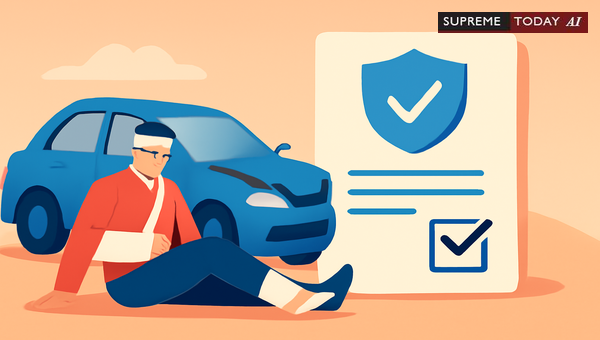
Does an Accident Victim Need Insurance? Essential Legal Guide
Car accidents can be traumatic, leaving victims with injuries, financial burdens, and questions about compensation. One common query arises: Should a victim in an accident possess insurance? If you're a pedestrian, cyclist, or driver hit by another vehicle, do you need your own policy to claim damages? This blog post dives into Indian law, primarily the Motor Vehicles Act, 1988, to clarify this issue. We'll explore insurer liabilities, court precedents, and practical advice—drawing from legal documents and judgments—while emphasizing that this is general information, not specific legal advice. Consult a lawyer for your case.
Understanding Victim Rights in Motor Accidents
In most scenarios, victims do not need their own insurance to receive compensation from the at-fault party's insurer. The focus is on whether the offending vehicle was insured. Under Section 147 of the Motor Vehicles Act, insurers must cover third-party liabilities for bodily injury or death caused by insured vehicles. This protects victims regardless of their insurance status. 2004 0 Supreme(AP) 652
Legal documents confirm: Insurance policies are typically required to cover the liability of the insured vehicle owner for injuries or death to third parties. 2004 0 Supreme(AP) 652 Even if the victim was uninsured, the insurer of the negligent vehicle is generally liable. 2023 0 Supreme(AP) 300
However, exceptions exist, such as policy breaches (e.g., unlicensed driving). Courts prioritize victim protection, allowing claims under Section 166 (fault-based) or Section 163-A (no-fault) of the Act. As one source notes: Therefore, the victim of an accident or his dependants have an option either to proceed under Section 166 of the Act or under Section 163-A of the Act. 2024 0 Supreme(Cal) 1134
Key Principles of Insurance Liability
1. Insurer's Duty to Third Parties
Insurance companies bear primary responsibility for compensating victims when their insured vehicles cause accidents. This holds even if the driver was negligent, provided the policy is valid. Insurance companies are generally liable to compensate victims of accidents involving insured vehicles, even if the accident was caused by the negligence of the insured driver. 2023 0 Supreme(AP) 300 2004 0 Supreme(AP) 652
Victims or dependents can pursue claims directly against the insurer, owner, or driver. Supreme Court rulings reinforce that insurers cannot evade liability easily for third-party victims. 2024 0 Supreme(Guj) 850
2. The 'Pay and Recover' Principle
If the driver lacked a valid license, insurers may still pay the victim upfront and recover from the owner later. In cases where the driver of the offending vehicle does not possess a valid driving license, the insurance company may be directed to pay the victim and then recover the amount from the owner of the offending vehicle. 2019 6 Supreme 286
This principle ensures victims aren't left waiting. However, insurers might challenge claims if the driver didn't posses (possess) the proper endorsement for the vehicle type.
RELIANCE GIC LTD., BELLARY, Vs B DHANANJAY S/O. B. RAMUDU - Karnataka
3. Exceptions and Defenses
Insurers can avoid liability for policy violations, like unauthorized use or unlicensed driving. Insurance companies may be absolved of liability if the accident was caused by a breach of the insurance policy terms, such as driving without a valid license or using the vehicle for purposes not covered by the policy. 2019 6 Supreme 286 2008 2 Supreme 144
For instance, in tractor accidents, courts have ruled: Therefore, the Insurance Company cannot take advantage of his own wrong in seeking the court to draw adverse inference that the driver of tractor did not posses a driving licence as on the date of incident.
THE DIVISIONAL MANAGER Vs SMT. YALLAWWA W/O RUDRAPPA GOUDAR - Karnataka
Gratuitous passengers in goods vehicles face hurdles: Under Section 147 of the Motor Vehicles Act, the Insurance Company is not statutorily liable to pay compensation when the accident victim is a gratuitous passenger in a goods vehicle. 2021 0 Supreme(Mad) 1351 2025 Supreme(GUJ) 104
Victim Compensation: No Need for Personal Insurance
Good news for victims: Your lack of insurance doesn't bar claims. Courts have clarified insurers can't defend based on victim negligence. The Apex Court has clarified that the insurance company cannot raise the defence of negligence on the part of the victim. 2024 0 Supreme(Guj) 850
In simple rash-and-negligent driving cases: Therefore, since this is a simple case of accident whereby a vehicle has dashed the victim, which resulted into his death, the driver, owner and Insurance Company are absolutely liable to pay compensation to the legal heirs of the victim. 2016 0 Supreme(Guj) 675
Steps for Victims to Secure Compensation:- Verify Offending Vehicle's Insurance: Confirm coverage exists—crucial for liability. 2024 0 Supreme(Cal) 1134- File FIR and Claim: Lodge police report; claim under MV Act sections. 2016 0 Supreme(Guj) 675- Review Policy Terms: Check for breaches like invalid licenses.
BASAPPA HANAMANTAPPA HARIJAN Vs AKABARASB S/O SAYYEDSAB ATTAR - Karnataka
-
Gather Evidence: Medical records, witness statements strengthen cases.-
Consider No-Fault Liability: Section 163-A aids quick payouts without proving fault.
2024 0 Supreme(Cal) 1134Insurance Coverage Insights:- Valid insurance triggers insurer payout for death/permanent disability. Sources: 2024 0 Supreme(Cal) 1134, 2023 0 Supreme(Bom) 1995- Insurers liable regardless of victim status if vehicle insured. 2020 0 Supreme(Kar) 2198: Once the insurance policy has been issued... the person being indemnified is a third party, victim of the accident.
Driver's License Impact on Claims
A driver's license status affects outcomes. Unlicensed drivers may void coverage, but 'pay and recover' often applies. Courts presume authorization unless proven otherwise.
THE DIVISIONAL MANAGER Vs SMT. YALLAWWA W/O RUDRAPPA GOUDAR - Karnataka
BASAPPA HANAMANTAPPA HARIJAN Vs AKABARASB S/O SAYYEDSAB ATTAR - Karnataka
Practical Recommendations
Conclusion and Key Takeaways
Victims in accidents typically do not need personal insurance to claim compensation—the at-fault vehicle's policy covers third parties under the Motor Vehicles Act. Insurers are liable for valid policies, with mechanisms like 'pay and recover' protecting claimants. Exceptions for policy breaches exist, but courts favor victims. Key takeaway: Focus on the offending vehicle's insurance and file promptly.
Remember: This is general guidance based on precedents like 2004 0 Supreme(AP) 652, 2019 6 Supreme 286, and others. Laws vary by case; consult a qualified attorney for personalized advice. Stay safe on the roads!
#AccidentVictimRights #MotorVehicleInsurance #InsuranceClaims