


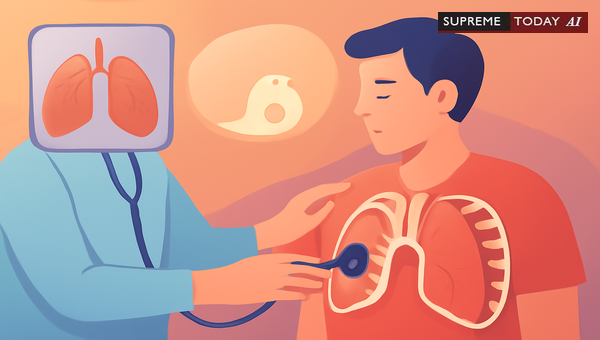
Is Air Release from Lungs Under IPC 320?
Imagine a violent altercation where a victim sustains a deep stab wound to the chest, leading to air escaping from the lungs into the thoracic cavity—a condition known as . This can cause severe respiratory distress and potentially life-threatening complications. But does such an injury legally qualify as under ?
This question often arises in criminal cases involving assaults on vital organs. In this post, we delve into the legal framework, medical implications, and judicial interpretations to clarify when air release from the lungs may cross into grievous territory. Note: This is general information based on legal precedents and not specific legal advice. Consult a qualified lawyer for your case.
Understanding under
defines through eight specific categories, distinguishing it from under . The relevant clause here is : any hurt which endangers life or which causes the sufferer to be during twenty days in severe bodily pain, or unable to follow his ordinary pursuits. 2023 0 Supreme(All) 243 2023 0 Supreme(All) 407
Courts emphasize that classification depends on the injury's nature, not just medical opinion. As noted, the court must independently decide whether an injury is grievous based on the nature of the injury, not solely on medical classification. 2023 0 Supreme(All) 243
Only injuries fitting these categories qualify; others remain , affecting punishment severity under vs. .
Medical Perspective: Air Release from Lungs
Air release from lungs typically signals a or , where lung tissue ruptures, allowing air into the pleural space. This compresses the lung, impairs breathing, and can lead to shock or cardiac arrest if untreated. Such injuries often involve the thoracic cavity, lungs, or vascular structures and are potentially life-threatening. 2017 0 Supreme(Gau) 715
In medical jurisprudence, these are serious internal injuries. Prompt intervention like chest tube insertion may be needed, and recovery can involve prolonged pain or incapacity.
Legal Classification: Does It Qualify as ?
A lung injury with air release may constitute if it meets criteria:- Endangers life: E.g., causes respiratory failure, shock, or risks death. Injuries to vital organs like lungs, if severe, fall here, similar to spleen rupture or internal bleeding. 2017 0 Supreme(Gau) 715 2022 0 Supreme(Cal) 317- Severe bodily pain for 20 days: Or inability to pursue ordinary activities.
Medical evidence is crucial. A doctor's opinion on life endangerment or prolonged effects is authoritative. 2017 0 Supreme(Gau) 715 The injury must be proven serious enough: The injury must be of such a serious nature that it either causes death or puts the victim in severe pain for at least twenty days or impairs his normal pursuits. 2017 0 Supreme(Gau) 715 2022 0 Supreme(Cal) 317
Application to Air Release Cases
If the injury leads to requiring hospitalization, it typically endangers life, qualifying under . For instance, untreated cases can be fatal, aligning with precedents on vital organ ruptures: injuries causing rupture of vital organs like the spleen, which endanger life, qualify as under . 2022 0 Supreme(Cal) 317
Court Precedents and Judicial Insights
Indian courts have consistently interpreted broadly for life-endangering internal injuries. While no case directly addresses lung air release, analogous rulings provide clarity:
- In cases of thoracic or vital organ trauma, courts classify based on danger to life. For example, injuries involving internal bleeding or organ rupture are grievous if life-threatening. 2017 0 Supreme(Gau) 715
Related precedents highlight similar logic:- Intent and severity in assaults: Courts modify convictions from to or when intent is to cause severe injury, not death. The court modified convictions from to not amounting to , emphasizing the accused's intent to inflict grievous injury rather than to kill. 2024 0 Supreme(All) 2465- Knife wounds to vital areas: In a case, knife blows to the chest and neck were deemed fatal and serious enough to cause death in ordinary course of nature, upholding convictions but underscoring grievous nature. 2001 0 Supreme(Raj) 1923- Grievous from sharp weapons: A sharp-edged weapon causing admission to hospital for grievous injury was noted under (attempt to ), implying application for life-endangering wounds.
- Bail considerations: Absence of grievous injury influences bail grants, as in cases where no grievous injury is attributed to these petitioners. 1995 0 Supreme(Raj) 943- Probation for lesser hurts: Courts apply for simple hurts but uphold convictions for grievous ones, like injury No. 1, is grievous in nature from sharp weapons. 1987 0 Supreme(Raj) 858
These illustrate that internal, life-risking injuries like lung punctures demand rigorous medical proof for grievous classification.
Exceptions and Limitations
Not every air release incident is grievous:- Minor cases: Small, treated punctures without life risk or 20-day pain remain .- Medical proof required: Courts reject automatic classification; evidence must show fit. Merely on the ground raised... the entire proceedings... cannot be quashed, whereas, allegations are having caused grievous injury. 2022 Supreme(Online)(Mad) 49356- Intent matters: For enhanced charges like , knowledge of grievous potential is key. 2021 Supreme(Online)(KER) 31446
Practical Recommendations
If facing or defending such a case:- Secure detailed medical reports: Include X-rays, CT scans, and doctor's opinion on life endangerment or pain duration.- Expert testimony: Vital for court classification.- Document impacts: Hospital stay, work incapacity proofs strengthen claims.
Focus on evidence: Medical evidence is pivotal; a doctor’s opinion on whether the injury endangers life or causes prolonged severe pain is authoritative. 2017 0 Supreme(Gau) 715
Key Takeaways
- Air release from lungs may be under IPC 320 if it endangers life or causes 20+ days of severe pain/impairment. 2023 0 Supreme(All) 243 2023 0 Supreme(All) 407
- Medical evidence is king—courts decide independently.
- Analogous precedents on vital injuries support classification for serious .
Disclaimer: Legal outcomes vary by facts. This overview draws from precedents like 2017 0 Supreme(Gau) 715, 2022 0 Supreme(Cal) 317, and others. Always seek professional legal counsel.
For more on IPC hurt provisions or case consultations, stay tuned to our blog.
#IPC320 #GrievousHurt #LungInjuryLaw












