


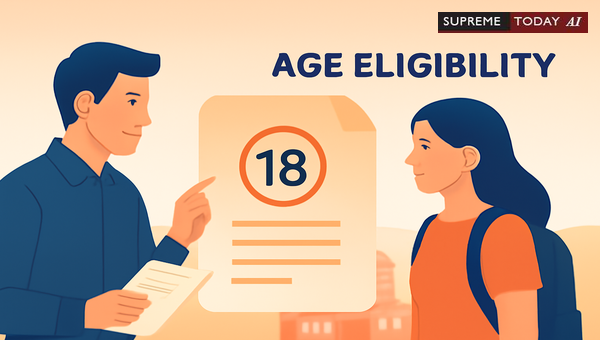
Rounding Up Age in College Elections: Legally Impermissible
In the high-stakes world of college student elections, eligibility can make or break a candidacy. Imagine a student just shy of the required age—say, 21 years and 11 months—hoping a simple rounding up will qualify them for the college union race. But is this permissible under Indian law? The answer, backed by consistent , is a resounding no.
The question at the heart of this issue is clear: Judgments on Rounding up Age for Eligibility in College Election is Not Permissible. Courts have repeatedly emphasized strict compliance with , rejecting any form of rounding off or relaxation. This blog post delves into the legal principles, landmark cases, and practical implications, drawing from authoritative judgments to provide clarity for students, institutions, and election aspirants.
Understanding the Core Legal Principles
for college elections, including age requirements, are typically enshrined in university statutes, educational board guidelines, and state regulations. These are not mere suggestions but binding rules that demand precise adherence.
1.
Statutory rules governing college admissions and elections leave no room for rounding off or relaxation of minimum age or marks. Courts have held that no such rounding off or relaxation was permissible as the rules are statutory in nature and cannot be diluted or amended by adding words for relaxation 2011 5 Supreme 359 2011 5 Supreme 353.
This principle extends to age verification in election contexts. Any deviation undermines the and fairness in the electoral process.
2. Strict Adherence to Minimum Requirements
When statutes prescribe a specific age threshold—often 21 years for undergraduate college union elections—candidates must meet it exactly. Enhancing eligibility through rounding up is not allowed. As noted in judicial observations, it is not permissible to enhance the marks by rounding off method to make up the minimum aggregate 2018 6 Supreme 162 2012 6 Supreme 257. While this quote addresses marks, the logic applies analogously to age, given the parallel statutory framework.
3. Guidelines from Educational Authorities
Bodies like the (AICTE) and universities issue explicit guidelines on minimum eligibility. Courts reject attempts to round off to meet these thresholds, stressing that guidelines must be strictly adhered to 2014 0 Supreme(SC) 1377. In college elections, similar rules from university acts prohibit flexibility.
4. in Election Disputes
In challenging age eligibility, the onus falls on the candidate. They must furnish conclusive evidence, such as birth certificates, proving compliance. Failure invites disqualification, with no judicial leniency for borderline cases 2003 8 Supreme 149 1964 0 Supreme(SC) 33.
Landmark Case Law Reinforcing the Ban on Rounding Up
Indian courts, particularly the and High Courts, have solidified this stance through key rulings.
Rupashree Chowdhary Case: This decision underscored that , including age, must be followed without rounding off 2014 0 Supreme(SC) 1377.
Rajiv Gandhi University Case: The court ruled that no provision exists for rounding off in qualifying examinations, emphasizing strict adherence to the prescribed minimum 2012 6 Supreme 257.
Further, the Hon'ble , in reviewing prior judgments, held that where a candidate is seeking increase of marks by rounding off the same so as to treat the said candidate eligible, the rounding off is not permissible
- Punjab and Haryana
. This principle mirrors age-related claims in elections.In The Registrar, vs. G. Hemlatha, the declared rounding off of impermissible, stating, when a particular aggregate is prescribed for eligibility, a person must meet the criteria without relaxation. It is not permissible to enhance... 2020 0 Supreme(Del) 18 2020 0 Supreme(MP) 414.
Additional precedents affirm: It is not permissible to enhance the marks by rounding-off method to make up the minimum aggregate 2020 0 Supreme(MP) 414. For age in college unions, rules specify that candidates must be exact members of the electoral body, with no leeway for near-misses 2025 Supreme(Online)(Ker) 57823.
Broader Judicial Consensus and Implications
Multiple judgments highlight the statutory constraints: Rounding off marks or age to meet ... candidates must meet these criteria strictly without relaxation or rounding off 2021 0 Supreme(P&H) 705 2023 Supreme(Online)(MP) 22091 2025 0 Supreme(Kar) 351 2023 Supreme(Online)(MP) 22675 2023 Supreme(Online)(MP) 24572. Courts have clarified that no authority exists to grant such relaxations, as they contradict prescribed rules.
While exceptional cases, like COVID-19 disruptions, have prompted targeted age relaxations by authorities, these are not via rounding up but specific notifications 2023 0 Supreme(UK) 663 2023 Supreme(Online)(DEL) 8052 2023 0 Supreme(Del) 12778. Automatic rounding remains off-limits.
For college elections, this means universities lack discretion to round up age. A candidate aged 20 years and 364 days is ineligible, full stop. This upholds electoral integrity but demands meticulous record-keeping.
Practical Tips for Compliance:- Students: Verify age with official documents well in advance. Use Aadhaar, SSC certificates, or affidavits.- Institutions: Implement robust verification processes to avoid post-election disputes.- Election Tribunals: Enforce rigorously.
Key Takeaways and Conclusion
The legal position is unequivocal: rounding up age for eligibility in college elections is not permissible. Statutory rules and guidelines require exact compliance, with courts consistently rejecting relaxations 2011 5 Supreme 353 2021 0 Supreme(P&H) 705. This ensures fairness but requires precision from all parties.
Important Disclaimer: This analysis provides general insights based on reviewed judgments and is not specific legal advice. Consult a qualified lawyer for personalized guidance, as outcomes may vary by facts and jurisdiction.
By adhering to these principles, colleges can conduct transparent elections, and students can focus on merit over technical maneuvers. Stay informed, stay compliant.
References
- 2011 5 Supreme 359 2011 5 Supreme 353 2018 6 Supreme 162 2014 0 Supreme(SC) 1377 2012 6 Supreme 257 2003 8 Supreme 149 1964 0 Supreme(SC) 33
- Punjab and Haryana
2025 Supreme(Online)(Ker) 57823 2020 0 Supreme(Del) 18 2020 0 Supreme(MP) 414 2021 0 Supreme(P&H) 705 2023 Supreme(Online)(MP) 22091 2025 0 Supreme(Kar) 351 2023 Supreme(Online)(MP) 22675 2023 Supreme(Online)(MP) 24572 2023 0 Supreme(UK) 663 2023 Supreme(Online)(DEL) 8052 2023 0 Supreme(Del) 12778















