


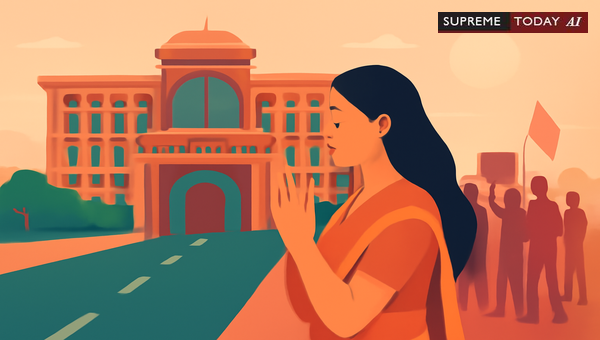
Kerala HC: Chanting Prayers on Roads Not an Offence
Introduction
In a significant ruling that underscores the balance between public order and constitutional freedoms, the has clarified that chanting prayers on the road will not make any offence. This decision addresses growing concerns over public gatherings, especially religious protests like those surrounding the Sabarimala temple entry issue. For devotees and protesters alike, understanding these protections is crucial in navigating legal boundaries during demonstrations.
The question at the heart of this discourse—Chanting Prayers on Road will Not Make any Offence Kerala Highcourt—highlights a pivotal legal stance. Peaceful religious expression on public roads is safeguarded, provided it doesn't escalate to violence or obstruction. This blog delves into the court's analysis, key precedents, and practical implications, drawing from judicial observations and related cases. Note: This is general information and not specific legal advice; consult a qualified lawyer for personalized guidance.
Overview of the 's Stance
The has repeatedly emphasized the protection of in public spaces. In cases involving protests against court judgments on religious matters, such as Sabarimala, the court ruled that chanting religious slogans or prayers falls under Article 19(1)(a) (freedom of speech and expression) and (right to assemble peaceably). Peaceful chanting cannot be criminalized merely for being a form of protest. 2022 0 Supreme(Ker) 1052
This protection extends to roads, where devotees have sought permissions or challenged restrictions. The court has stressed that authorities must justify any curbs, ensuring they don't arbitrarily infringe on democratic rights.
at Play
Right to Protest and Religious Expression
The Constitution of India prioritizes peaceful assembly. The affirmed:- Protected Activity: Chanting prayers, even in groups protesting judicial decisions, is a legitimate exercise of free speech and assembly. No offence arises if conducted peacefully. 2022 0 Supreme(Ker) 1052- Sabarimala Context: Devotees challenged restrictions on chanting 'Sarana Mantras' en route to the temple. The court noted pleas like: Issue a or such other writ or direction directing respondents not to impose restrictions from chanting of the names and glory of Lord Ayyappa.
Similar petitions sought directions against prohibitions on chanting mantras during journeys to Sannidhanam, reinforcing religious rights during processions. 2019 Supreme(Online)(Ker) 76456
No Criminal Offence Under IPC
Critically, the court clarified that mere chanting does not qualify as or under . For an offence, concrete evidence of force or is required—absent in these peaceful scenarios. 2022 0 Supreme(Ker) 1052
This distinction prevents misuse of criminal laws against non-violent religious expressions.
Restrictions and Legal Frameworks
While rights are robust, they aren't absolute. Courts have outlined boundaries:
and
Police often invoke during tensions, as in Sabarimala areas. However, the challenged such blanket impositions, stating they must be proportionate and justified. Arbitrary orders curtailing prayer chanting violate . 2018 0 Supreme(Ker) 764
and Public Ways Act
The doesn't empower authorities to grant or deny permissions for road meetings. Courts scrutinized this, noting: There is no provision in the Act to identify any road margin in any road side in the State having space for permitting any meeting. 2010 0 Supreme(Ker) 483 2012 0 Supreme(Ker) 268
Under the , was deemed unconstitutional for violating (freedom of movement) and 21 (right to life). Processions using one side of the road without obstructing traffic may be allowed, upholding partial validity with restrictions. 2012 0 Supreme(Ker) 268 2012 0 Supreme(Ker) 900
Insights from Related Judicial Precedents
Broader case law supports these findings:
Prayer Meetings in Residences: Courts have permitted prayers at homes if they cause no nuisance. For instance: The petitioner should be permitted to conduct prayers in his own residence, ensuring it does not cause hindrance to the general public or give rise to any law and order problem. 2020 0 Supreme(Mad) 1585 This principle extends analogously to public peaceful gatherings.
Freedom of Religion: Emphasizing , authorities must provide concrete evidence before restricting practices. The fundamental right to freely profess, practice, and propagate religion as guaranteed by the Constitution of India should be upheld, provided it does not cause hindrance to the general public. 2020 0 Supreme(Mad) 39
Sabarimala Devotee Rights: Petitions for 'darshan' with group chanting were addressed, directing non-interference unless law and order issues arise. 2018 Supreme(Online)(KER) 6765
Road Blockages: Courts lamented frequent road blocks but urged leaders to avoid endangering lives: Prevail upon the enlightened political and religious leaders and they should not risk the life of the public by leading them in procession on the road along with dangerous traffic. 2012 0 Supreme(Ker) 900
These precedents collectively affirm that peaceful chanting is protected, but traffic safety and public convenience must be balanced.
Practical Recommendations
For individuals or groups planning public prayers or protests:- Ensure Peacefulness: Avoid any force or obstruction to stay within legal bounds.- Seek Permissions Judiciously: While not always required, coordinate with police for larger gatherings.- Challenge Arbitrary Actions: If restricted unduly, approach courts citing Articles 19 and 25.- Monitor Enforcement: Watch for overreach under Section 144 or state acts.
Legal counsel is advisable, especially in sensitive areas like Sabarimala.
Conclusion and Key Takeaways
The 's rulings robustly protect chanting prayers on roads as a non-offence when peaceful, embedding it within constitutional freedoms. Cases like those referenced 2018 0 Supreme(Ker) 764 2022 0 Supreme(Ker) 1052 2010 0 Supreme(Ker) 483 set clear precedents against arbitrary restrictions, while cautioning against public hazards.
Key Takeaways:- Peaceful chanting is shielded under , (b), and 25.- No IPC Section 353 offence without evidence. 2022 0 Supreme(Ker) 1052- must be justified; unconstitutional provisions struck down. 2012 0 Supreme(Ker) 268- Balance rights with public safety—no nuisance or blockage.
This evolving jurisprudence promotes democratic expression while safeguarding order. Stay informed, exercise rights responsibly, and seek professional advice for specific situations.
References:- 2018 0 Supreme(Ker) 764 2022 0 Supreme(Ker) 1052 2010 0 Supreme(Ker) 483-
2019 Supreme(Online)(Ker) 76456 2020 0 Supreme(Mad) 1585 2012 0 Supreme(Ker) 268 2012 0 Supreme(Ker) 900
(Word count: approximately 1050. General insights based on public judgments; not legal advice.)
#KeralaHighCourt, #ReligiousFreedom, #FundamentalRights












