


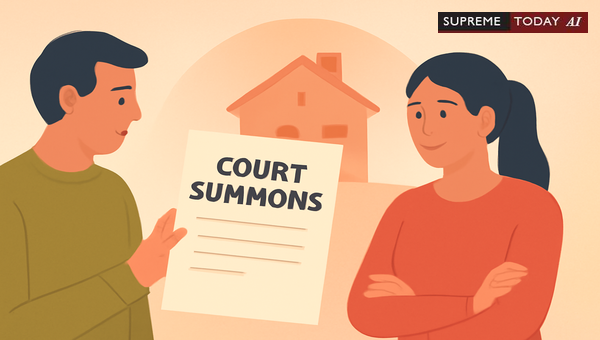
Can a Landlord Issue Court Summons Without Knowing the ? Insights from Indian Law
In the complex world of landlord-tenant relationships in India, disputes often arise over rent, , or unauthorized occupancy. A common question for landlords is: Without knowing the , can a court summon be issued by the landlord? This query touches on procedural rights in , where landlords seek to enforce their property rights against occupants whose identities may not be fully verified at the outset.
This blog post breaks down the legal framework, drawing from judicial precedents and procedural rules. Note: This is general information based on case law and not specific legal advice. Consult a qualified lawyer for your situation.
Understanding Summons in Civil Disputes
Summons are a fundamental tool in civil litigation, notifying parties to appear before the court. In landlord-tenant cases, a landlord may file a suit for , recovery of possession, or arrears under laws like the , or state-specific Rent Control Acts.
have broad authority to issue summons to private parties involved in disputes. As established, can issue summons to parties involved in a civil dispute. This is a procedural step to ensure that all parties are notified and can present their case.2016 0 Supreme(HP) 593Summons can be issued to private individuals or entities involved in civil disputes. The court has the to compel their appearance to address the matter at hand.2016 0 Supreme(HP) 593
Even if the landlord does not fully know the —meaning the legitimate or authorized occupant—the court can proceed. The (initial filing) describes the defendant based on available information, such as address or description (e.g., tenant in possession). Courts issue summons accordingly, and identity can be clarified during proceedings.
Key Judicial Support for Issuing Summons to Private Parties
often find sufficient material to summon the private respondents/accused.2025 0 Supreme(SC) 561 This power is exclusive to the court, allowing it to summon persons for trial alongside others. Therefore, it would be open for the court to summon such a person so that he could be tried together with the accused and such power is exclusively of the court.2025 0 Supreme(SC) 561
In civil suits, the Civil court is responsible for ensuring that summons are properly issued to all relevant parties. If a party is not present, the court may take necessary steps to procure their presence, which may include coercive measures if warranted.2016 0 Supreme(HP) 593
Limitations: vs. Civil Suits
Not all remedies are available. under or 227 of the Constitution are typically not maintainable against private individuals like tenants unless a public duty is involved.
Writs against private individuals: The documents emphasize that ... are not maintainable in disputes solely between private parties unless there is a public duty involved. Writs are primarily a remedy in public law and are not intended for resolving private disputes.2008 0 Supreme(Ori) 103 2014 0 Supreme(J&K) 350
A writ of can only be issued against a private individual if they are discharging a public duty. If the dispute does not involve any public law element, the remedy lies within the civil court system.2001 0 Supreme(All) 1029 2001 0 Supreme(Bom) 935
For landlords, this means sticking to civil suits rather than writs for summoning tenants.
Procedural Safeguards in Issuing Summons
Issuance isn't arbitrary. Courts must satisfy procedural norms:
Case: The contents of either the charge sheet/private complaint/protest petition are understood by the Presiding Officer and the cognizance orders should reflect that there is a case stating facts very precisely to summon the accused.2023 0 Supreme(Telangana) 571
Competent Authority: Summons quashing petitions are rarely entertained unless issued by an incompetent authority or with malafides. No petition to quash the summon is entertainable, unless the said summon has been issued by an incompetent Authority having no or allegation of malafides are raised against the Authority.2024 0 Supreme(Mad) 1988
Preference for Summons Over Warrants: As far as possible, if the court is of the opinion that a summon will suffice in getting the appearance of the accused in the court, the summon or the bailable warrants should be preferred.2023 0 Supreme(All) 2848 2023 0 Supreme(All) 2006
In tenancy cases, classified as civil disputes, The dispute between the parties is civil in nature.2023 0 Supreme(All) 2848
Additional powers mirror : The Director shall, for the purpose of , have the same powers as are vested in a civil Court under the while trying a suit. Therefore in order to ascertain the complete facts, summons are issued.2024 0 Supreme(Mad) 1325
For documents or witnesses, courts verify necessity: No court shall issue such summon unless it considers the production of the original document is necessary.2025 Supreme(Online)(Mad) 72018
Insights from Related Cases
Summoning Additional Parties: Under (analogous in civil contexts), The Court can summon anyone.2021 0 Supreme(P&H) 312 Courts summon based on material, not absence of contrary evidence. Trial Court shall not summon the accused only because there is no material on the record to suggest innocence of the accused, rather trial Court can summon the person as an additional accused... when on the material available on the record trial Court opines that person sought to be summoned is involved.2011 0 Supreme(P&H) 412
Counter-Claims and Registration: Every counter-claim is required to be registered by the Court. Only thereafter can summons be issued by the Court.2019 0 Supreme(Del) 1959 2019 0 Supreme(Del) 1961
Service Issues: Non-service doesn't halt proceedings if addressed. In one case, a civil judge dismissed an application overlooking non-service, leading to further appeals. 2024 0 Supreme(Guj) 160
Expedited Trials: Courts direct speedy disposal in long-pending suits, empowering summons for witnesses post-satisfaction. 2024 0 Supreme(AP) 1324
These precedents affirm courts' flexibility in landlord-tenant summons, even with incomplete initial knowledge.
Practical Recommendations for Landlords
- File a detailed describing the occupant.
- Request court-issued summons under .
- If evasion, seek (publication) or warrants.
- Avoid writs; opt for civil remedies: For disputes involving private rights, the appropriate legal recourse is through civil suits rather than .2019 0 Supreme(Mad) 2025 2022 0 Supreme(Cal) 461
Tenants should respond promptly to avoid .
Conclusion and Key Takeaways
Yes, generally, a landlord can initiate a civil suit, and the court can issue summons to an alleged even without full prior knowledge of their identity. This is supported by ' authority over private disputes, procedural CPC rules, and case law emphasizing justification. 2016 0 Supreme(HP) 593 2025 0 Supreme(SC) 561
Key Takeaways:- handle private summons effectively.- Writs are limited; use suits for tenancy issues.- Follow procedures to ensure validity.- Prefer summons over coercive measures initially.
References: 2016 0 Supreme(HP) 593 2008 0 Supreme(Ori) 103 2014 0 Supreme(J&K) 350 2001 0 Supreme(All) 1029 2001 0 Supreme(Bom) 935 2019 0 Supreme(Mad) 2025 2022 0 Supreme(Cal) 461 2025 0 Supreme(SC) 561 2024 0 Supreme(Mad) 1988 2023 0 Supreme(Telangana) 571 2024 0 Supreme(Mad) 1325 2025 Supreme(Online)(Mad) 72018
M. Malla Reddy VS Union of India - Crimes (2024)
2024 0 Supreme(Guj) 160 2024 0 Supreme(AP) 1324 2023 0 Supreme(All) 2848 2023 0 Supreme(All) 2006 2021 0 Supreme(P&H) 312 2019 0 Supreme(Del) 1959 2019 0 Supreme(Del) 1961 2011 0 Supreme(P&H) 412Word count: 1028. Always seek professional legal counsel.
#LandlordRights #CourtSummons #TenancyLawIndia















