


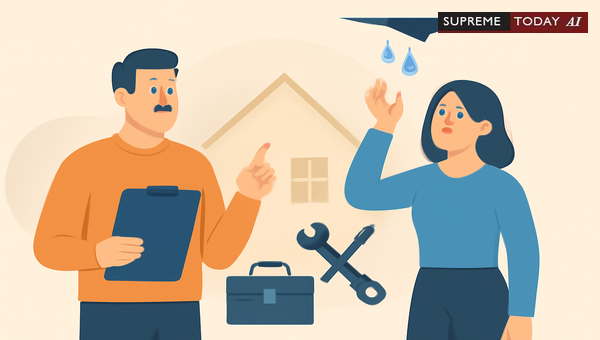
Landlord's Repair Duties: Extent of Responsibilities
Renting a property comes with expectations on both sides—tenants want a safe, habitable space, while landlords aim to protect their investment. But what exactly is the extent a landlord has to be responsible for maintenance and repairs of the premise? This question arises frequently in landlord-tenant disputes, especially when issues like leaking roofs, faulty wiring, or structural cracks emerge. Understanding these obligations can prevent costly conflicts and ensure compliance with the law.
In this post, we'll break down the general landlord responsibilities, legal frameworks, tenant roles, limitations, and insights from relevant cases. Note that laws vary by jurisdiction, so this is general information—consult a legal professional for advice tailored to your situation.
Overview of Landlord's Obligations
Landlords typically bear a to keep rental properties safe and fit for habitation. This means ensuring the premises are safe for lawful visitors and maintaining them in a condition suitable for their intended use. Liability often hinges on defects the landlord knew about or should have known about .
Key Landlord Responsibilities
Landlords are generally tasked with:- Major structural repairs, such as fixing foundations, roofs, or load-bearing walls.- External repairs and maintenance, including gutters, exterior walls, and drainage systems.- assessments and insurance.
Additionally, maintenance services should cover the upkeep of interiors, exteriors, structural elements, and common areas . For instance, statutes impose a duty on landlords to carry out to the building, giving them reasonable time after notice from tenants 2003 0 Supreme(Ker) 509. Failure to act may allow tenants to seek remedies through authorities like the 2003 0 Supreme(Ker) 509.
Legal Framework Governing Repairs
Several key laws outline these duties:
and
These statutes define landlord liability for defects stemming from failures in maintenance and repair obligations . Landlords must address issues that make the property unsafe or unfit, but only for breaches of their specific duties.
Tenancy Agreements and
Contracts often specify divisions of responsibility. For example, tenancy agreements may include where tenants cover damages from their negligence, excluding . In , repair obligations from the original contract carry over, with landlords responsible unless the tenant has undertaken them
. The Act provides that the landlord shall be responsible for the repairs, when the tenant has not undertaken to do
.
Under laws like the , Section 14(1)(f), landlords may seek eviction for major repairs only if they prove the work requires vacating the premises and gain the 's satisfaction 2007 0 Supreme(Del) 1176. Mere admissions by tenants aren't enough; detailed evidence is required 2007 0 Supreme(Del) 1176.
In contexts, landlords must handle . If they fail after notice, tenants can apply to the for permission to do the work themselves, with costs recoverable 2000 0 Supreme(Ker) 645.
Tenant's Responsibilities in Maintenance
Tenants aren't off the hook. They typically handle:- Internal repairs and maintenance, like minor fixes to fixtures or decor.- Yielding the premises in , allowing for .
As one case notes, the premise, being left in a satisfactory condition, allowing for reasonable wear and tear and therefore the Claimant is responsible for reasonable wear and tear, not the Defendant 2024 Supreme(DUB)(DIFC) 21. Landlords aren't liable for damages from tenant negligence or accidents, such as those from electrical or fire causes during occupancy 2024 Supreme(DUB)(DIFC) 21.
Repairs by tenants to keep the building usable aren't considered unauthorized improvements requiring permission; they're often permitted, especially minor ones like wall plastering or water outlet pipes
. Courts have upheld this, refusing injunctions against such work in old premises
.
Limitations and Exceptions to Landlord Liability
Landlord duties have boundaries:- No liability for tenant-caused defects: If damage results from negligence or failure to maintain per the agreement, the landlord is off the hook .- Knowledge requirement: Liability depends on the landlord's awareness of the defect. If unaware and reasonably couldn't know, no responsibility .
Further, landlords aren't responsible for damage from accidents using facilities (e.g., electrical, fire) during tenancy 2024 Supreme(DUB)(DIFC) 21. In rent control scenarios, eviction for repairs demands proof that work can't proceed without vacation and 2007 0 Supreme(Del) 1176.
Tenants making improvements may not always claim compensation, especially if renting a building (not land) under acts like the 2000 0 Supreme(Ker) 645.
Practical Insights from Case Law
Courts emphasize balance. In one appeal, disallowances of expenses were scrutinized, but the principle applies: authorities must substantiate claims with evidence 2025 Supreme(Online)(ITAT) 4174. Similarly, constitutional challenges to rent control provisions highlight the need for restrictions on landlord rights 1995 0 Supreme(Ker) 296. Landlords bear costs at current rates for necessary repairs 1995 0 Supreme(Ker) 296.
In disputes over walls or renovations, courts clarify permissible work scopes to avoid escalation
.
Key Takeaways and Recommendations
- Landlords: Focus on structural/external repairs, document all notices and actions to limit liability . Conduct regular inspections and respond promptly.
- Tenants: Handle internal upkeep, report issues early, and understand your repair limits to avoid disputes at lease end.
- Review your tenancy agreement for specifics on indemnification and obligations.
In summary, landlords hold primary responsibility for major maintenance to ensure safety, but tenants share internal duties, with exceptions for negligence or unknown defects. Always prioritize clear communication and documentation.
This post provides general insights based on common legal principles and cited sources. Laws differ by location—seek professional legal advice for your circumstances.
(Word count: approx. 1050)
#LandlordLaw #RentalRepairs #TenantRights















