


Who Owns Elephant Tusks After Death? Legal Insights
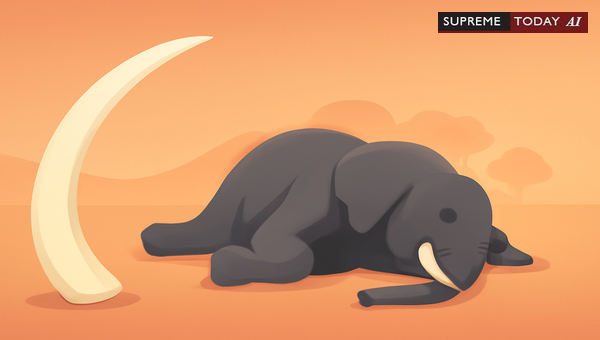
Imagine stumbling upon a deceased wild elephant on your private property, its impressive tusks gleaming in the sunlight. Who legally owns those tusks? This question, Who Owns Elephant Tusks After Death? Legal Insights, arises frequently in regions with significant elephant populations like India, where intersect with .
Elephant tusks, prized for their ivory, are heavily regulated under Indian law to combat poaching and illegal trade. Ownership isn't straightforward—it hinges on the circumstances of the elephant's death, location, and applicable statutes like the . This post breaks down the legal principles, key cases, and practical recommendations, drawing from judicial precedents and statutory provisions. Note: This is general information, not legal advice. Consult a qualified attorney for specific cases.
Legal Principles Governing Ownership of Dead Wild Animals
Under Indian wildlife law, the ownership of a dead wild animal, including its tusks, depends on critical factors: the location of death and whether authorities were involved in pursuing or killing the animal.
- Private Land Scenario: If an elephant dies naturally (or otherwise) on private land and was not chased or pursued by authorities, the landowner is generally entitled to the carcass and its parts, including tusks. This principle stems from established case law emphasizing in such situations 1978 0 Supreme(Mad) 558.
- Government or Protected Area Involvement: Conversely, if the elephant was hunted, killed under authority, or found in a protected area, ownership typically vests with the government or forest authorities 2018 0 Supreme(SC) 547.
The court in relevant rulings has clarified: the in the tusks of a dead wild animal found in private land vest with the landowner unless the animal was chased or pursued by authorities 1978 0 Supreme(Mad) 558.
Ownership of Tusks Found on Private Land
When a dead elephant is discovered on private property without government pursuit, landowners may claim the tusks, but strict procedures apply. Government Order MS No. 3440 reinforces that the landowner holds rights to the carcass and parts 1978 0 Supreme(Mad) 558.
However, possession alone doesn't confer unrestricted rights. Post-discovery, compliance with the , is mandatory. Section 42 requires the Chief Wildlife Warden to issue a for any wild animal article or in lawful possession. As noted in one case: as per , the Chief Wildlife Warden is expected to issue a in such form to any person, who is in lawful possession of any wild animal for any animal article, and 2022 Supreme(Online)(KER) 61570. The petitioner's ownership of the elephant wasn't disputed, highlighting that lawful prior possession can support claims post-death.
Regulations Under the
The , imposes stringent controls on elephant tusks, classified as and trophies.
Key provisions include:1. Prohibition on Commercial Transfer: No in elephant tusks or parts without prior permission and certificates 2018 0 Supreme(SC) 547 2023 0 Supreme(Ker) 128.2. Ownership Transfer Post-Death: Rights do not automatically pass to finders; statutory compliance is required 2023 0 Supreme(Ker) 128.3. Penalties for Violations: Sections 40(2), 49B, and 51 prescribe punishments for unauthorized possession or trade, including imprisonment 2012 0 Supreme(Ker) 1008.
In a carving-related case, forest officials seized ivory from an artisan who claimed it was bought for legitimate use. The court upheld conviction, stating: based on such a licence, a person is not entitled to commence or carry on business referred to in and confirmed that release under the was improper for wildlife offenses 2012 0 Supreme(Ker) 1008.
Even animal articles like ivory must align with the Act's intent to protect endangered species, as affirmed in interpretations excluding loopholes for items like hair, which remains regulable 2007 0 Supreme(Del) 1826.
Insights from Related Case Law
Judicial precedents provide further clarity on tusk-related disputes:
Poaching and Removal Cases: In instances of gunshot killings and tusk extraction, prosecutions under , 29, 31, etc., require proof of location, such as reserve forests via gazette notifications. Failure to produce evidence led to acquittals: Notification is to be proved either by production of Gazette or by a certified copy of notification before court 2020 0 Supreme(Ker) 1095.
Liability for Elephant Attacks: While not directly on ownership, cases involving tusks in attacks underscore owner responsibility. One ruling held (owner and mahout) liable without distinctions for dangerous animals, awarding compensation 2015 0 Supreme(Ker) 349. Another noted: The owner of the dangerous animal will be held liable for the perils occurred 2012 0 Supreme(Ker) 690.
These cases illustrate the broader regulatory net around elephants and their parts, emphasizing documentation and lawful possession.
Transfer and Possession Procedures
To legally possess or transfer tusks:- Verify death circumstances (private land, no pursuit).- Obtain Chief Wildlife Warden's certificate 2022 Supreme(Online)(KER) 61570.- Secure prior permission for any transfer 2018 0 Supreme(SC) 547.
Non-compliance risks seizure and penalties, as seen in ivory trading convictions 2012 0 Supreme(Ker) 1008.
Key Takeaways and Recommendations
- Private Land, No Pursuit: Landowner generally owns tusks 1978 0 Supreme(Mad) 558.
- Government Kill/Hunt: Vests with authorities 2018 0 Supreme(SC) 547.
- Always Comply: Certificates and permissions under Wildlife Protection Act are essential 2023 0 Supreme(Ker) 128.
Recommendations:- Document the discovery site and circumstances immediately.- Contact forest officials promptly for guidance.- In disputes, review specifics like pursuit evidence.- Avoid any trade without approvals to prevent legal issues.
In summary, while private landowners may claim tusks from naturally deceased elephants on their property, the Wildlife Protection Act overlays rigorous regulations. This framework balances with conservation, aligned with India's international commitments. For personalized advice, engage legal experts familiar with wildlife law.
Disclaimer: Laws evolve, and outcomes depend on facts. This overview is for informational purposes only.
#ElephantTusks #WildlifeLaw #LegalOwnership












