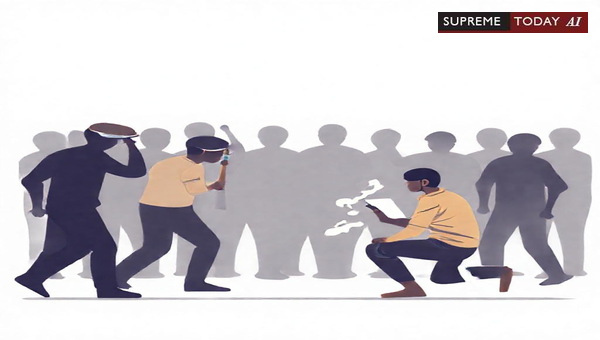
Is Lathi Classified as a Weapon Under Section 324 IPC? Key Judgments
In Indian criminal law, disputes often escalate into physical altercations involving everyday objects like a lathi (a wooden stick). A common question arises: Is a lathi classified as a weapon under Section 324 IPC? This section of the Indian Penal Code (IPC) deals with voluntarily causing hurt by dangerous weapons or means, carrying a punishment of up to three years imprisonment or fine. But does a simple lathi fit this category? Judicial precedents provide clarity, emphasizing that context matters. This post examines key judgments to answer the query based on established legal positions.
Disclaimer: This article offers general information on legal interpretations and is not specific legal advice. Consult a qualified lawyer for advice tailored to your situation, as outcomes depend on case facts.
Understanding Section 324 IPC
Section 324 IPC punishes whoever voluntarily causes hurt using dangerous weapons or means. Hurt is defined under Section 319 IPC as causing bodily pain, disease, or infirmity. The key phrase is dangerous weapons or means, which courts interpret narrowly.
- Weapons listed in Section 324: Firearms, acid, instruments for shooting, stabbing, or cutting.
- Explanation: Any instrument used to cause hurt in a manner likely to cause death qualifies as dangerous.
Courts stress that not every object is inherently dangerous. A lathi, commonly used for support or herding cattle, is typically not classified as such unless wielded with exceptional force on vital body parts. Let's dive into judgments.
Judicial Tests for Classifying Lathi as Dangerous Weapon
Indian courts, including the Supreme Court and High Courts, have consistently held that a lathi's classification depends on:
- Nature and ordinary use: A lathi is a blunt, household item, not per se deadly.
- Manner of use: Force applied, target area (e.g., head vs. limbs), and injury severity.
- Injury outcome: Simple hurt (Section 323 IPC) vs. grievous hurt (Section 325 IPC).
- Intent and context: Sudden fight vs. premeditated assault.
In most cases, convictions under Section 324 for lathi use are rare unless evidence shows it was used lethally.
Key Supreme Court and High Court Judgments
Several precedents directly address lathi under Section 324 IPC:
Lathi not inherently dangerous: In a case where appellants assaulted with lathis causing simple injuries, the High Court set aside Section 324 convictions. A lathi, in its ordinary use, is not an instrument likely to cause death and therefore does not fall within the ambit of Section 324 IPC. The court interpreted Section 324's object, scope, and heading, reducing charges to Section 323 IPC (simple hurt) with fines. 1980 0 Supreme(All) 341
Contextual assessment required: Another ruling clarified that lathis used in altercations do not automatically trigger Section 324. Since the appellant Oversheer Chaudhary is alleged to have assaulted the informant with Lathi which is not a dangerous weapon, the charge against him also does not fit to be proved under Section 324. Convictions were modified due to lack of grievous intent. 2024 0 Supreme(Pat) 1010
Exceptional cases upheld: However, where lathi blows caused severe head injuries, courts have upheld Section 324. In State of Bihar (referenced), the Supreme Court sustained conviction for lathi injuries, noting: the Apex Court has upheld the conviction under Section 324 I.P.C. for injuries caused by Lathi. This highlights scrutiny of medical evidence. 2023 0 Supreme(All) 408
Not a deadly weapon: Reiterating, The weapon used is not a deadly weapon... The injuries noted are also not caused by dangerous sharp edged weapons. High Court altered charges from higher sections to Section 323, emphasizing proof beyond doubt. 2024 0 Supreme(Cal) 1251
These rulings align with appellate courts' caution in overturning acquittals or convictions. For instance, High Courts re-appreciate evidence only if trial judgments are perverse, giving due weight to presumption of innocence. 2008 5 Supreme 685 and 2015 0 Supreme(SC) 290
Factors Courts Consider in Lathi Cases
Judges evaluate holistically:
1. Medical Evidence
- Simple injuries (e.g., bruises, no fractures) → Section 323 IPC.
- Grievous hurt (e.g., fractures, disfigurement per Section 320 IPC) → Possible Section 325/326.
- Example: Medical evidence shows that it is a simple injury. Conviction limited accordingly. 2003 0 Supreme(AP) 1090
2. Witness Credibility
- Interested/injured witnesses' testimony is reliable if corroborated, even if relatives. Minor discrepancies ignored. 2006 6 Supreme 339
- Hostile witnesses' usable parts accepted. 1991 0 Supreme(SC) 318
3. Common Intention (Section 34/149 IPC)
- Group assaults with lathis may invoke vicarious liability, but proof of shared intent needed. Common intention can be formed at spur of moment. 2023 1 Supreme 60
4. Sentencing Discretion
- Courts balance gravity: probation for first-timers, fines for simple hurt. 2023 0 Supreme(All) 408
- Reduced sentences if period undergone suffices. 2019 0 Supreme(Gau) 1050
Comparative Analysis: Lathi vs. Other Implements
| Weapon | Typical Classification under 324 IPC | Example Judgment ||--------------|-------------------------------------|------------------|| Lathi | Rarely (blunt, non-lethal ordinarily) | 1980 0 Supreme(All) 341 || Knife/Dagger| Yes (sharp-cutting) | 1991 0 Supreme(SC) 318 || Firearm | Yes | 2022 0 Supreme(SC) 1759 || Acid | Yes | Statutory |
This table shows lathi's distinct position.
Implications for Accused and Victims
- For accused: If charged under 324, argue lathi's non-dangerous nature, backed by medical reports showing simple hurt.
- For victims: Seek higher charges (326 IPC) with proof of grievous injury; appeal acquittals cautiously, as appellate reversal needs substantial reasons. 2008 5 Supreme 685
Prosecution must prove beyond reasonable doubt; mere possession insufficient.
Key Takeaways
- Generally, no: A lathi is not classified as a dangerous weapon under Section 324 IPC in ordinary use, leading to downgrading to Section 323. 1980 0 Supreme(All) 341 and 2024 0 Supreme(Pat) 1010
- Exceptions exist: Severe force on vital parts may qualify, per medical/witness evidence. 2023 0 Supreme(All) 408
- Courts' approach: Re-appreciate evidence carefully; prioritize trial court views on acquittals. 2015 0 Supreme(SC) 290
- Advice: Always document injuries medically; avoid self-help in disputes.
In summary, while a lathi can cause harm, judgments consistently treat it as non-dangerous under Section 324 unless exceptional circumstances prove otherwise. This balanced judicial stance prevents over-criminalization of rural/common altercations while punishing brutality.
For deeper insights, review full judgments or consult legal experts. Stay informed, stay safe.