


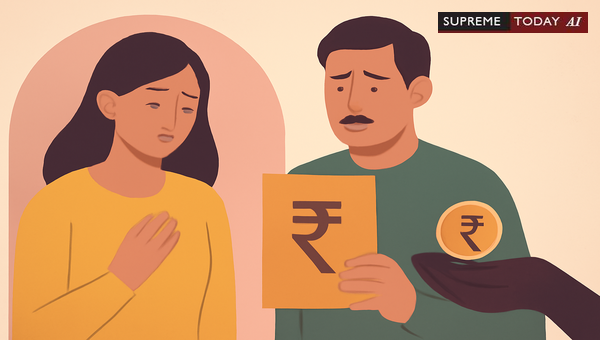
Can Unmarried Major Daughter Claim Marriage Expenses from Father under 2005?
In India, family dynamics often intersect with legal rights, especially when it comes to financial support. A common question arises: Whether an Unmarried/major Daughter can Claim Marriage Expenses or from her Father under the . This issue touches on the balance between parental obligations and an adult child's independence. The () aims to safeguard women from abuse, but its scope for major unmarried daughters seeking maintenance or marriage expenses is limited. This post breaks down the legal position, key definitions, court interpretations, and exceptions, drawing from statutory provisions and judicial precedents. Note: This is general information and not specific legal advice. Consult a qualified lawyer for personalized guidance.
Understanding the 's Core Provisions
The provides relief to women facing domestic violence, including monetary support under . However, eligibility hinges on being an in a .
- (): Defined as any woman who is, or has been, in a with the respondent and alleges domestic violence 2013 8 Supreme 122.
- (): Includes living or having lived together in a , related by (blood relation), marriage, or akin to marriage 2013 8 Supreme 122.
An unmarried major daughter (over 18) typically qualifies as being in a with her father due to . Yet, courts emphasize that relief is not automatic. The Act targets women who face violence 2013 8 Supreme 122.
Main Legal Finding: No Automatic Right for Capable Major Daughters
Under the , an unmarried major daughter cannot claim maintenance or from her father solely based on her status as a major daughter, unless she is unable to maintain herself and is in a with the respondent. The Act's primary focus is on protecting vulnerable women within domestic setups, not providing ongoing support to self-sufficient adults 2013 8 Supreme 122.
Definition of 'Child' Limits Claims
defines child as any person below 18 years. Thus, a major daughter is not a 'child' under the Act and loses default entitlement 2013 8 Supreme 122. For instance:
The term 'child' in the Act refers to persons below 18 years of age, and thus, a major daughter (above 18) is not automatically entitled to relief unless she is unable to support herself 2013 8 Supreme 122.
This interpretation aligns with the Act's purpose: protecting those subjected to violence and incapable of self-support, not capable adult children 2013 8 Supreme 122.
Judicial Precedents on Maintenance for Major Daughters
Courts have consistently clarified this position, often referencing and personal laws alongside the .
- In Noor Saba Khatoon and Jagdish Jugtawat, the held that a major daughter capable of self-maintenance has no automatic right to claim from her father. Mere unmarried status or age does not suffice; incapacity must be proven 2024 0 Supreme(All) 45 2013 8 Supreme 122.
A major daughter, who is capable of maintaining herself, does not have an automatic right to claim maintenance under or under the Personal Laws 2024 0 Supreme(All) 45.
Specific to marriage expenses or , claims succeed only if the daughter demonstrates inability due to circumstances like unemployment or illness 2013 8 Supreme 122.
Insights from Recent Cases
Other rulings reinforce this:
- In a case, allows for the and any child resulting from violence. Notably, was granted to a minor daughter without impleading her, but this underscores 'child' as minor 2024 Supreme(Online)(CG) 275.
of the Act of 2005 provides that the Magistrate may direct the respondent to pay to meet the expenses incurred and losses suffered by the and any child of the 2024 Supreme(Online)(CG) 275.
- An observation notes that an unmarried daughter with no income may claim maintenance from her father, enforcing the obligation if she proves financial incapacity
.
The unmarried daughter would be entitled to maintenance from her father, if she has no income to maintain herself
.
However, for majors, this is not blanket; evidence of inability is crucial.
Claims on behalf of deceased aggrieved persons are barred, as rights are personal and extinguish upon death
2022 Supreme(Online)(Bom) 16.
Rights under the Protection of Women from Domestic Violence Act are personal and extinguish upon the death of the
.
Exceptions: When Claims May Succeed
While generally restricted, exceptions exist:
- Incapacity to Maintain Herself: Due to disability, illness, or lack of earning capacity (e.g., no income) 2013 8 Supreme 122
.
- Proof of Domestic Violence: Must allege and substantiate violence in the 2024 Supreme(Online)(ALL) 168.
Any including any child of the , who has been subjected to domestic violence, may claim to meet the expenses incurred and losses suffered 2024 Supreme(Online)(ALL) 168.
- Specific Needs like Marriage Expenses: Courts may direct payment if linked to violence and proven need, but not routinely for capable adults 2013 8 Supreme 122.
Courts scrutinize claims rigorously, ensuring the Act's protective intent isn't stretched to general family maintenance
.
Practical Recommendations
- For Daughters: Gather evidence of inability (medical certificates, income proofs) and domestic violence. Consider alternative remedies under , Cr.P.C. Section 125, or personal laws.
- For Families: Document the daughter's capacity to avoid protracted litigation.
- Seek Alternatives: Government schemes or employment support may be more suitable than proceedings for capable adults.
Conclusion and Key Takeaways
In summary, an unmarried major daughter typically cannot automatically claim marriage expenses or from her father under the 2005 unless she proves inability to maintain herself amid domestic violence 2013 8 Supreme 122. The Act prioritizes vulnerable women, not self-reliant adults 2024 0 Supreme(All) 45. Key takeaways:
- Age Matters: Over 18 means no 'child' status.
- Incapacity Key: Prove it for success.
- Personal Rights: Limited to living aggrieved persons.
Understanding these nuances empowers informed decisions. For tailored advice, approach a legal expert. Stay informed on evolving jurisprudence to navigate family law effectively.
#DVAct2005, #MaintenanceRights, #WomensLawIndia












