



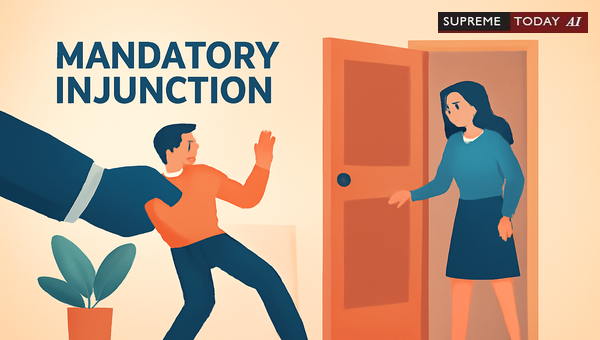
vs Forceful Eviction: What Landlords and Tenants Need to Know
In the heated world of landlord-tenant disputes, forceful eviction often leads to frantic legal battles. Tenants facing threats of being thrown out may rush to court seeking a to halt the process. But can such an injunction truly prevent eviction? The question at the heart of many cases is: Whether can be Granted against Forceful Eviction?
This blog dives into Indian legal principles, drawing from key judgments and statutes. We'll clarify why courts typically insist on through formal eviction suits rather than shortcuts like injunctions. Note: This is general information based on precedents and not specific legal advice. Consult a qualified lawyer for your situation.
Main Legal Finding: Trumps Injunctions
Generally, when a landlord seeks to evict a tenant, the law requires following —filing an under relevant statutes like —rather than relying solely on injunctions or other civil remedies initiated by tenants. Eviction cannot be achieved through or outside statutory procedures. Suits for injunction by tenants do not substitute the formal eviction process. 1996 8 Supreme 493
The court's role is to ensure eviction aligns with the law, involving a decree from an , not just injunctive relief. This protects tenants from arbitrary actions while allowing landlords legitimate remedies.
Key Points on Eviction and Injunctions
- Formal Required: Landlords must initiate proceedings under applicable tenancy laws, such as the , or similar statutes. Courts limit to checking if orders are 'according to law,' reappraising evidence only if findings are perverse. 2023 0 Supreme(Pat) 1001
- Injunctions Don't Replace Eviction: A tenant's suit for injunction restrains landlord actions temporarily but doesn't grant eviction rights or negate . 1996 8 Supreme 493
- Court's Obligation: Courts must issue orders for property preservation but cannot bypass statutory eviction. When an is filed, that court has over landlord-tenant status.
Detailed Analysis: Why Mandatory Injunctions Fall Short
1. Requirement of for Eviction
Eviction must occur via a proper legal proceeding, specifically an under the relevant Rent Act. Courts adjudicate based on statutory grounds like default in rent, , or demolition. For instance, under , eviction for personal necessity requires proving genuine need—not dire necessity—and considering partial eviction. 2023 0 Supreme(Pat) 1001
Forceful eviction without this process is illegal. Tenants often file injunction suits to restrain landlords 'from evicting forcibly except by of law,' as seen in multiple cases. 2021 0 Supreme(Mad) 1542 2019 0 Supreme(Mad) 3365
2. Distinction Between Injunction and Eviction Proceedings
An injunction suit restrains actions like dispossession, but eviction requires a judicial decree for removal. A suit for injunction filed by a tenant against the landlord is fundamentally different from an eviction proceeding. 1996 8 Supreme 493
In one case, a tenant's suit against forceful eviction faced a landlord's for eviction and . Courts noted no bar to such counterclaims in tenant-filed suits, emphasizing termination of tenancy via notice under . Even if prior notice is disputed, averments in the can serve as notice, maturing after 15 days.
Trial courts dismissed such suits for default, but appellate courts remanded for merits, criticizing dilatory tactics without heavy costs. 2019 0 Supreme(Mad) 3365 2019 0 Supreme(Mad) 552
3. Court's Role and Statutory Safeguards
Landlords must obtain a decree before execution. Courts preserve property in but won't order eviction sans suit. The Court is not only competent to issue necessary orders... but... under the obligation to issue appropriate orders for effecting such maintenance. However, this doesn't bypass eviction procedures. 1996 8 Supreme 493
Bona fide requirement persists even if landlords own other properties; tenants can't dictate use. A co-owner can seek eviction without others' consent. 2024 0 Supreme(Bom) 1016
In demolition cases, landlords must prove or need; mere intent isn't enough without evidence. One court confirmed a tenant's eviction order only after verifying facts, directing vacation within three months. 2021 0 Supreme(Mad) 1542
4. Exceptions, Limitations, and Counterclaims
Courts won't grant mandatory injunctions for eviction without suits. Tenant injunctions against 'interference' don't bar landlord eviction petitions, even if filed later. Filing of the suit for by a tenant... cannot be a bar. 2019 0 Supreme(P&H) 176
Under , Section 13(3)(a)(i), personal necessity justifies eviction post-proper proceedings. 2019 0 Supreme(P&H) 176
Limitations: Injunctions protect possession temporarily, but statutory tenant protections demand full eviction trials.
Practical Recommendations for Landlords and Tenants
- For Landlords:
- File formal eviction suits citing grounds like arrears, , or reconstruction.
- Avoid self-help; use counterclaims in tenant suits for efficiency.
Pay court fees for reliefs like possession and .
For Tenants:
- Seek injunctions to prevent immediate dispossession, but prepare for eviction defenses.
Contest on partial eviction or notice validity. 2023 0 Supreme(Pat) 1001
For Courts: Adhere strictly to statutes; remand dubious dismissals for merits. 2019 0 Supreme(Mad) 3365
Integrating Broader Precedents
Cases like those under affirm bona fide needs despite other properties. 2024 0 Supreme(Bom) 1016 In Jharkhand, eviction courts decide landlord status exclusively.
These reinforce that injunctions are interim, not eviction substitutes.
Conclusion and Key Takeaways
In summary, mandatory injunctions generally cannot be granted to enforce or prevent eviction outside . Landlords must pursue eviction suits; tenants' injunctions offer temporary relief but not permanent stays. Eviction of a tenant must be effected through a formal under the relevant law, and proceedings such as suits for injunction... do not constitute or replace . 1996 8 Supreme 493
Key Takeaways:- Prioritize statutory eviction over force.- Use counterclaims strategically.- Courts protect both parties via procedure.
Stay informed, act lawfully, and seek professional advice to navigate these disputes effectively.
#EvictionLaw, #TenantRights, #LandlordTenant










