
SupremeToday Landscape Ad
AI Thinking

AI Thinking...

Searching Case Laws & Precedent on Legal Query.....!

Analysing the retrieved Case Laws

Scanned Judgements…!


AI Overview

AI Overview...

  • Section 50 of the NDPS Act – Applicability and Procedure The law mandates that when a body search is conducted under Section 50, a search list must be prepared, signed by witnesses, and the accused must be informed of their right to have the search conducted in the presence of a Gazetted Officer or Magistrate. Several cases emphasize that compliance with these procedural requirements is essential for the legality of the search and subsequent seizure. For instance, in ["2025 0 Supreme(Ker) 2635"], it is noted that although PW1 claimed to have obtained written consent, the document was not produced before the court, raising questions about compliance. Similarly, ["2023 0 Supreme(Ker) 901"] states, The search shall be made in their presence, and a list of all things seized... shall be prepared, highlighting the necessity of a search list. In cases like ["2025 0 Supreme(HP) 8"] and ["2026 Supreme(Online)(HP) 269"], courts examined whether the provisions of Section 50 were followed, especially whether the accused was informed of their rights and whether the search was conducted in the presence of witnesses or officers authorized under the law. It is also noted that Section 50 applies specifically to searches of the person's body under the NDPS Act, and not necessarily to searches under other statutes. The absence of a proper search list or failure to inform the accused of their rights can render the search illegal, as seen in ["2024 0 Supreme(Ker) 1040"] and ["2024 0 Supreme(Gau) 1163"], where the lack of a prepared search memo and failure to follow prescribed procedures were critical factors.

  • Preparation of Search List and Witnesses The preparation of a search list signed by witnesses is a mandatory procedural step. Several sources, such as ["2025 0 Supreme(Ker) 2635"], ["2023 0 Supreme(Ker) 901"], and ["2025 0 Supreme(HP) 8"], emphasize that a proper search list must be prepared at the time of the search, and witnesses must sign it. Failure to produce or prove the seizure list, as in ["2025 0 Supreme(Jhk) 253"], undermines the credibility of the search and seizure process. In some cases, courts found that even when the search was conducted, the absence of a search list or witnesses' signatures compromised the legality. For example, ["2024 0 Supreme(Gau) 1163"] notes the absence of a prepared search list and the lack of clarity on who led the search, which is critical for establishing procedural compliance.

  • Informing the Accused of Rights and Conduct of the Search Courts consistently held that the accused must be informed of their rights, including the option to have the search conducted in the presence of a Gazetted Officer or Magistrate. For instance, ["2023 6 Supreme 138"] states, It is necessary for us to examine whether the provisions of Section 50 of the NDPS Act are applicable to the present case and, if applicable, then whether those have been breached. Several cases, such as ["2023 0 Supreme(P&H) 1602"], highlight violations where the accused was not made aware of their rights, or the consent obtained was not properly documented, which can invalidate the search. The absence of a clear mention in the consent letter that the accused was informed of their rights further weakens the legality of the procedure. In ["2023 0 Supreme(Cal) 219"], it is noted that notices under Section 50 were served, but no personal search of the accused was conducted, indicating procedural lapses.

  • Conduct of the Search and Seizure The actual conduct of the body search must adhere to the legal requirements, including the presence of witnesses and proper documentation. Several sources, such as ["2025 0 Supreme(Ker) 2635"], ["2023 0 Supreme(Cal) 1617"], and ["2023 Supreme(Online)(Chh) 14354"], mention that searches conducted without following the prescribed procedures, such as absence of witnesses or search memos, are invalid. For example, in ["2026 0 Supreme(Gau) 30"], the court observed that the police did not call witnesses or prepare a search memo, which affects the legality of the seizure. Similarly, ["2025 0 Supreme(All) 3638"] notes that the object was considered part of the person's body, but the absence of procedural compliance can challenge its admissibility.

  • Specific Cases and Legal Principles The law is clear that violations of Section 50 procedures, such as conducting a body search without informing the accused of their rights or without proper documentation, can lead to the exclusion of evidence. As noted in ["2025 0 Supreme(Ker) 2635"] and ["2025 0 Supreme(Jhk) 253"], non-compliance with procedural safeguards can render the search illegal, affecting the prosecution's case. Conversely, when the accused voluntarily hands over contraband or when the search is conducted in accordance with the law, the procedure is deemed valid, as discussed in ["2025 0 Supreme(HP) 8"] and ["2023 0 Supreme(Cal) 219"].

Analysis and ConclusionWhen body searches under the NDPS Act are conducted, it is mandatory to prepare a search list, inform the accused of their rights, and ensure witnesses are present. The absence of such procedural safeguards, as evidenced in multiple sources, can invalidate the search and seizure, impacting the admissibility of evidence. Courts have consistently emphasized the importance of strict compliance with Section 50 to uphold constitutional protections and ensure procedural fairness. Therefore, in NDPS cases, a search list must be prepared, signed by witnesses, and the accused must be informed of their rights, especially regarding the presence of a Gazetted Officer or Magistrate during body searches.References: ["2025 0 Supreme(Ker) 2635"], ["2025 0 Supreme(HP) 8"], ["2023 0 Supreme(Ker) 901"], ["2023 6 Supreme 138"], ["2026 Supreme(Online)(HP) 269"], ["2023 0 Supreme(Cal) 219"], ["2024 0 Supreme(Gau) 1163"], ["2025 0 Supreme(All) 3638"], ["2025 0 Supreme(Jhk) 253"], ["2023 Supreme(Online)(Chh) 14354"], ["2024 0 Supreme(Ker) 1040"], ["2026 0 Supreme(Gau) 30"]

Is a Written Search Memo Mandatory During Personal Body Searches Under Section 50 NDPS Act?

NDPS Body Search: Is Search List Mandatory?

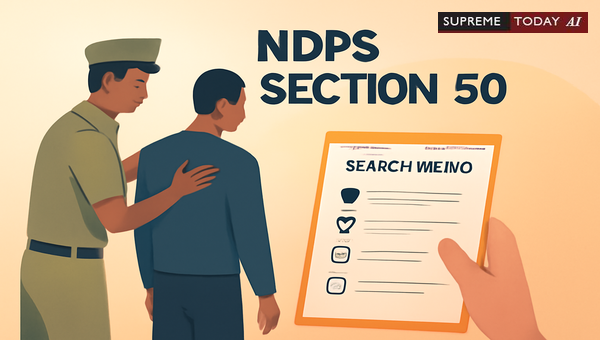
In the high-stakes world of narcotics enforcement in India, the Narcotic Drugs and Psychotropic Substances (NDPS) Act, 1985, sets strict procedural safeguards to protect individual rights while ensuring effective policing. One common question arises in NDPS cases: in NDPS case when body search is conducted whether search list is to be prepared? The answer, generally speaking, is yes—a detailed search list or memo must typically be prepared to document the body search process. This requirement stems from Section 50 of the NDPS Act, aimed at upholding transparency and preventing abuse.

Failure to comply can undermine the prosecution's case, potentially leading to acquittals. In this post, we'll break down the legal mandate, key judicial insights, distinctions from other searches, consequences, exceptions, and best practices. Note: This is general information based on case law and statutes; consult a qualified lawyer for advice specific to your situation.

Understanding Section 50 of the NDPS Act

Section 50 mandates that before conducting a personal (body) search of a suspect, the empowered officer must inform the person of their right to be searched in the presence of a nearest Gazetted Officer or Magistrate. This provision safeguards dignity and ensures procedural fairness. Crucially, the law requires recording the search proceedings in a memo or list, detailing:

  • The manner in which the search was conducted.
  • The identity of the officer performing the search.
  • The identity of the person searched.
  • Signatures of the searched person, witnesses, and officers.

As highlighted in judicial pronouncements, the document prepared by the Investigating Officer at the spot must invariably disclose that the search was conducted in the aforesaid manner and the name of the female official who carried out the personal search of the concerned female should also be disclosed. 2023 7 Supreme 644

Key Judicial Pronouncements on Search Memo Requirement

Courts have consistently emphasized the mandatory nature of preparing a search memo during body searches. In one landmark ruling, the provisions of Section 50 were deemed essential for credibility: The law enjoins that the details of the search, including the manner of search, the name of the person who conducted the search, and the identity of the person searched, must be recorded. 2023 7 Supreme 644

Another case underscored that non-compliance vitiates the prosecution: the conviction was set aside where the mandatory requirement of informing the accused of his right under Section 50 was not followed, and no search memo was prepared. 1999 6 Supreme 564

From additional precedents:

  • In a case involving Charas recovery, the court noted, He further accepted that before making search of the accused, no paper was prepared regarding his own search... 'Panchnama' was prepared signed by P.W.-1 as also independent witnesses. Yet, broader procedural lapses, including sample handling under Section 52-A, led to acquittal. 2023 0 Supreme(Pat) 346
  • Prosecution was not able to prove that search and recovery of contraband article brown sugar from appellants was in accordance with procedure prescribed under Section 50 of NDPS Act. Non-compliance proved fatal. 2022 0 Supreme(Chh) 418

These rulings illustrate that courts scrutinize documentation rigorously.

Distinction: Body Search vs. Other Searches

Section 50 applies specifically to personal body searches, not searches of premises, vehicles, bags, or articles. Section 50 would come into play only in the case of a search of a person, not of premises or articles. 1999 6 Supreme 159

For instance:

  • Bag searches may require panchnama but not the full Section 50 memo. In cases where both the search of the bag and the body is conducted... but the contraband is retrieved only from the bag, body search compliance is still assessed if attempted. 2014 0 Supreme(Ker) 976
  • Premises searches fall under Sections 41-42, demanding other safeguards like written records of information received. 2023 0 Supreme(Ker) 172

This distinction prevents overreach while ensuring body searches—being highly invasive—receive heightened protection.

Consequences of Non-Compliance

Skipping the search memo can render evidence unreliable or inadmissible. Courts often acquit due to:

  • Lack of transparency, raising planting allegations.
  • Violation of mandatory procedural rights.

Examples abound:

  • In this case, there is non-compliance of the provisions of Section 50 of NDPS Act. Conviction set aside. 2021 0 Supreme(J&K) 458
  • Before search is to be conducted, an option as required in terms of Section 50 of NDPS Act is required to be given... In this case, there is non-compliance. 2021 0 Supreme(J&K) 164
  • Appeals allowed where prosecution has completely failed to prove its case beyond reasonable doubts due to lapses like no Magistrate for samples and non-production of Malkhana Register. 2023 0 Supreme(Pat) 346

In 1999 6 Supreme 564, the court explicitly held such failures affect the credibility of the evidence and can vitiate the prosecution case.

Exceptions and Limitations

While strict, exceptions exist:

  • Chance recoveries during investigations (not based on prior information) may relax Section 50 mandates. 1999 6 Supreme 159
  • Searches post-sunset or without recorded information under Section 42 can compound issues but don't always nullify if body search memo is intact. 2021 0 Supreme(J&K) 164
  • Compliance of Section 50 is not mandatory in relation to search other than body search. 2023 0 Supreme(Ker) 172

However, courts interpret these narrowly; any doubt favors the accused.

Practical Recommendations for Compliance

For investigating officers:

  • Always inform the suspect of Section 50 rights in writing.
  • Prepare a detailed search memo on-site, signed by all parties.
  • Use independent witnesses; disclose searcher identity (e.g., female officer for women).
  • Link to panchnama for seizures.

For accused or defense:

  • Demand rights on spot; note non-compliance.
  • Challenge procedural lapses in trial.

Section 50 of the NDPS Act prescribes the conditions under which personal search of a person is required to be conducted. Being the pivotal provision... 2018 0 Supreme(All) 1645

Conclusion and Key Takeaways

In NDPS body searches, preparing a search list or memo is generally mandatory under Section 50 to ensure transparency and credibility. Judicial trends, as in 2023 7 Supreme 644, 1999 6 Supreme 564, and others, show non-compliance often dooms prosecutions. While exceptions apply to non-personal searches, erring on caution is wise.

Key Takeaways:- Mandatory for body searches: Record details meticulously.- Distinguish search types: Section 50 is person-specific.- Non-compliance risks: Acquittal likely.- Stay informed: Procedures protect rights.

This framework promotes fair enforcement. For case-specific guidance, seek professional legal counsel. Share your thoughts below!

References: All citations from provided judgments like 2023 7 Supreme 644, 1999 6 Supreme 159, 1999 6 Supreme 564, 2023 0 Supreme(Pat) 346, etc.

#NDPSAct, #BodySearch, #Section50NDPS
Chat Download
Chat Print
Chat R ALL
Landmark
Strategy
Argument
Risk
Chat Voice Bottom Icon
Chat Sent Bottom Icon
SupremeToday Portrait Ad
logo-black

An indispensable Tool for Legal Professionals, Endorsed by Various High Court and Judicial Officers

Please visit our Training & Support
Center or Contact Us for assistance

qr

Scan Me!

India’s Legal research and Law Firm App, Download now!

For Daily Legal Updates, Join us on :

whatsapp-icon Back to top







