


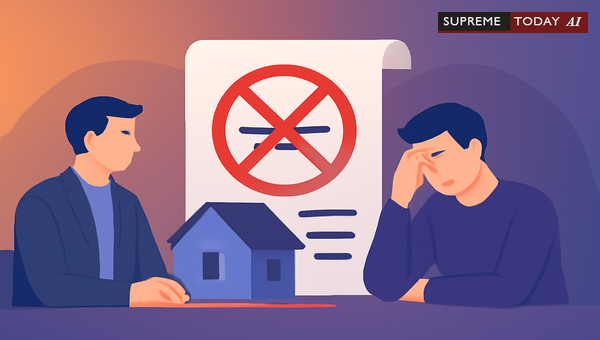
Land Owner Not Party to Case: Is the Order Binding on Them?
In , a common question arises: Judgement Regarding if an Owner of a Land is Not Made Party in a Case then Order is Not Binding Upon him. Imagine you're a landowner, and a or affects your property—but you weren't involved in the case. Are you bound by it? Generally, legal principles protect from being automatically bound by such decisions. This blog explores and rulings, rules, and practical implications for challenging deeds or orders.
Drawing from established case law, we'll clarify when a land owner not made a party can ignore or challenge an order, focusing on declarations of invalidity rather than . Note: This is general information, not specific legal advice. Consult a qualified lawyer for your situation.
Core Legal Principle: Are Not Bound
Courts have consistently held that a person not a party to a , , or order is not legally obligated by it. A who is not a signatory or party to a cannot be forced to value their suit based on that document's terms. Instead, valuation depends on the relief sought, statutory provisions, and case circumstances. **2020 2 Supreme 622
The in emphasized: It is logically impossible for a person who is not a party to a document or to a to ask for its . must seek a declaration that the is invalid or (non-existent), not . Thus, they aren't required to value the suit per the 's value. **2020 2 Supreme 622
Similarly, in , the Court clarified that a person not bound by a or can treat it as nonexistent and sue for their rights without valuing the suit based on the . **2025 5 Supreme 513
This principle extends to land owners not made parties in cases. As one ruling notes: It is well settled that it is not necessary for a third party to a ... 2025 0 Supreme(Raj) 1230 A non-party land owner can challenge the binding effect without conforming to the 's valuation.
Key Points on Non-Binding Orders
- A non-party to a or document is not required to value the suit based on that . **2020 2 Supreme 622 2025 5 Supreme 513
- Court fees depend on the relief sought and relevant statutes, not the 's value. **2017 6 Supreme 25
- Suits for or non-binding nature don't automatically require -based valuation for non-signatories. **2020 2 Supreme 622 2025 5 Supreme 513
- Land owners not parties can ignore the if claiming rights independently. **2017 0 Supreme(MP) 64
Detailed Case Law Analysis
Precedents
In Suhrid Singh, the Court distinguished remedies: Parties to a seek (valued per ), but seek declarations (valued per relief). 2020 2 Supreme 622 This protects land owners not involved in prior transactions or cases.
reinforces: challenge validity via declaration, with valuation tied to relief, not consideration. **2020 2 Supreme 622
Insights
The in a related matter noted that for seeking declaration of a sale as , valuation isn't based on the if they're not signatories. **2017 6 Supreme 25
In another case: The is not required to value the suit as per the valuation of the sale . The suit is not for of an instrument, but for declaration of sale as illegal and void. **2017 0 Supreme(Ori) 276
Not Bound to Value Suit According to Defendant's — rulings like Suhrid Singh support seeking declarations without -based court fees. **2025 0 Supreme(MP) 147
From additional precedents:- Since they are not party to the sale , therefore, they are not required to value the suit on the basis of the valuation of the sale . 2017 0 Supreme(MP) 64- Third parties need not cancel deeds; they can file for declarations of non-binding effect. 2025 0 Supreme(Raj) 1230
- Calcutta
These rulings align with the query: An order or from a case where the land owner wasn't a party typically does not bind them. They can sue independently for declaration. **2016 0 Supreme(Mad) 3853
and Court Fees for
Valuation hinges on the 's relationship to the document:- If a party/signatory: Value per for . 2020 2 Supreme 622- If non-party: Fixed fee or based on relief (e.g., 20 times land revenue). 2017 0 Supreme(MP) 64
Courts evaluate pleadings and relief, not assuming valuation. 2017 6 Supreme 25 2025 5 Supreme 513 For land owners, this means challenging fraudulent or invalid sales without undue fees.
Exceptions:- If relief implies (even for ), higher valuation may apply—but rare. 2025 0 Supreme(Kar) 294- State-specific statutes influence, but non-party status prevails. 2017 6 Supreme 25
Practical Implications for Land Owners
If you're a land owner not made a party:1. File for declaration: Assert the order/ is invalid or non-binding on you.2. Value appropriately: Use statutory methods, not value—avoid rejection for under-valuation.3. Gather evidence: Prove non-party status and invalidity (e.g., low consideration). **2024 0 Supreme(Mad) 2136
Legal practitioners should:- Specify relief clearly.- Assess party status pre-filing.- Cite precedents like Suhrid Singh.
From other sources: Even boundary recitals in deeds don't bind . 2016 0 Supreme(Mad) 3853 Suits proceed on 's independent title claims. **2022 0 Supreme(HP) 592
Recommendations and Best Practices
- Document everything: Preserve proof of ownership and non-involvement.
- Seek timely relief: Limitations apply to declaratory suits.
- Consult experts: Valuation errors can dismiss suits.
Courts prioritize substance: If pleadings seek declaration, not , prevail on valuation. **
- Calcutta
Conclusion: Protect Your Rights as a Non-Party
Generally, a land owner not made a party in a case is not bound by the order or . They can seek declarations of invalidity without -based valuation, as affirmed in Suhrid Singh2020 2 Supreme 622 and Unni2025 5 Supreme 513. This empowers property owners in disputes over sales, partitions, or prior orders.
Key Takeaways:- treat deeds/orders as non-existent.- Valuation follows relief, not document value.- Declaration > for third parties.
Stay informed, act promptly, and remember—this overview isn't advice. For tailored guidance, contact a legal professional.
References
- 2020 2 Supreme 622 – Suhrid Singh on non-party declarations.
- 2025 5 Supreme 513 – on non-binding deeds.
- 2017 6 Supreme 25 – Valuation for .
- 2025 0 Supreme(Raj) 1230 – Third-party challenges.
- 2017 0 Supreme(MP) 64 – for .












