


Analyzing the Statutory Powers and Procedural Duties of Panchayat Secretaries in Encroachment Cases
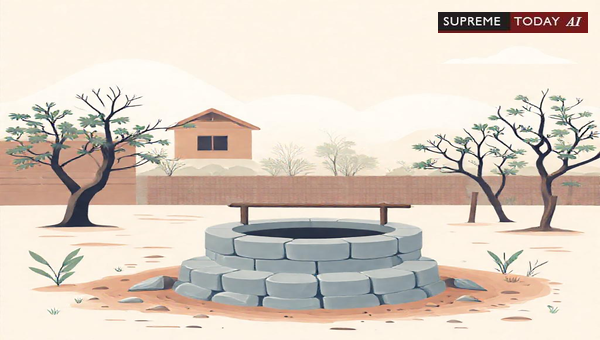
The question of whether a well, which has been filled with earth, can be recovered by a Panchayat Secretary through the issuance of a legal notice is a complex matter rooted in local governance and property law. This issue demands a careful examination of the granted to a Panchayat Secretary under relevant state legislative frameworks, specifically the , alongside fundamental principles of administrative law and .
Establishing Jurisdiction and
At its core, this dispute concerns the jurisdictional reach of the of a Gram Panchayat. The Panchayat Secretary functions as the administrative and executive backbone of the Gram Panchayat, and under state acts, they possess statutory powers to address issues concerning public land and communal assets.
The legal precedents are clear regarding the competence of the Panchayat Secretary. In the context of the A.P. Panchayat Raj Act, 1994, the court affirmed that a Panchayat Secretary cannot be deemed to be unauthoritative when they issue formal for the removal of encroachments 2020 0 Supreme(AP) 14. Similarly, court findings confirm that the President of a Village Panchayat, who serves as the , has got every power to issue notice to the encroachers to initiate action against obstructions on communal or public lands 2007 0 Supreme(Mad) 3395.
This executive capacity is reinforced by provisions like of the A.P. Panchayat Raj Act, 1994, which establishes that communal property, such as wells, administered for the benefit of villagers, vests in the Gram Panchayat's jurisdiction 2022 0 Supreme(AP) 339. further clarifies the authority to remove obstructions, particularly on public roads or common areas, by way of notice.
The Procedural Mandate: Beyond Issuing a Notice
While the power to initiate recovery through a notice is established, the authority of the Panchayat Secretary is not absolute. Any attempt to remove an encroachment, such as earth filling a communal well, must strictly adhere to mandated procedural safeguards and constitutional requirements.
The requirement of dictates that no person should be deprived of property without being given a fair chance to be heard. The Andhra Pradesh Government Order (Panchayat Raj and Rural Development Department, dated 21.07.2011) is explicit: where Panchayat property is occupied, the (the Panchayat Secretary) shall serve a notice to the party concerned and give a brief hearing before proceeding for eviction 2020 0 Supreme(AP) 193.
The judiciary has repeatedly emphasized this procedural rigidity. In a key ruling regarding the removal of encroachments, final eviction notices were set aside precisely because the Secretary failed to afford the petitioners a personal hearing 2020 0 Supreme(AP) 14. Furthermore, the Supreme Court in Jagpal Singh v. State of Punjab (2011) reinforced the duty of the to follow due process when evicting illegal occupants from lands like Gram Sabha or Poramboke land 2020 0 Supreme(AP) 193.
Navigating the Removal Process for Encroachments
When a well is found to be filled with earth, the following process outlines the steps the Panchayat Secretary may legally take:
- Verification of Ownership: The Secretary must first establish that the well constitutes Panchayat property or communal land, referencing of the A.P. Panchayat Raj Act, 1994.
- Serving Notice: A proper show cause or removal notice must be formally served on the encroacher, detailing the specific encroachment and the intended relief sought 2020 0 Supreme(AP) 14.
- Mandatory Hearing: A brief personal hearing must be granted. This stage is critical; without it, any final action is highly vulnerable to legal challenge.
- Issuing Orders: Suitable administrative orders must be passed by the before any physical removal or eviction takes place 2020 0 Supreme(AP) 193.
If the encroachment involves complex earth removal for construction, other state regulations must also be considered. For instance, permits for moving earth must often comply with specific development or building rules, and the Secretary cannot unilaterally impose conditions that restrict the use of excavated soil beyond what is permitted by law 2018 Supreme(Online)(KER) 43229.
Limitations and Safeguards in Enforcement
Even when the Secretary possesses the power to initiate recovery, several checks and balances prevent arbitrary action.
- Evidentiary Basis: The Gram Panchayat cannot rely on vague allegations. The Secretary must have material evidence to substantiate the claim that the earth filling the well is indeed an encroachment on public property 2015 0 Supreme(AP) 662.
- Rights of the Encroacher: The affected person must be allowed the opportunity to produce documents and evidence to establish their legal title or right to the land through the prescribed notice period 2021 0 Supreme(Guj) 853.
- Physical Possession: It is also important to note that, even when a Panchayat is competent to issue an eviction notice, the court has clarified that the Panchayat is not authorized to take physical possession of property on its own; they must follow the prescribed administrative and judicial processes 2007 0 Supreme(Mad) 3398.
For those planning construction or excavating earth, compliance with rules regarding transport and utilization is also vital. Courts have ruled that while local authorities may require permits, they cannot arbitrarily restrict the movement or use of excavated soil in a way that contradicts established state building rules or statutory permits 2024 Supreme(Online)(KER) 2651.
In summary, while the Panchayat Secretary holds the to issue notices for the recovery of a well filled with earth, the power to act is strictly tied to adherence to procedural correctness. Success hinges on thorough evidence, strict compliance with mandated hearings, and timely adherence to the provisions of the relevant state enactments. Failure to provide these procedural safeguards fundamentally undermines the legality of the recovery action, leaving it open to challenge through writ jurisdiction. It is generally advisable to ensure that all notices meticulously document the basis of the encroachment and the specific statutory powers being invoked.
Disclaimer: This content is provided for informational purposes only and does not constitute formal legal advice for any specific case. Local laws and court interpretations may vary.
#PanchayatRaj #LegalRemedies #EncroachmentRemoval #PublicPropertyLaw #PanchayatSecretary









