


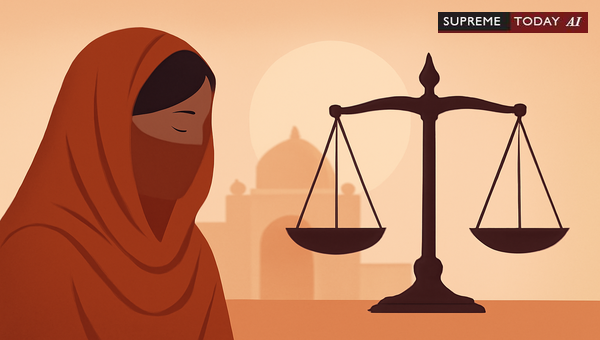
: Meaning & Legal Protections in India
In Indian jurisprudence, certain social and cultural practices have shaped unique legal protections for vulnerable groups. One such concept is the ''—a term that often arises in property disputes, contracts, and civil proceedings. But where is it referred to '' in law? This question highlights a longstanding principle aimed at safeguarding women living in seclusion due to traditional customs.
This blog post delves into the definition, historical context, key legal protections, and modern interpretations of '.' Drawing from landmark judgments and recent cases, we'll explain how courts apply this doctrine to prevent exploitation. Note: This is general information and not specific legal advice. Consult a qualified lawyer for your situation.
What is a ?
The term '' refers to a woman who lives in seclusion, typically behind a pardah (veil or screen), with limited interaction with the outside world. Courts presume such women have imperfect knowledge of worldly affairs, making them susceptible to or in legal transactions. 1898 0 Supreme(SC) 12 1886 0 Supreme(All) 122
Historically rooted in Muslim and certain Hindu customs, it describes women confined to the zenana (women's quarters). As noted in early rulings, these women retain property rights independent of their husbands but require extra safeguards due to their isolation. For instance, in , the court acknowledged that social customs restrict their knowledge, necessitating protections. 1898 0 Supreme(SC) 12
Key Characteristics
- Seclusion: Living behind a screen with minimal external contact. 1898 0 Supreme(SC) 12
- Presumed Ignorance: Limited understanding of legal documents, even if literate. 1886 0 Supreme(All) 122
- Vulnerability: Prone to exploitation by relatives or outsiders. 1898 0 Supreme(SC) 12
Legal Protections and
When a executes a document—like a sale deed or gift—the law shifts the to the party benefiting from it. They must prove she fully understood the transaction's nature and effect, beyond just reading it aloud. 1886 0 Supreme(All) 122 1924 0 Supreme(All) 195
This principle isn't limited to illiterate women; it applies to any secluded due to custom, even educated ones. The in clarified: a is a woman of rank who lives in seclusion, shut in the zenana, having no communication except from behind the pardah or screen, but the concept evolves with society. 1886 0 Supreme(All) 122
Evolving Scope
Modern courts extend protections to women in urban areas or those dependent due to infirmity, illiteracy, or customs—not strictly veiling. 1898 0 Supreme(SC) 12
Applications in Various Legal Contexts
The doctrine appears across civil, criminal, and administrative law:
- Property Transactions: In land acquisition cases, courts consider if a knew of proceedings. One case noted: She was a and not aware of the legal formalities, rejecting due to lack of notice. 2019 0 Supreme(P&H) 1488
- Court Attendance: Magistrates may dispense with personal appearance under . In a defamation case, the court held the magistrate erred by refusing exemption for a parda-nashin woman, affirming discretion in . 1893 0 Supreme(Cal) 97
- Liability and Business: Mere claim of being parda nashin doesn't absolve liability. A PDS dealer's widow, claiming she is a had nothing to do with the affairs, was held liable post-husband's death under . 2010 0 Supreme(Pat) 355
- Claims: Illiteracy and parda nashin status are alleged in sale deed challenges, e.g., Harbans Kaur was alleged to be illiterate and parda nashin.
Another rejected non-examination pretext: negates her plea that she is a .
- Family Disputes: In a 100-year-old woman's case, her parda nashin status supported exemption for canceling a fraudulent sale deed. 2014 0 Supreme(P&H) 540
These examples show courts scrutinize claims contextually, not automatically granting protections.
Exceptions and Limitations
Not all veiled women qualify:- Educated/Socially Active: If aware and independent, presumption doesn't apply. 1898 0 Supreme(SC) 12- No Automatic Immunity: E.g., treated like others if evidence shows knowledge, as in Dirgaj Singh analogy: The learned District Judge seems to have, treated Dirgaj Singh as if he had been a parda-nashin lady. 1918 0 Supreme(All) 347- Evidence-Based: Social circumstances, not just veiling, matter.
Recommendations for Legal Practice
- Prove Comprehension: Beneficiaries must demonstrate understanding via independent advice or witnesses.
- Holistic Assessment: Courts evaluate education, health, and lifestyle.
- Adapt to Change: Recognize urban women's evolving roles. 1898 0 Supreme(SC) 12 1886 0 Supreme(All) 122
Conclusion and Key Takeaways
The '' doctrine protects secluded women from exploitation, emphasizing proven understanding in transactions. While traditional, it adapts to modern India, balancing custom with equity. Key takeaways:- Burden on transaction beneficiary. 1886 0 Supreme(All) 122- Applies broadly to dependent women.
- Contextual, not absolute protection.
Stay informed on such nuances to navigate property and contract laws effectively. For personalized guidance, seek professional legal counsel.
References:1. 1898 0 Supreme(SC) 12: Core definition and insights.2. 1886 0 Supreme(All) 122: Evolving concept and .3. 1924 0 Supreme(All) 195: Proving comprehension.4.
: Extended protections.5. Additional cases: 1893 0 Supreme(Cal) 97, 2010 0 Supreme(Pat) 355,
, etc. #PardaNashin, #IndianLaw, #LegalProtections












