


Pillion Rider Liable for Ganja in Scooter? NDPS Insights
Introduction
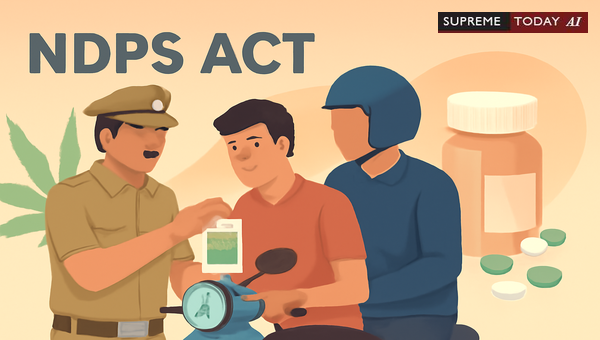
Imagine you're riding as a pillion passenger on a friend's scooter, unaware of what's hidden inside. Suddenly, police stop the vehicle, discover ganja (cannabis) tucked away, and you're named the . Does mere presence make you guilty under the ? This scenario raises critical questions about possession, knowledge, and liability for pillion riders.
The legal query at the heart of this issue is: Ganja Inside the Scooter is the Pillion Rider. In such cases, courts scrutinize whether the pillion rider had of the . This blog post breaks down the legal principles, key precedents, and strategies, drawing from Indian case law. Note: This is general information, not specific legal advice. Consult a qualified lawyer for your situation.
Key Facts in Typical Ganja Seizure Cases Involving Scooters
Scooter-related NDPS cases often involve two individuals: the rider (usually the owner) and the pillion rider. Ganja is commonly found in the vehicle's dicky (storage compartment) or bags. Prosecution claims , but courts demand .
- The is frequently the pillion rider in the query, but evidence shows riders/owners bear primary responsibility. For instance, The 1st accused was the rider of the scooter and he is the RC owner of the vehicle also. The 2nd accused was the pillion rider. 2021 Supreme(Online)(KER) 13355 2021 Supreme(Online)(KER) 23200
- Accused are often arrested together, as in cases dated , where both were in judicial custody after traveling on the scooter. 2021 Supreme(Online)(KER) 13355
- recovery doesn't automatically implicate the passenger; factors like ownership, control, and awareness matter.
These facts highlight why pillion riders often challenge charges successfully.
Core Legal Principles: Possession and Knowledge Under NDPS Act
Under the NDPS Act, conviction requires proving —not just . Mere presence as a pillion rider does not imply guilt. The prosecution must establish:
- : The accused must have knowledge of the and control over it. Mere presence as a pillion rider does not automatically imply possession or knowledge of the found in the vehicle. 2006 0 Supreme(Chh) 341
- Burden on Prosecution: When the accused isn't the vehicle owner, prosecutors must prove knowledge. In cases where the accused is not the owner of the vehicle, the burden is on the prosecution to prove that the accused had knowledge of the . 2006 0 Supreme(Chh) 341
- Knowledge Beyond Doubt: Courts emphasize that the accused had knowledge of the to establish culpability. 2016 0 Supreme(Gau) 263
If the pillion rider was unaware—e.g., unconscious or no access to the dicky—they may escape liability. In one case, it was determined that the pillion rider was not in of the , as the bags were held by another individual. 2006 0 Supreme(Chh) 341
Landmark Case References on Pillion Rider Liability
Indian courts have consistently protected pillion riders lacking evidence of involvement. Here's a review:
- Ganja in Scooter Dicky: The accused was found driving a scooter with ganja in the dicky. The court ruled that the prosecution must prove that the accused had knowledge of the ganja to establish possession. 2014 0 Supreme(SC) 885 This underscores driver/owner focus.
- Unconscious Pillion Rider: In a seizure case, the pillion rider was not the owner and was unconscious when the ganja was seized, the court noted that the lack of knowledge negated the possibility of liability. 2002 0 Supreme(Chh) 100
- Driver vs. Pillion Distinction: Multiple judgments differentiate roles. The 1st accused was the rider of the scooter and he is the RC owner... The 2nd accused was the pillion rider. Courts often grant bail or acquit pillions due to passive role. 2021 Supreme(Online)(KER) 13355 2021 Supreme(Online)(KER) 23200
- Escape and Absconding Cases: The another - 3 - person who was a pillion rider was managed to escape by running towards the land and this petitioner was caught red-handed. The accused No.2 is still absconding. This shows scrutiny on active participants. 2023 Supreme(Online)(KAR) 9631
- No : Learned counsel for the Petitioner submits that Petitioner is the driver of the Bolero and he has no nexus with the bike rider as well as the pillion rider. Similar logic applies to scooters.
In broader NDPS scooter cases, courts acquit pillion riders citing insufficient possession evidence, especially when items are in driver-controlled areas. 2006 0 Supreme(Chh) 341 2016 0 Supreme(Gau) 263
Integrating Additional Case Insights
Other precedents reinforce that scooter ownership and control tilt liability toward the rider:
- Rash Driving Analogies: While not NDPS, cases like KA 06/H 6745 as a pillion rider along with the petitioner... as a rider distinguish roles, aiding NDPS arguments on passive presence. 2023 0 Supreme(Kar) 1364
- Accident Scenarios: PW2 ‘Anandu’ is the pillion rider, on the scooter... the tanker lorry came from behind. Highlights pillion's limited control. 2023 0 Supreme(Ker) 519
- Seizure with Bags: At that time this petitioner and accused No.2 were proceeding in a scooter by holding a white bag. Bag-holders face higher scrutiny. 2023 Supreme(Online)(KAR) 9631
These illustrate courts' reluctance to convict pillions without direct links, like handling or confessions.
Defense Strategies for Pillion Riders
If facing charges:
- Challenge Knowledge: Argue lack of awareness, especially if not owner. Gather evidence like unconscious state or no access. 2002 0 Supreme(Chh) 100
- Witness Testimonies: Use statements on circumstances. Prepare to challenge the prosecution’s evidence regarding possession and knowledge. 2006 0 Supreme(Chh) 341
- Vehicle Ownership: Emphasize rider/owner as primary accused. 2021 Supreme(Online)(KER) 13355
- : Courts grant bail where possession isn't proven, as mere presence suffices for release pending trial.
Conclusion and Key Takeaways
The legal position is clear: Being a pillion rider does not inherently imply possession or knowledge of ganja found in a scooter. Prosecution must prove under NDPS Act, a high bar often unmet for passengers. Primary liability falls on the rider/owner, with pillions benefiting from doubt. 2016 0 Supreme(Gau) 263 2014 0 Supreme(SC) 885
Key Takeaways:- Mere presence ≠ guilt; demand proof of knowledge/control.- Cite precedents like unconscious rider cases for defenses. 2002 0 Supreme(Chh) 100- Always seek professional legal counsel—outcomes vary by facts.
This analysis draws from established cases to empower understanding. Stay informed, ride safe, and know your rights.
References: 2006 0 Supreme(Chh) 341 2016 0 Supreme(Gau) 263 2014 0 Supreme(SC) 885 2002 0 Supreme(Chh) 100 2021 Supreme(Online)(KER) 13355 2021 Supreme(Online)(KER) 23200 2023 Supreme(Online)(KAR) 9631
#NDPSAct #PillionRider #GanjaCase












